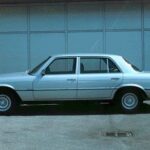
S-Class limousines of the series 116
Production: 1972 - 1980
Types
| Type | Model | Production | Number produced |
|---|---|---|---|
| 280 S | W 116 V 28 | 08.72/09.72 - 07.80 | 122.848 |
| 280 SE | W 116 E 28 | 08.72/09.72 - 07.80 | 150.593 |
| 280 SEL | V 116 E 28 | 10.73/04.74 - 05.80 | 7.032 |
| 350 SE | W 116 E 35 | 03.72/08.72 - 09.80 | 51.100 |
| 350 SEL | V 116 E 35 | 09.73/11.73 - 06.80 | 4.266 |
| 450 SE | W 116 E 45 | 08.72/12.72 - 04.80 | 41.604 |
| 450 SEL | V 116 E 45 | 12.72/02.73 - 06.80 | 59.578 |
| 450 SEL 6.9 | V 116 E 69 | 02.75/09.75 - 05.80 | 7.380 |
| 300 SD | W 116 D 30 A | 02.77/05.78 - 09.80 | 28.634 |
| 350 SE | W 116 E 35 | - 08.80 | altogether 292 spec. protection cars - model range 116 |
| 350 SEL | V 116 E 35 | - 06.80 | altogether 292 spec. protection cars - model range 116 |
| 450 SE | W 116 E 45 | - 04.78 | altogether 292 spec. protection cars - model range 116 |
| 450 SEL | V 116 E 45 | - 02.80 | altogether 292 spec. protection cars - model range 116 |
History
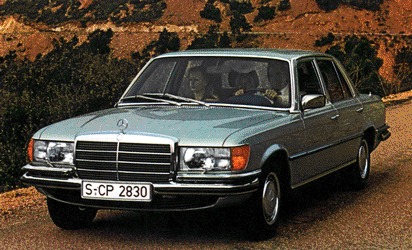
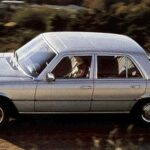
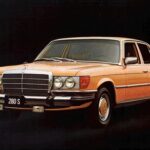
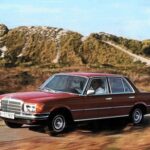
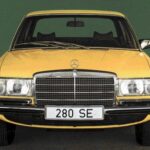
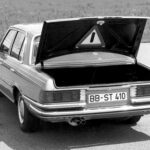
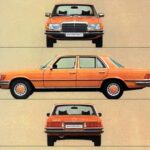
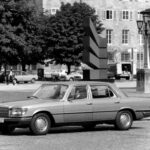
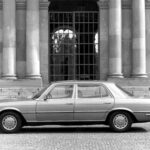
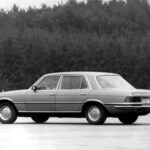
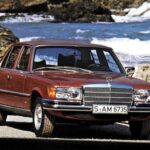
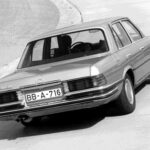
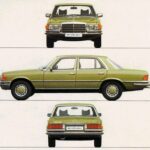
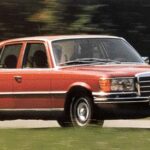
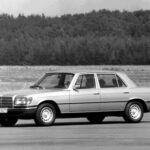
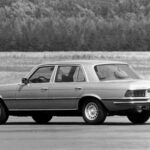
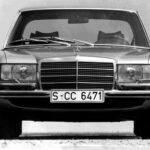
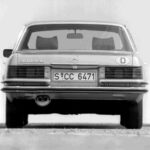
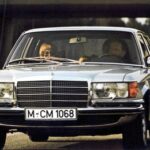
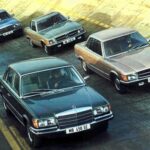
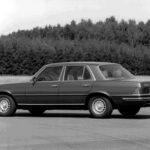
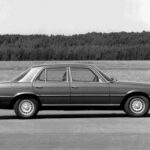
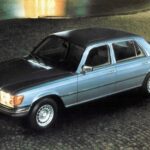
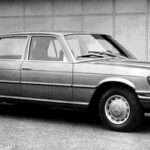
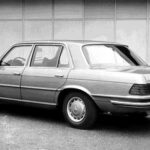
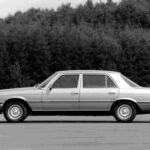
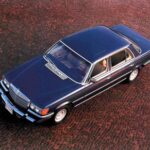
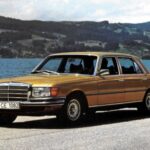
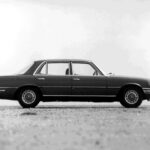
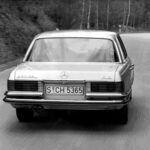
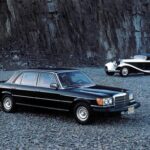
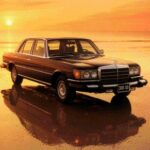
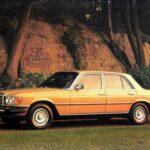
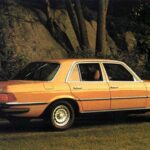
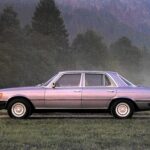
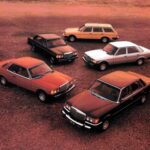
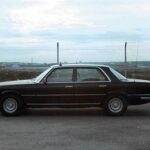
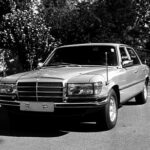
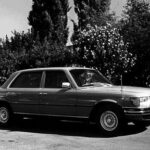
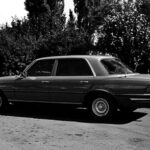
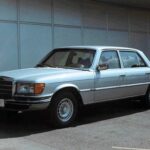
In September 1972 a totally new car generation of the upper class was presented to the public. For the first time the name ,Mercedes-Benz S-class" was officially used. It replaced the type range 108/109 and at that time consisted of types 280 S, 280 SE and 350 SE. Six months later the S-class limousine was also available with a larger displacement capacity in the 4,5 ltr.-V8-engine, parallel to the 450 SL and the 450 SLC. At the same time type 450 SEL was issued with a 100 mm longer wheel base. As with its predecessors the driver thus benefited from the newly gained leg room. Since November 1973 the prolonged version was also available as 350 SEL, since April 1974 finally also as 280 SEL.
A remarkable technical novelty in the limousines of type range 116 was the twin control arm front wheel suspension with zero steering offset and brake dive support. It improved the handling characteristics of the car considerably. The rear wheel suspension corresponded for the most part to the construction which had proved itself for years in the ,strike-eight"-type and was also used in the 350 SL.
In terms of passive safety the S-class also outlined the latest technological development. The many construction details realised in the 350 SL for the first time and for safety reasons now, of course, were transferred as a whole to the S-class limousines. Thus the fuel tank was not located in the rear end of the car anymore, but above the rear axle and thus protected against collision. Inside a heavily padded dashboard, deformable or conceiling switches and controls as well as a new four-spoke security wheel with impact absorber and broad impact cushion provided for utmost crash protection. Important improvements in comparison to the preceding type range was the even more stable security passenger cell with stiffened roof-frame structure, high-strength roof and door pillars as well as reinforced doors. The energy absorption of the front and rear deformation zone in the front and rear end was significantly increased by a controlled deformation capacity.
Newly developed cowl panels at the A-pillars, serving as water-shield gutters, guaranteed good visibility in rain and kept the side windows clean in bad weather. Further security details were wide wraparound direction indicators, well visible also from the side. In addition, broad rear lamps with ribbed surface profile proved to be very insusceptible to dirt.
In May 1975 type 450 SEL was presented as the new top model of the type range and as the legitimate successor to 300 SEL 6.3. The powerful 6.9 ltr.-V8-motor, developed from the 6.3 ltr. -aggregate, achieved 286 PS and a maximal torque of 56 mkg. For the first time in a Mercedes-Benz car a hydropneumatic suspension with level control system guaranteed highest driving comfort. Further optional equipment belonging to the production delivery of the top model included central locking system, air-conditioning and headlamp washer system. As its direct predecessor, the 450 SEL 9 was an immediate and full success. Even though it was more than twice as expensive than the 350 SE, 7.380 cars were built within its production time of four years and six months.
Between November 1975 and February 1976 the fuel injection system of the 2, 8 ltr.-, 3,5 ltr.- and 4,5 ltr.-injection engines was changed in order to correspond to the now higher exhaust-emission standards in most European countries. The electronically controlled Bosch ,D-Jetronic" was replaced by the newly developed mechanically controlled Bosch "K=Jetronic". In all three cases the conversion was connected to slight power reductions. In the 2,8 ltr.- engine as well as in the 3,5 ltr.- engine the compression was lowered at the same time. In order to facilitate maintenance both V8=engines were equipped with a breakless transistor ignition and a hydraulic valve-clearance compensation.
Parallel to the 2,8 ltr.- injection engine the compression was also lowered in the carburettor engine. Here, too, this led to a reduced potential of performance. Two years later, since April 1978, the original performance of all three models with injection engine was reached again. With the 2,8 ltr.-injection engine - in contrast to the carburettor engine - the compression was increased to its old value. With the two V8=models the former performance was basically achieved by changing the exhaust-emission system.
In May 1978 the model range of the series 116 was once more extended. The new member of the family, type 300 SD, gained as much attention as the 450 SEL 6.9 three years before. The new S-class model, however, was at the other end of the performance scale and - for the first time in the history of this vehicle category - was driven by a Diesel engine. The 3,0 ltr.-5 cylinder aggregate which had proven so well in the types 240 D 3.0 and. 300 D was now provided with a turbocharger and thus with a new task. This made it possible to increase the performance to 115 PS. The development of this unusual S-class variant, which was exclusively available in the USA and Canada, had been started with the goal to fulfil the lower consumption figures newly introduced by the US-government.
The important figure was the so-called ,fleet consumption", an invention of the Carter-administration, which designated the average consumption of all car-models made available by a manufacturer. With an extended offer of traditionally economical Diesel models the fleet consumption could be lowered under the legal limit.
A technical innovation of trend-setting importance was available since autumn 1978, world exclusively in the S-class-limousines of the type range 116: the antilock system (ALS) which had been developed together with the Robert-Bosch GmbH. It guarantees the unrestricted controllability of the vehicle even when slamming on the brakes, thus contributing considerably to active safety. Today it is almost self-evident and also available in small cars. In those days, however, the market introduction of the ALS was a real sensation.
Safety of a different kind was offered by the extra-safe versions of the type range 116. Based on the experience gained by the development of the specially safe 280 SEL3.5, the protection technology could be further improved. Altogether 292 cars were produced from the eight-cylinder models 350 SE, 350 SEL, 450 SE and 450 SEL and delivered to selected clients, among them many state institutions in Europe and overseas.
In September 1979 types of the series 126 were represented at the Frankfurt motor show IAA. They were the successors of the first S-class type range. The production of the type range 116, however, was not finished yet. It stopped only between April and September 1980, depending on the type. The last car of a total of 473.035 built units of this model range that passed the final-assembly inspection at the plant in Sindelfingen was a 300 SD.