Inspecting cylinders with light pobe, assessing cylinders
WIS 01-0200
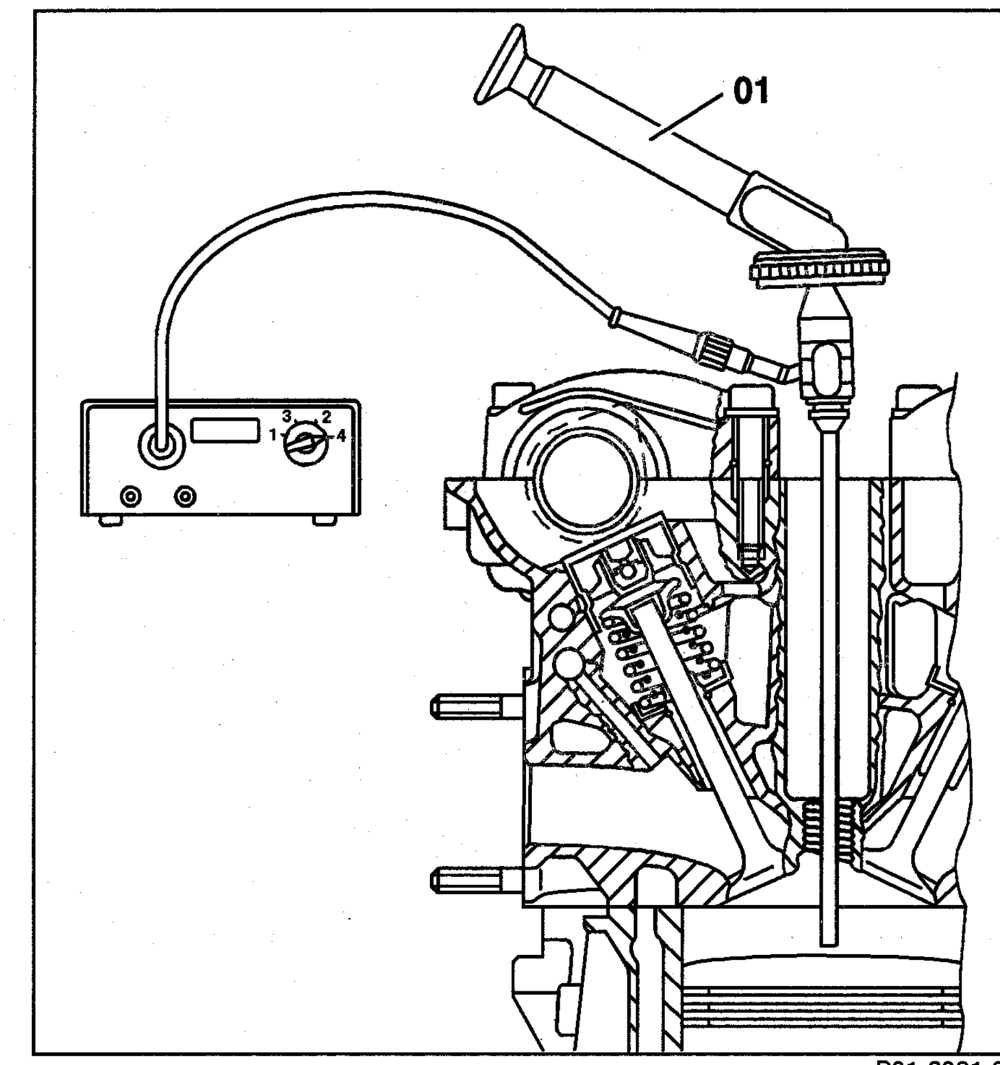
Preceding work: Operation no. of operation texts and work units or standard texts Removing, installing spark plugs (AP15.00-1580CA) and flat rates Hazard warnings when hood opened (01-0085) 01-1321
P01-6031–37
PistON 2… eee eee ee eee eee eee position to BDC, see table. Motoskop and lens probe ………….0005 connect. Motoskop TW 12 V to car battery Motoskop TW 220 V to mains. Lens probe 2… cee ee eee eee insert into cylinder, remove. Cylinder 2.0… ce eee eee inspect, assess, see note.
ei = RA 01.1313-0200/1
Oe vi
Commercially available tool
Cylinder inspection lamp e.g. Karl Storz GmbH, 78532 Tuttlingen Motoskop TW (cold light) with lens probe 103 26 CT (210 mm)
Marking index Piston in BDC position on TDC pointer
0 4and7
90 8 and 2
180 1 and6 270 5 and 3
Note If complaints are received regarding an engine because of noises, overheating, oil consumption etc., it is good practice to perform a visual inspection with a cylinder inspection lamp with the cylinder head installed. If it is not possible to assess the cylinders with The information which follows is designed to sufficient certainty by means of a visual inhelp in assessing the cylinder walls, in taking a spection with the cylinder inspection lamp, the proper professional decision regarding the cylinder head should then be removed. condition and further use of the crankcase.
1. Normal condition
Mat grey surface, no honing pattern.
elm RA 01.1313-0200/2
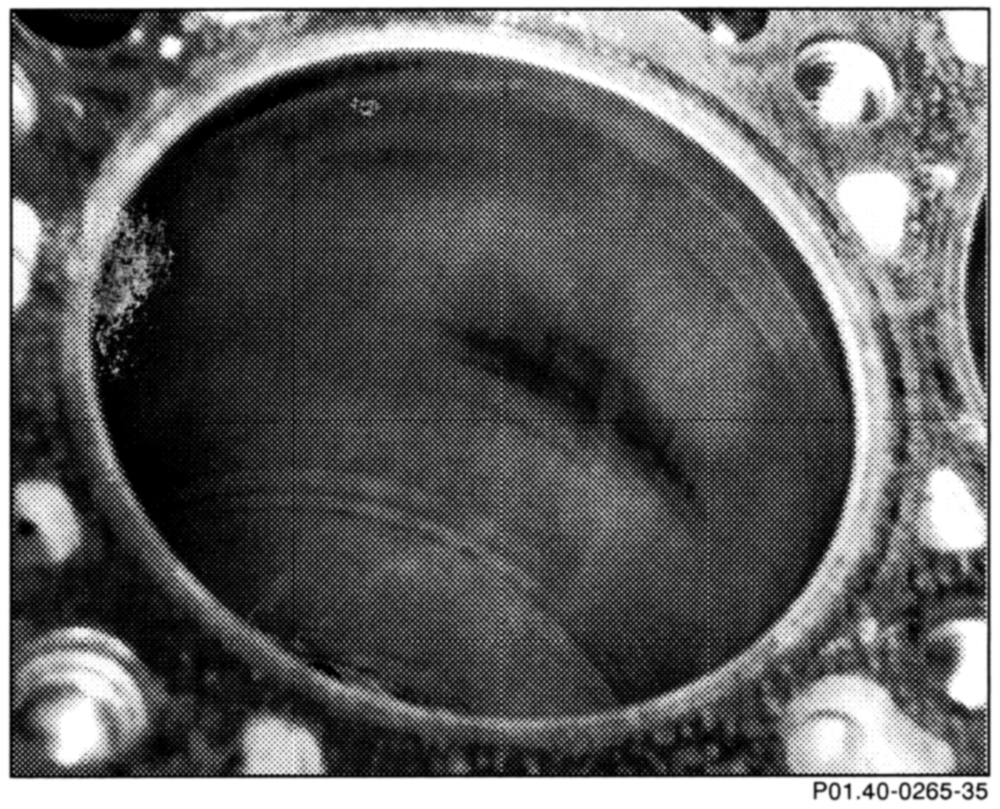
cylinder or in the area of the cylinder head bolt pipes. Continue using crankcase.
3. Bright cylinder
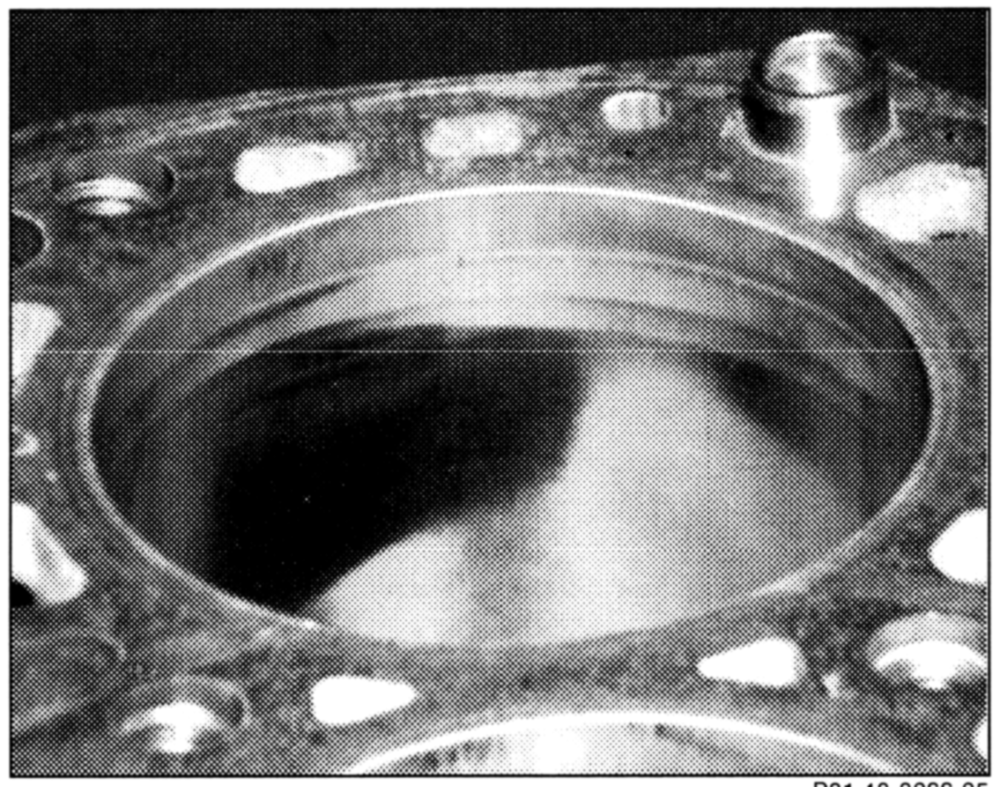
surfaces, polished and
reflective all round
Usually starting from the first piston ring, in the top area of cylinder, with measurable partial cylinder wear. Cylinder wall unserviceable.
P01.40-0266–35
eae RA 01.1313-0200/3
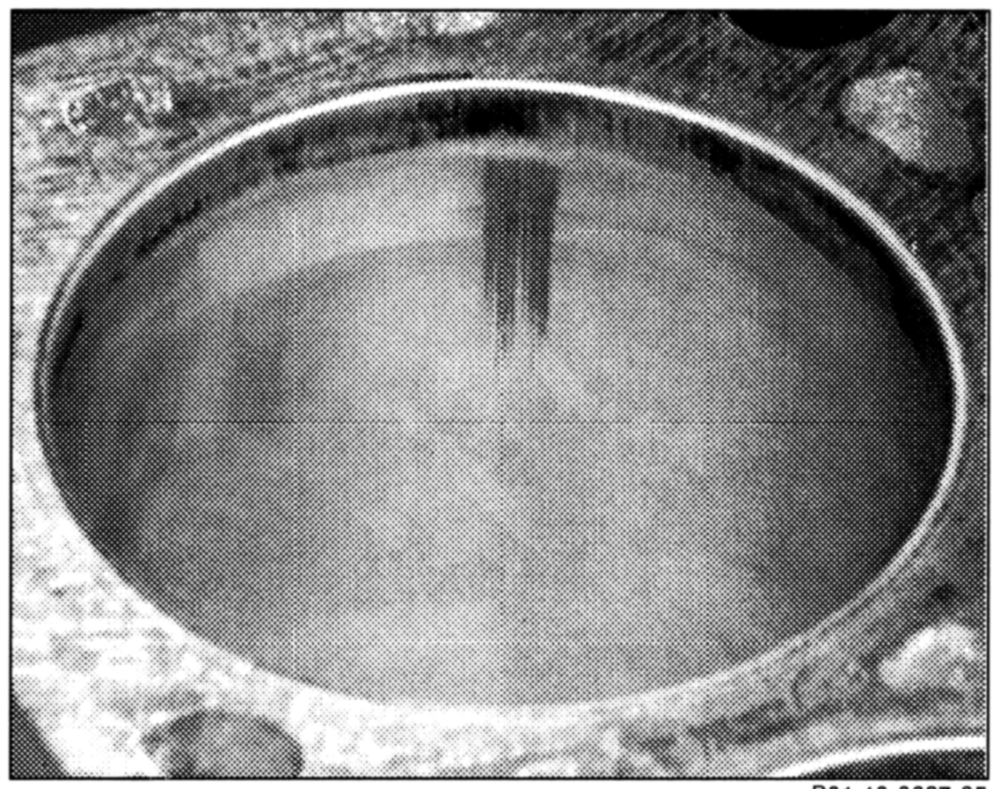
Starting from first piston ring, extending for about 30 mm. Traces of dry rubbing which cannot be felt, caused by fuel ablution of the oil film, e.g. frequent cold starting in short-distance driving. These traces of rubbing, which are likely to be found in the area of the cylinder head bolts and on the pressure side, are acceptable if smoothed. The piston rings are not damaged. Continue using crankcase.
P01.40-0267–35
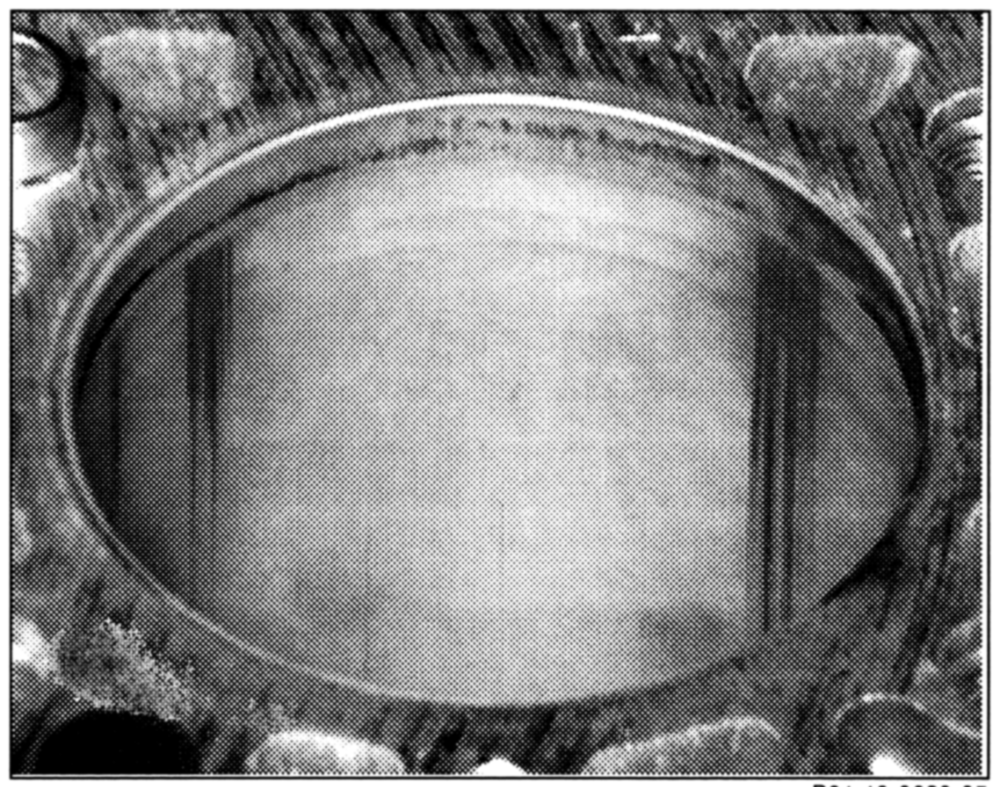
5. Roughened
streaks, traces of
seizure
Starting from the first and second piston ring and extending initially to the bottom part of the cylinder. Traces of rubbing as described in section 4 have progressed to seizure. Piston rings may be damaged. If the streaks can be felt, cylinder wall unserviceable.
P01.40-0268–35
oie §=RA 01.1313-0200/4
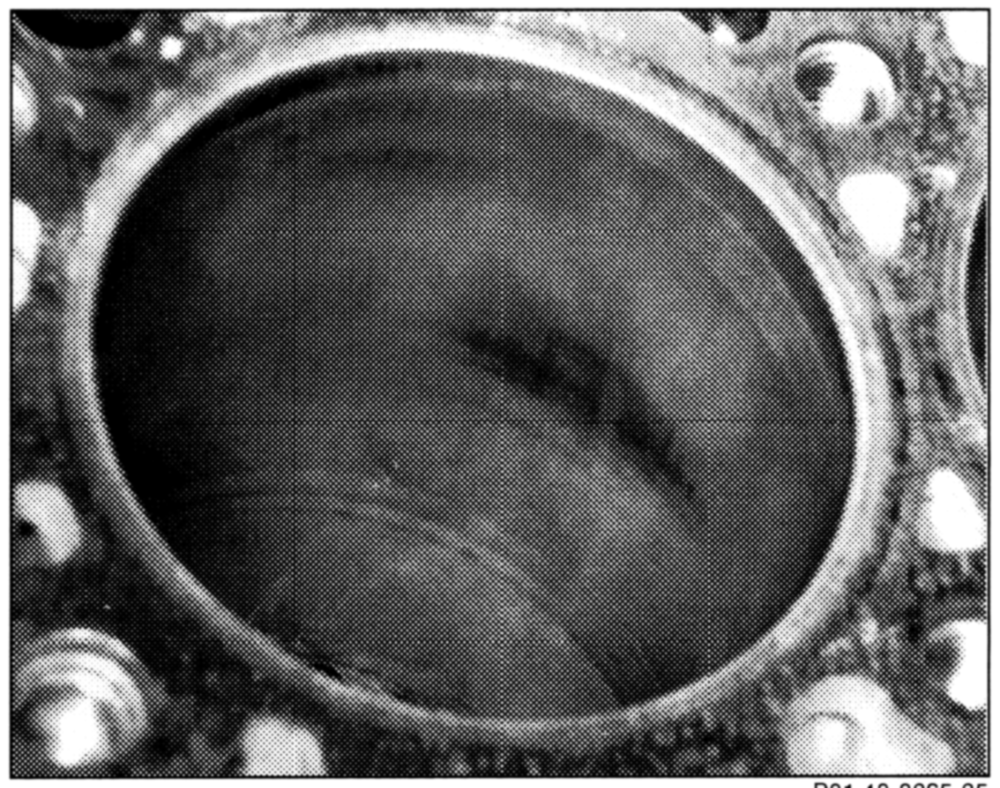
acceptable. Continue using crankcase.
P01.40-0265–35
7. Traces of individual, continuous
scratches
Caused by dirt, e.g. by soot particles being pulsated back out of the exhaust. Continue using crankcase.
8. Piston seizure
Cylinder wall usually roughened over the entire length to the extent that this can be felt. Material accumulation and traces of seizure on cylinder wall and piston skirt which can be felt. Cylinder wall unserviceable.
9. Brown discoloration of cylinder surfaces
Oil varnish exists over considerable areas of the cylinder wall and indicates that the engine has been driven in a very high temperature level. Continue using crankcase provided no impermissible cylinder distortion exists. Oil varnish above the piston ring zone is normal and is acceptable.