Formation of deposits on breaker contact points
WIS 15-503
Conventional tool
Voltmeter with measuring range O—3 volts
Formation of blue or dark-grey deposits on contact breaker points of transistorized ignition system may lead to misfiring by insulating characteristics during progressive stage. Pertinent complaints have resulted in unjustified exchange of switching unit.
Deposits on contact breaker points are the result of different influences, which we are briefly explaining below:
Blue deposits
Blue deposits (tungsten oxide) are formed by the arc occurring during the dwell stage and the resulting burning of contact material. This arc is caused above all by the discharge of the suppression capacitor installed in ignition distributor.
A large dwell angle (small breaker point gap) favors the intensity of the arc and thereby the formation of deposits.
Dark-grey deposits
Dark-grey deposits are caused by burnt grease, oil or dirt particles, formed between breaker points.
The elimination of complaints concerning formation of deposits requires the following jobs:
1, Check on ignition distributor whether
a) deposits have been formed on contact breaker point,
b) the cams are showing score marks (check with finger nail).
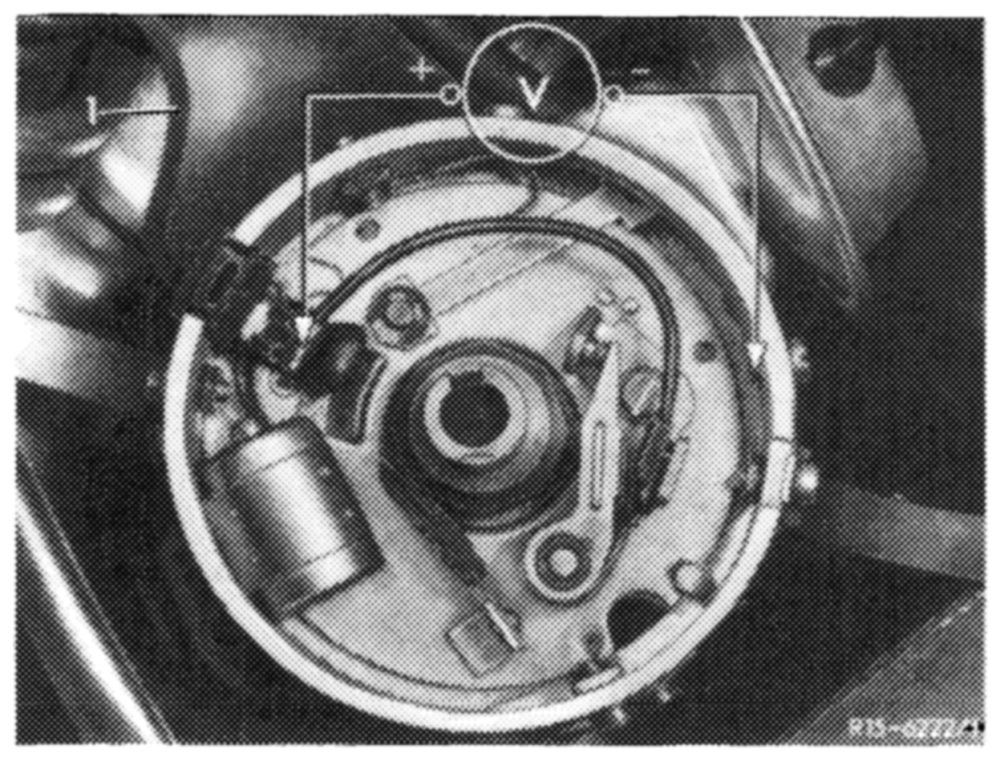
2. \f a visual checkup shows no clear fault, check operation of contact by measuring voltage drop. Use voltmeter with measuring range of O—3 volts.
W.th closed contacts, the voltage drop may amount to 0.5 volt. A higher voltage drop indicates already a beginning formation of deposits.
1 Control line with capacitor
Remedies
1. Deposits on contact breaker points:
a) Exchange contact breaker points (refer to repair instructions).
b) Remove control line with capacitor and replace by shielded control line without capacitor.
2. Score marks on distributor cam or chafed lubrication felt:
Exchange ignition distributor. On new ignition distributor, mount a shielded control line without capacitor prior to installation.
Repair notes
Contact breaker points
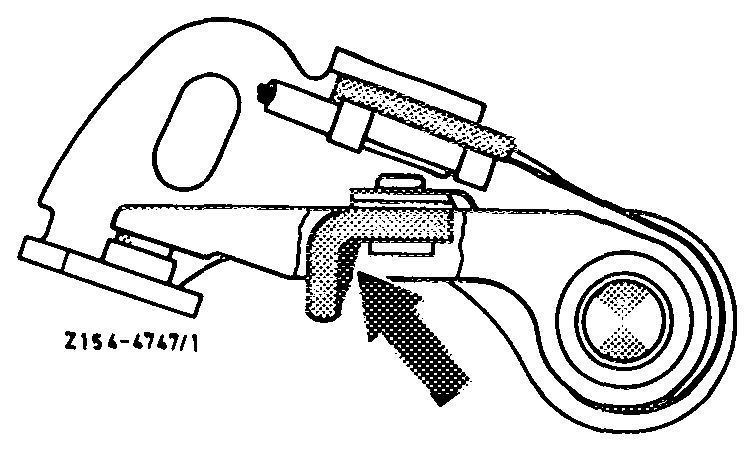
When renewing contact breaker points, be sure to coat slide piece (arrow) with a defined grease wedge (special grease Bosch Ft 1 v 4). Without grease the dwell angle will increase (smaller contact gap) as a result of the increased wear of slide member. This will favor the formation of deposits and may result in misfiring.
Arrow: Spot to be greased
Dwell angle
Adjust dwell angle to lower tolerance limit (15–500). This will make sure that the dwell angle will not change beyond specified value following running-in time of slide piece.
Adjusting values (tower tolerance) 47°
1§,3-503/3 F2