Operation of EGR (model year 1980)
WIS 14-500
Description of operation
To reduce the forming of nitric oxides (NOx) a portion of the exhaust gases is recirculated out of exhaust manifold by way of a valve into the intake manifold.
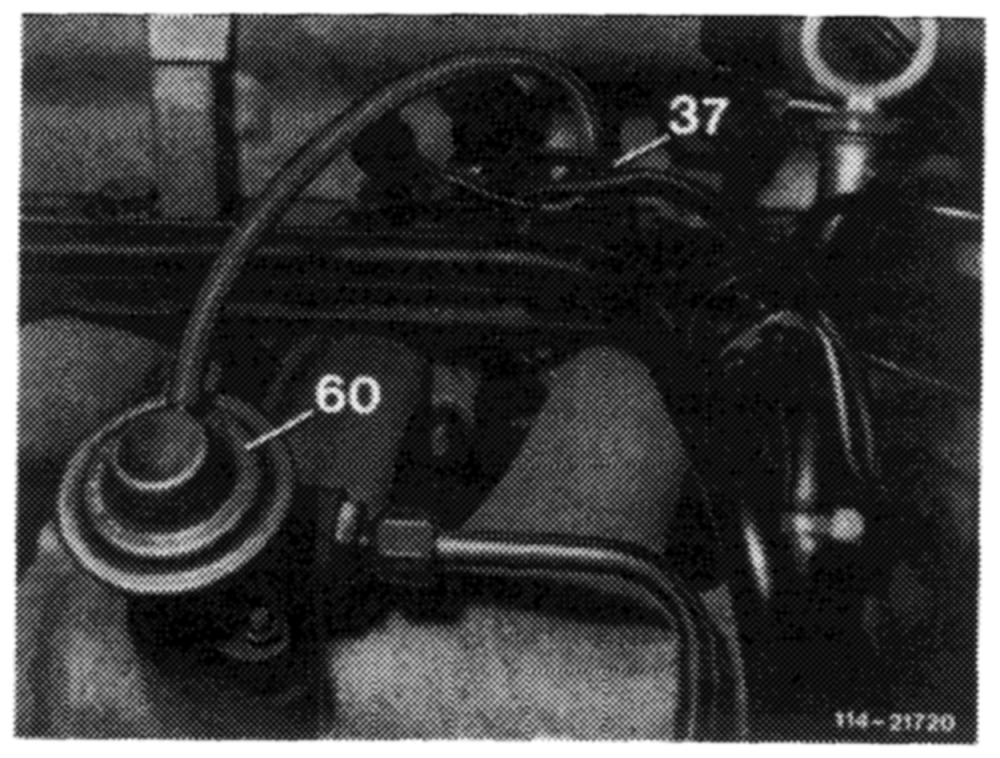
The recirculated exhaust gases are adapted to the load conditions of the engine in such a manner that no operating faults will occur.
Starting from a coolant temperature of approx. 50 °C in cylinder head a portion of the exhaust gases is recirculated into the intake manifold in medium and upper partial load range. Adding exhaust gases to the fuel/air mixture will decrease the combustion temperature and thereby reduce forming of nitric oxides. The amount of recirculated exhaust gases is dependent on the valve position (vacuum at throttle valve).
37 Thermovalve 50 °C 60 EGR valve
Depending on the throttle valve position, more or less vacuum will act on the EGR valve (60).
The EGR valve (60) which is mounted on the exhaust manifold opens and a given amount of exhaust gases is routed via recirculating line into intake manifold.
EGR proceeds:
Above 50 °C coolant temperature. In medium and upper partial load range.
No exhaust gas is recirculated at idle, during deceleration and in low partial load range. There will also not be enough vacuum at full load to keep EGR valve open.
Below 50 °C coolant temperature the bimetallic strip rests against O-ring and closes connection ‘’B”’.
Above 50 °C coolant temperature the bimetallic strip will snap downwards under influence of heat. Both connections are connected to each other.
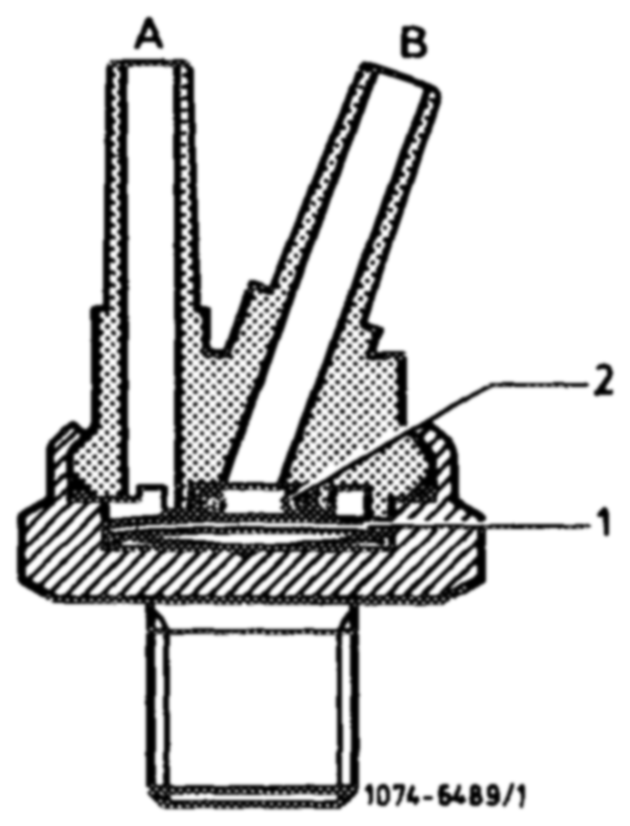
The vacuum line to EGR valve must be plugged to connection “A”, since this alone will guarantee absolute tightness between bimetallic strip and O-ring.
DpnBimetallic strip O-ring To EGR valve To throttle valve housing (vacuum side)
Function diagram EGR
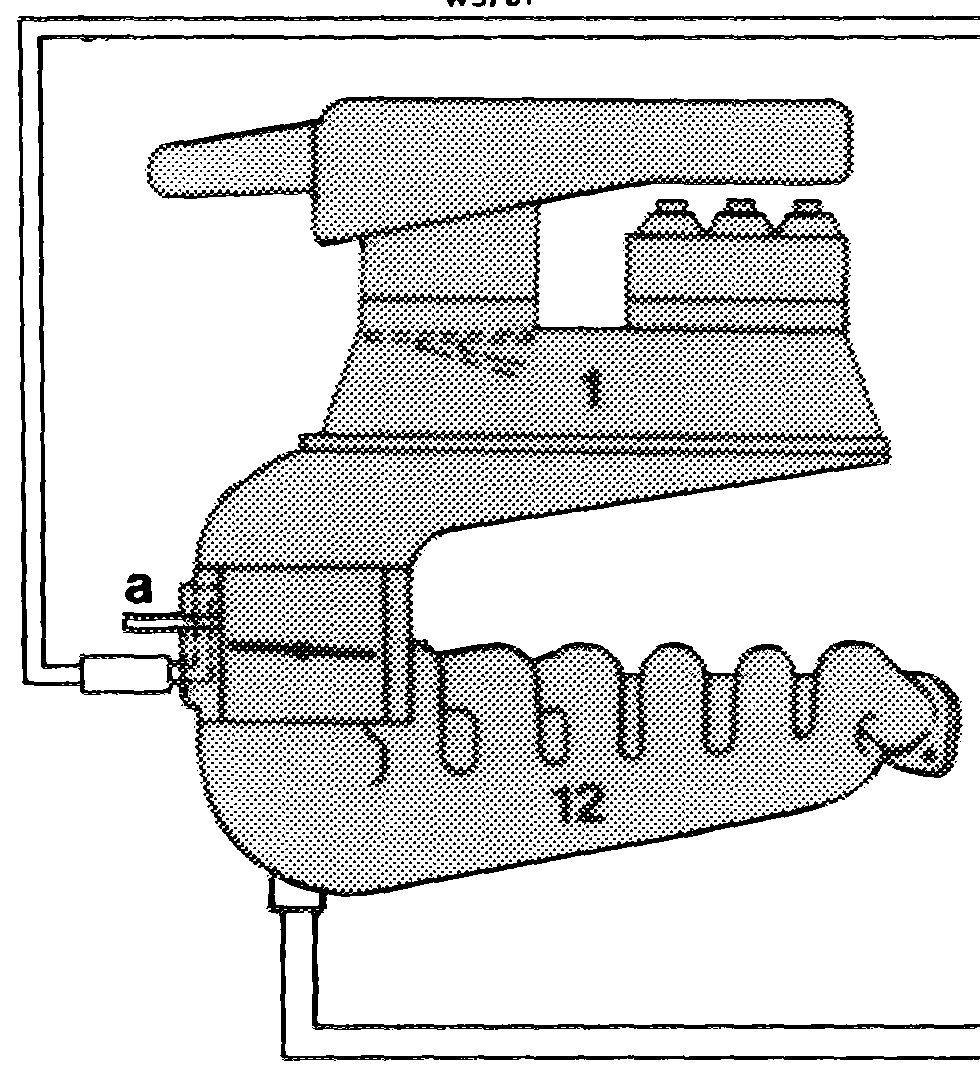
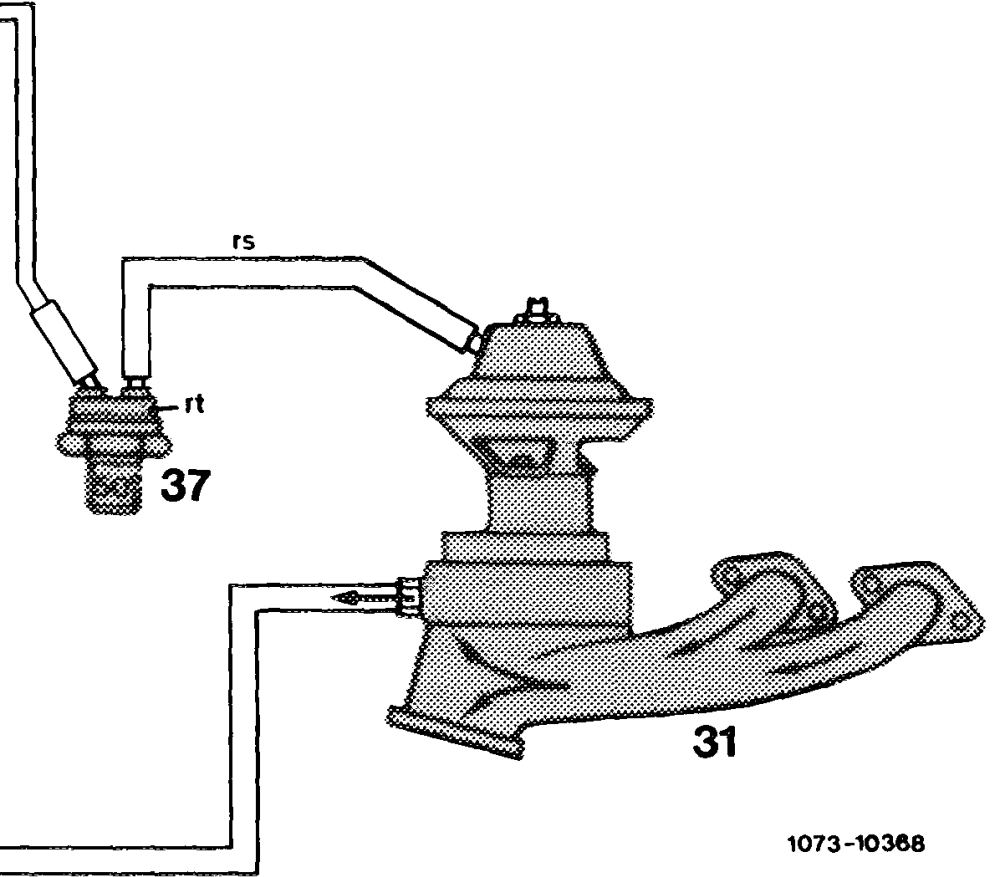
wsibr
1 Mixture controller 37 Thermovalve 50 °C Color code 12. Intake manifoid 60 EGR valve br brown 31. Exhaust manifold a To ignition distributor rs =pink rt =red ws = white