Function of two-mass flywheel
WIS 03-4600
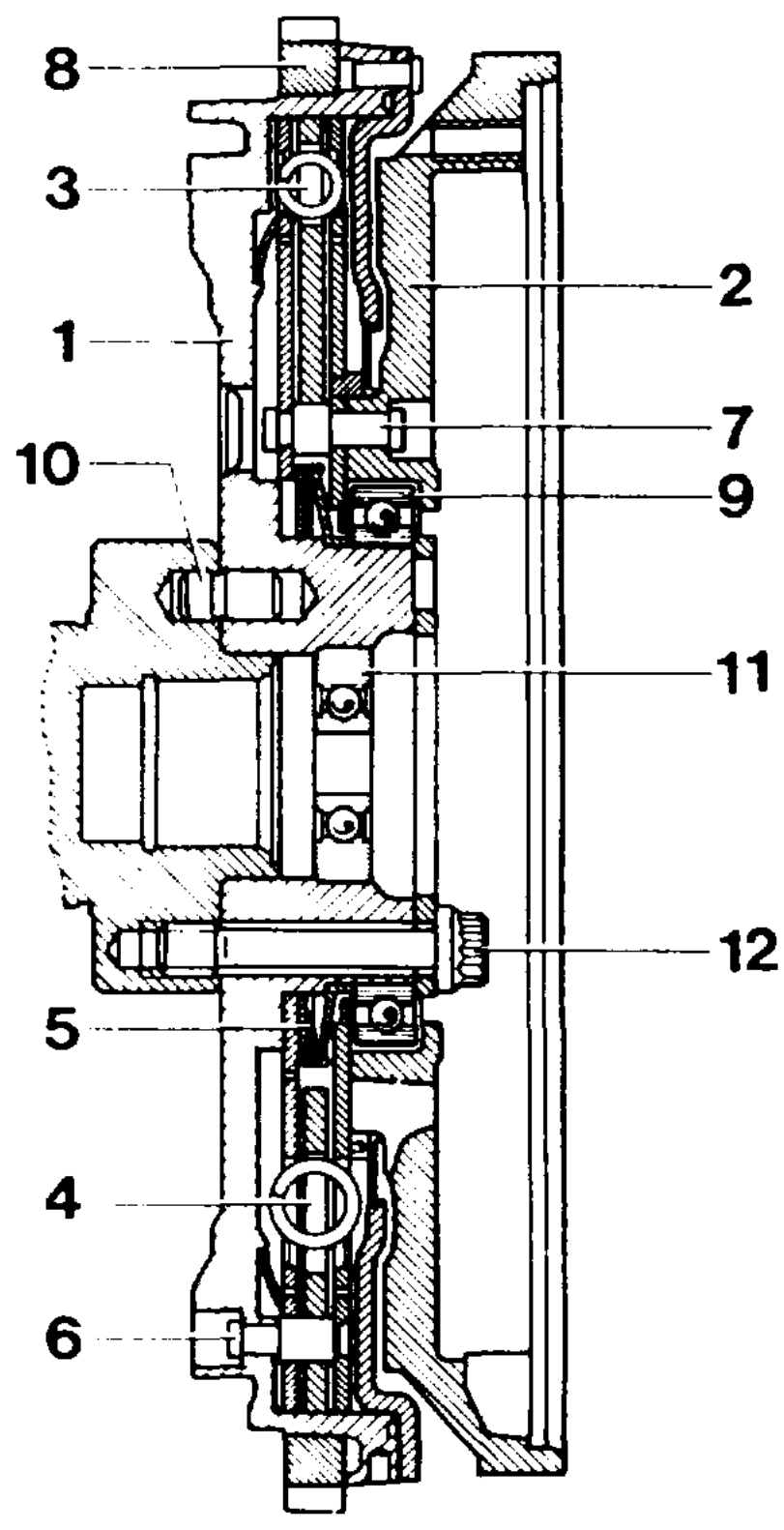
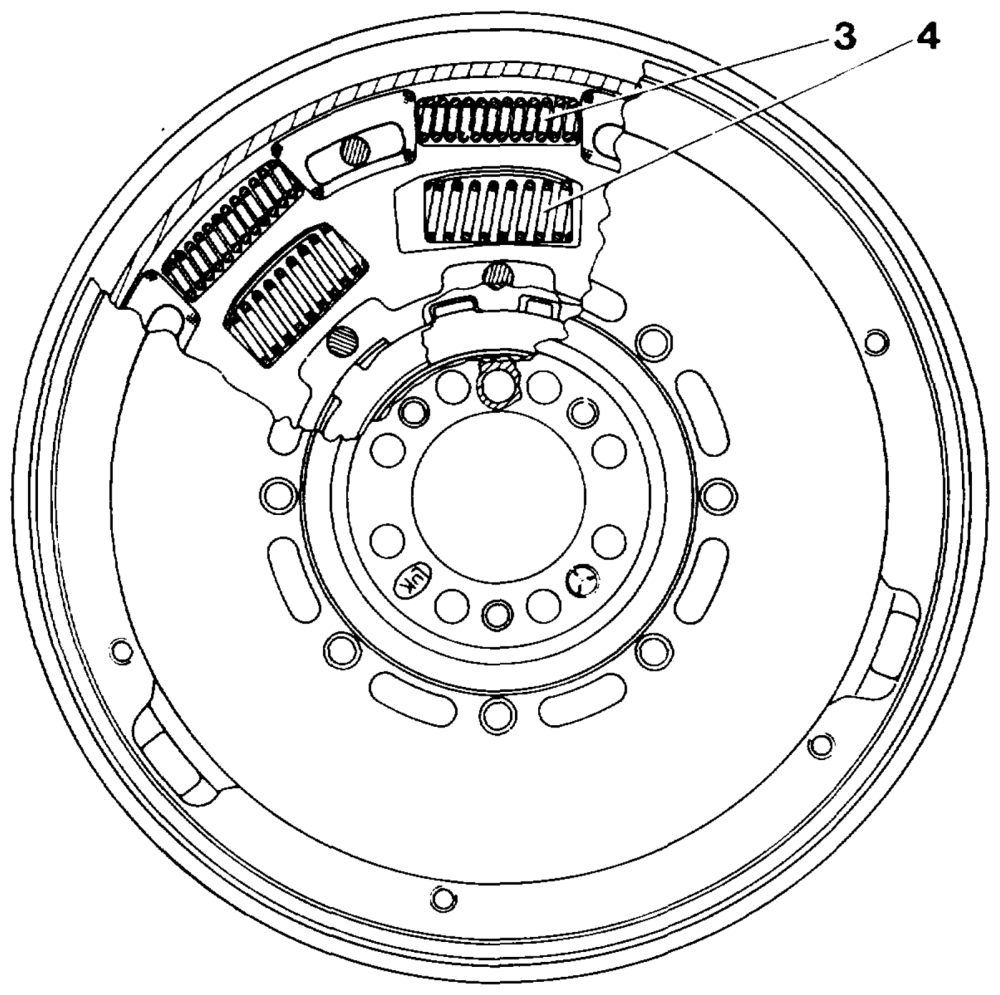
P03-5224–57
Spacer pin secondary flywheel mass/damper
1 Primary flywheel mass 7
2 Secondary flywheel mass system Ring gear
3 Outer spring damper 8 Grooved ball bearing
4 inner spring damper 9 Dowel pin
5 Friction device 10 Grooved ball bearing
6 Spacer pin primary flywheel mass/damper system 11 Stretch bott 12
Design
The two-mass flywheel consists of three principal parts:
Primary flywheel mass (1)
The primary flywheel mass is bolted to the crankshaft by 8 M10 x 157 stretch bolts.
wae RA 03.1123-4600/1
The grooved ball bearing for mounting the transmission input shaft, is placed in the primary flywheel mass. The starter ring gear is shrink-fitted on the outside.
Secondary flywheel mass (2)
The secondary flywheel mass is pivoted on the primary flywheel mass and rotates by means of a grooved ball bearing. The clutch is mounted on the secondary flywheel mass.
Damper system
The damper system is installed between the two flywheel masses. It consists of an inner and an outer spring damper and friction devices. The rotational range of the flywheel masses to each other is limited by the damper system to + 15° and + 40°, respectively. Each flywheel mass is connected to the damper system with riveted spacer pins.
Function
The two-mass flywheel absorbs the rotational vibrations of the crank assembly and reduces the transmission of these vibrations to the transmission-propeller shaft area. Ride comfort in the lower rpm range is improved. As a result of the different distribution of the moments of inertia of the primary and secondary flywheel mass, critical vibrations are not active below idle speed. The primary flywheel mass is bolted to the crankshaft and connected to the secondary flywheel mass by spacer pins. The torsion and friction system located between the two has a damping effect on residual vibrations.