Tires
WIS 40-104
Note Use only tires recommended by us. Pay attention to our tire recommendations particularly with regard to light alloy rims.
As replacements or for a conversion, use tires of similar construction, similar make and similar version for all rims. We do not approve combination of belted tires (radial) with conventional tires (diagonal), steel belted tires with textile belted tires, as well as winter tires (M + S) with summer tires.
In the event of replacements, tires approved for higher speeds may of course be used instead of the tires specified for the respective model! (example: belted tires 195/70 R 14 90 H instead of 195/70 R 1490S).
When replacing tires, include spare wheel as a road wheel, but only if depth of tire treads and tire version are similar. Avoid excessive ageing of tires!
New tires should be run in prior to demanding full efficiency. About 100 km driven at moderate speed are enough. Avoid sharp acceleration and braking.
Storage areas for keeping tires in stock should be dark, cool and dry. Avoid drafts as much as possible, since oxygen accelerates ageing of rubber compound.
Place tubes upright in shelf (min. 10 cm ground clearance) or in sets one upon the other on wooden gratings.
On removed tires, put tubes into tires lightly inflated and dusted with talcum, make sure that tires are not coming into contact with gasoline, oil or technical greases.
Apply safety rules as a protection against fire!
If vehicles are converted to a different tire size than the one ex factory, pay attention to national laws and regulations prior to conversion.
For tube type tires use only new tubes of the same make and specified designation.
For tubeless tires, insert valves of specified version into rims (refer to 40–120). When renewing a tire, also exchange rubber valve as a safety measure. Prior to inserting the new rubber valve, clean contact surfaces on rim. If required, de-rust surfaces and re-paint.
Screw only metal or rigid plastic valve caps with rubber sealing rings, part no. 007757 008600, on valves.
Tire designation
1 Tire designation
Example: 195/70 R 14 90 H!’) Identification for nominal width of tire in mm ——____ rs Designation for tires of series 70 (cross section ratio height: width 70 %)
Code letter for belted tires in radial type I
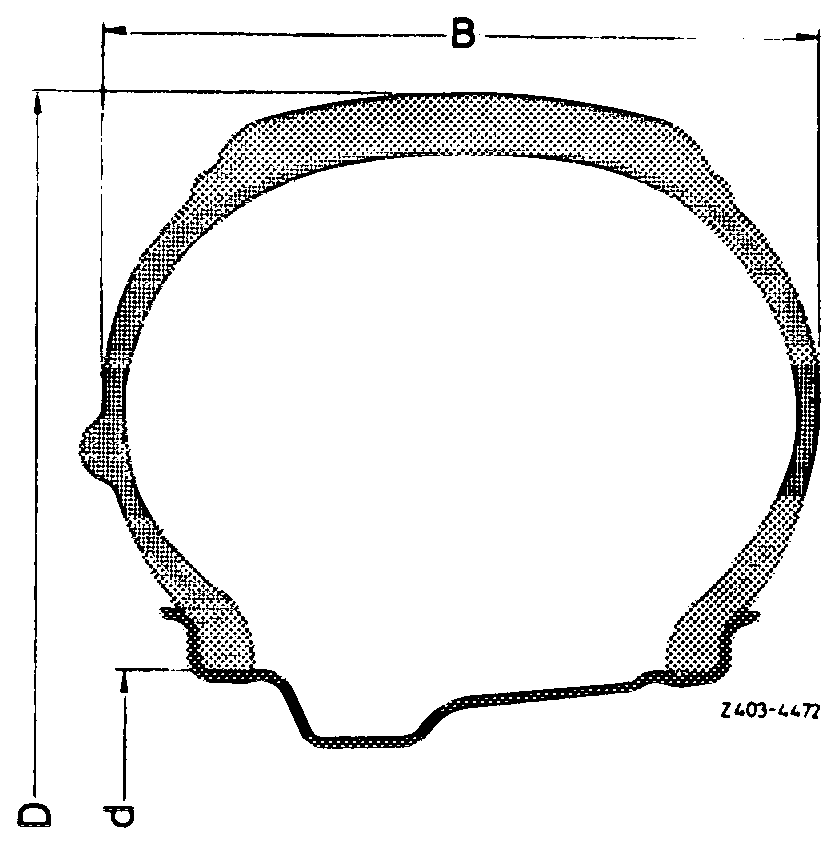
Rim dia. in inches Code number for load carrying capacity of tire _____ Code letter for max. speed up to 210 km/h _ 1) For designation of tires according to ECE-regulation no. 30 (starting 1978), with the exception of VR-version tires, the operational identification, that is, the code letter for the permissible max. speed and the code number for load carrying capacity is named following the tire designation. The former designation of tire was 195/70 HR 14 orasa temporary designation 195/70 HR 1490 H.
200 Nominal width of tire in mm a) Tire OD Rim dia. in inches
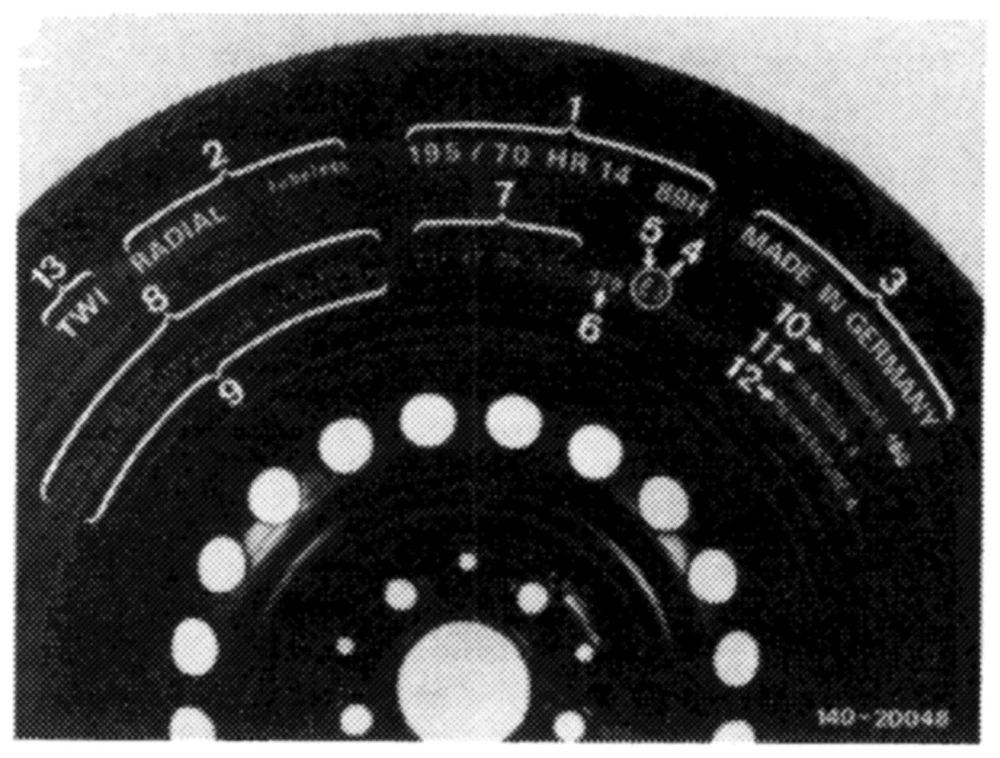
2 Additional tire designations
Radial = designation for belted tires tube-type = tube-type tires or assembly with tube tubeless = tubeless version tires M+S = mud and snow tires
3 Indication of manufacturing country
4 Country code number for licence number
Example: 3 = Italy, 1 = Germany, 2 = France. 0132239 = registration number for type or model test
5 Europe licence number
E = Europe
6 Production date code number
The 3-digit code or production code number is at end of letter and number sequence beginning with DOT and located in bead range of outer tire flanc.
Number 1 and 2 production week Number 3 last digit of production year
7 @s® licence number
DOT = Certificate of Department of Transportation
XT = Manufacturer’s code
J9 = Size code
XKNC = Type or version code
8 Gs® identification for tire understructure
Example: SIDEWALL 2 PLIES RAYON = Sidewall of carcass comprises 2 layers rayon cord.
TREAD AREA 2 PLIES RAYON + 2 PLIES STEEL + 1 PLY NYLON = Tread zone has 2 layers rayon cord of carcass and 2 layers steel cord + 1 layer Nylon of belt.
9 Gss identifications for max. wheel load and max. air pressure
Example: MAX. LOAD RATING 1340 LBS = max. permissible wheel load 1340 pounds MAX. PERM. INFL. PRESS 36 PSI = Max. permissible air pressure 36 pounds per square inch
10 @s& identification for tread wear
TREAD WEAR 160 = Wear code number in % as compared with an average US comparison tire.
11 @s® identification for anti-skid properties
TRACTION A = Identification for deceleration on wet asphalt and concrete.
12 GSA identification for temperature stress
TEMPERATURE A = Identification for temperature behavior during fast dynamometer run
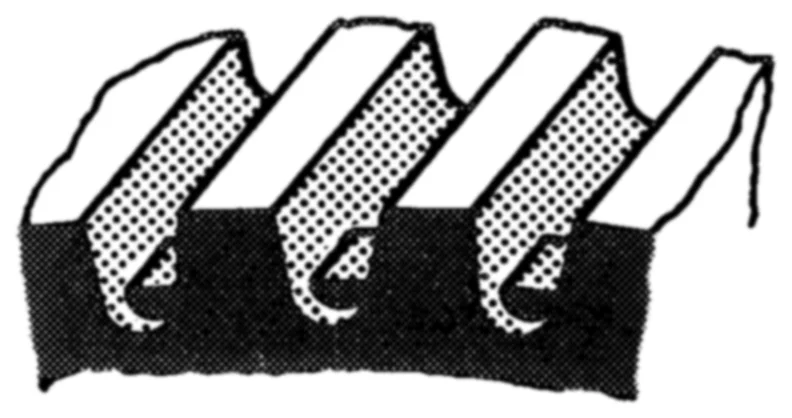
The wear limit of 1.6 mm for tire tread specified for USA and lately for other countries has already been indicated for a number of years by the ‘“TWI” tread wear indicator on tire.
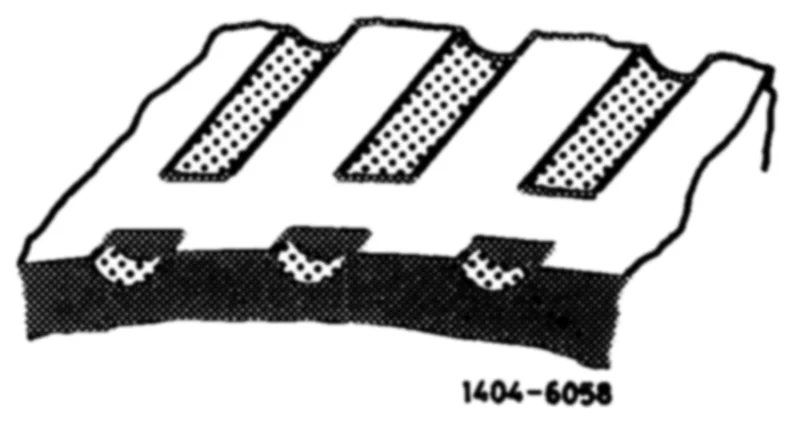
These humps are 1.6 mm high and embedded in base of tread at 6 points of circumference and will show up as cross stripes on tread when the wear limit is attained.
Permissible max. speed for passenger car belted tires (radial)
Code letter Q upto 160 km/h Code letter R upto 170 km/h Code letter S upto 180 km/h Code letter T upto 190 km/h Code letter H upto 210 km/h Code letter V above 210 km/h
Sticker for M + S tires
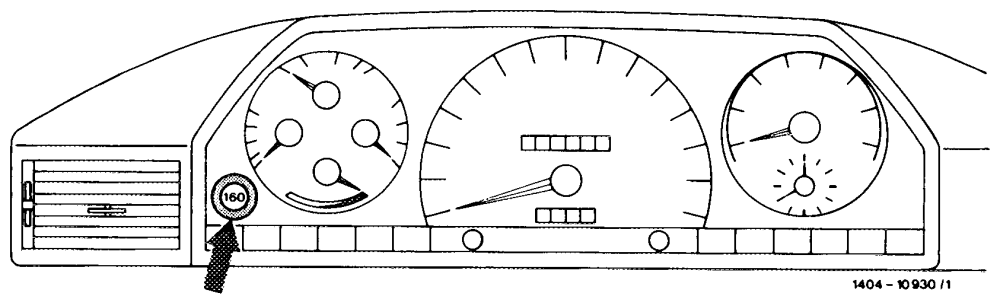
Regulations in the Federal Republic of Germany are specifying that the legally permitted maximum speed for M +S tires “should be clearly displayed within view of driver’, if the max. speed permitted for M +S tires is below the max. speed of the vehicle (refer to vehicle documents).
This sticker may be attached to the spot specified for this purpose only. On models 123 and 126 do not place this sticker on glass of instrument cluster, since this glass may be damaged when the residual glue is removed (plexiglass).
Sticker for M + S tire version Q = upto 160km/h
Sticker for M + S tire version T = upto 190km/h
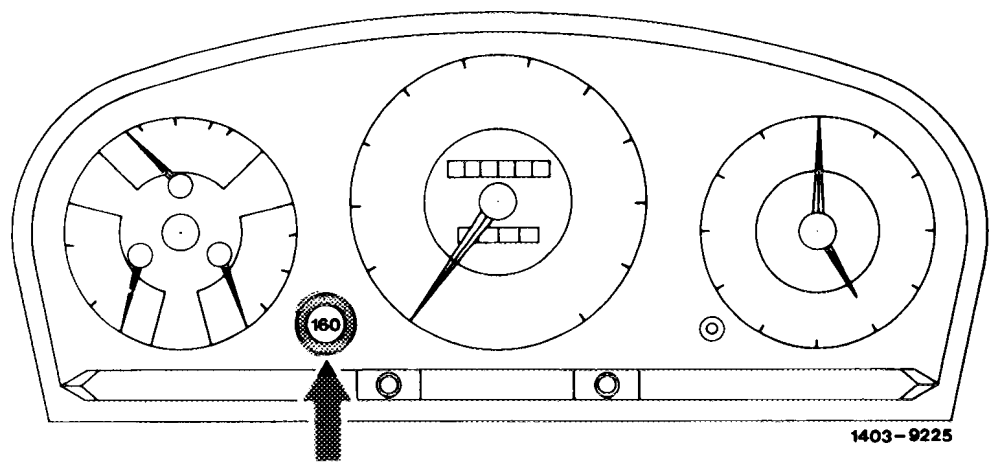
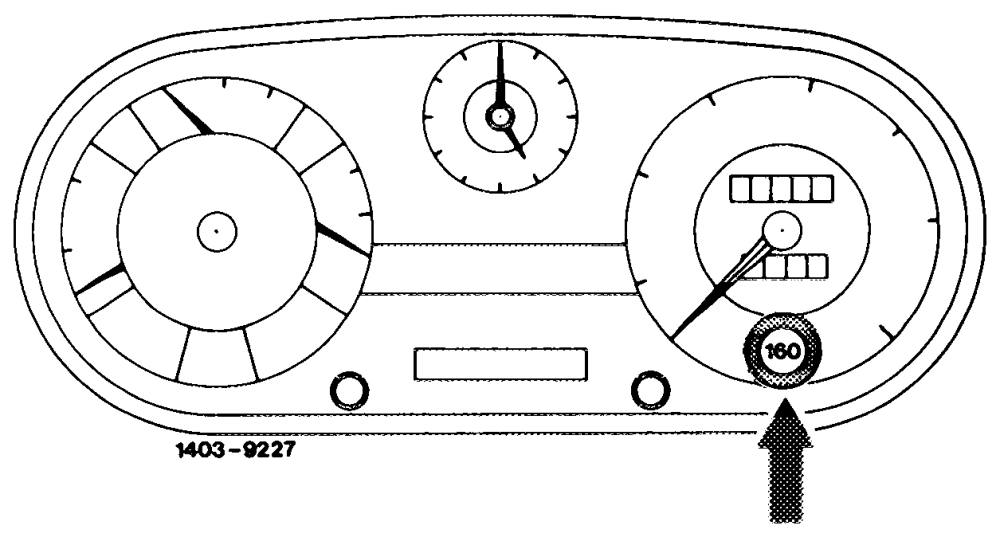
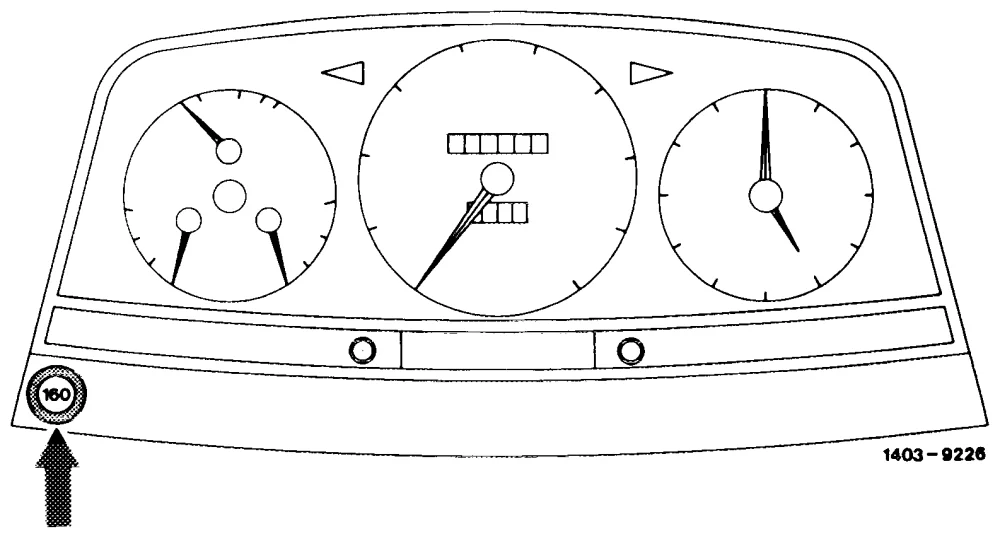
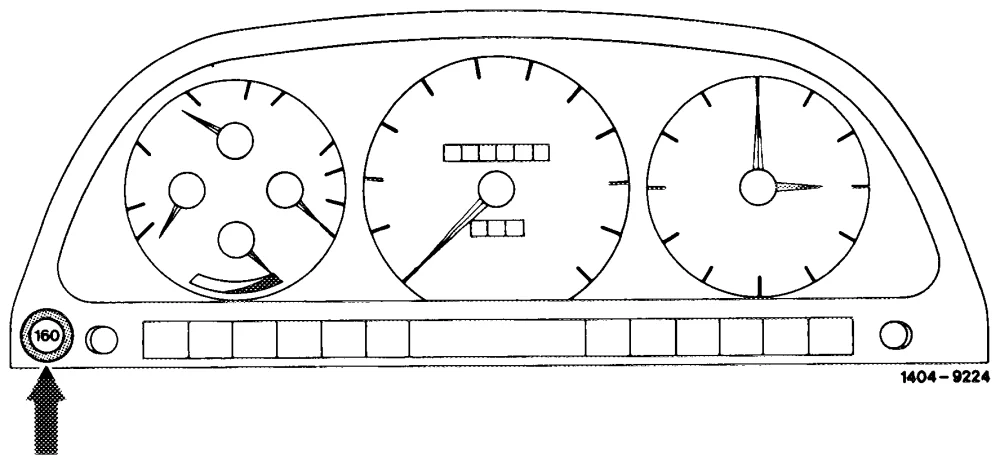
Model 201
Tire wear
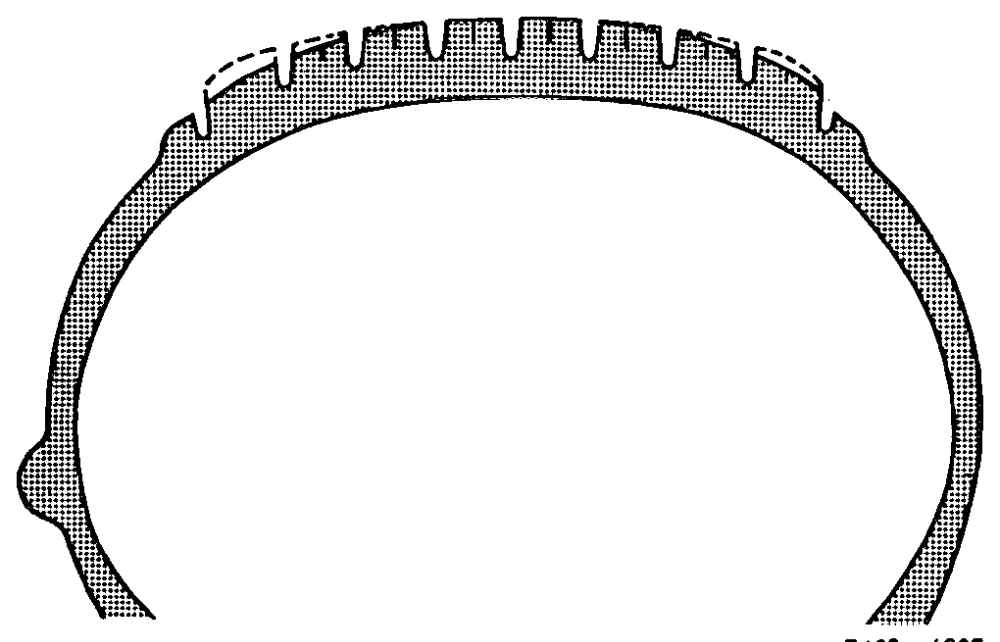
When evaluating tire wear patterns proceed as follows:
Front axle
On front wheels, a slightly higher wear of tire shoulders as compared with center of thread is normal, while the wear on tire shoulder facing the road center (e. g. with righthand traffic on outside of lefthand wheel, on inside of righthand wheel) may be more distinctive. 2402 ~ 4607
Causes of increased tire wear
1. Not enough inflation pressure, influencing both outer and inner shoulder to the same extent.
2. Predominantly city or highway driving, as well as sports style driving. The habit of driving around sharp bends while decelerating may lead to increased shoulder wear. Wear occurs mostly on outer shoulders, with righthand traffic particularly more clearly at lefthand front wheel.
3. Deviations of toe-in. Even minor deviations beyond normal tolerance range may lead to increased wear on tire shoulders, particularly on white tires (starting with series 70) each time on both wheels. At insufficient toe-in, increased wear will show up on inner shoulders or at increased toe-in on outer shoulders. In the event of toe-in deviations, which are clearly exceeding the tolerance limits, the wear may extend from tire shoulder almost to center of tread, in which case the tread may be slightly roughened.
If deviations of pivot point position from nominal value are too high, increased shoulder wear may occur on both wheels as well as on one wheel only, since changes of toe-in during deflection will be too high. A pivot point which, for example, is substantially too low will lead to an increased change of track in minus direction during downstroke, while a pivot point which is substantially too high will lead too early to a change of track in minus direction during upstroke.
If the track difference angle deviates too much, an unfavorable wheel position may result in influences which lead to increased shoulder wear.
4. In depencence of tire version and tire tread, the wear on shoulders, predominantly outside, may have a sawtoothed shape. This wear pattern is particularly distinctive on tires with a shoulder zone open in outward direction, e. g. sports style summer tires and M + S tires.
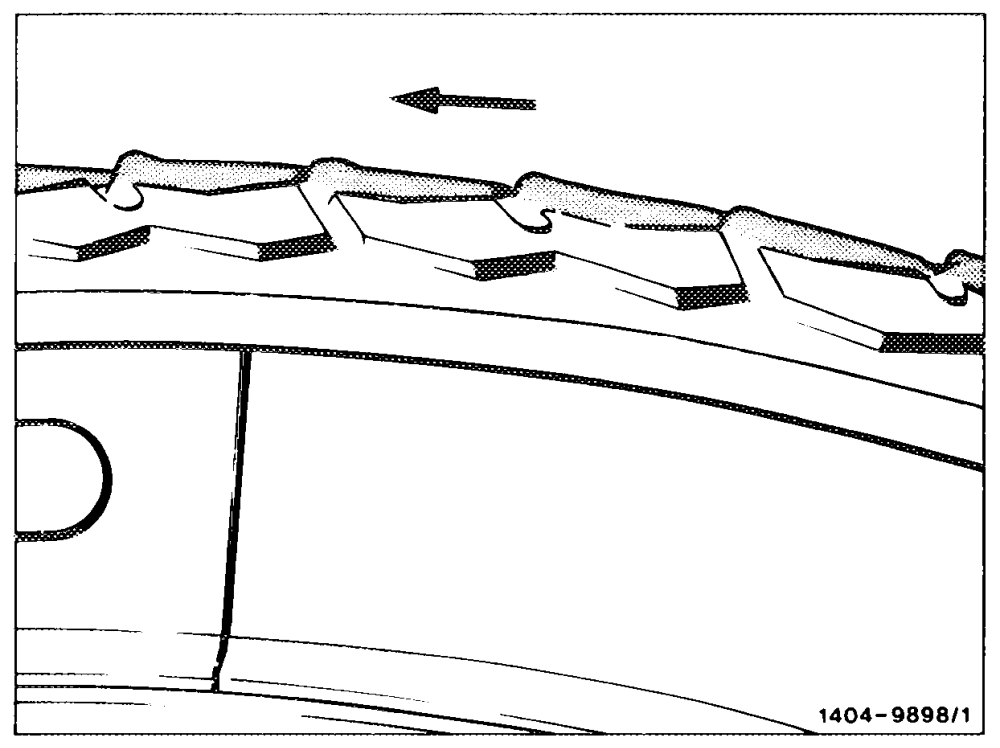
Saw tooth-shaped wear occurs predominantly on front axle, but to a lesser degree also on rear axle.
Saw tooth-shaped wear on front wheel tires
Rear axle
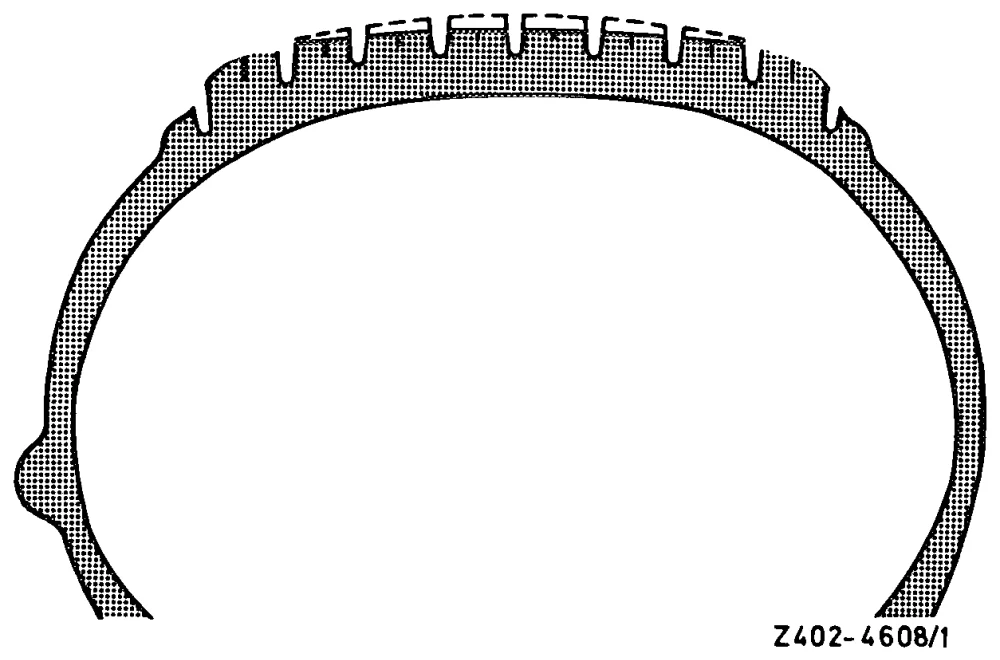
On rear wheels, wear is normally distributed across entire tire tread surface, but may be slightly higher in tread center than at the shoulders.
Causes of increased wear
1. Depending on load of vehicle rear end (on vehicles without level compensation increased minus camber at high load) wear on inner side of tread is higher than on outer side.
2. If toe-in is wrong, the same applies as explained in section ’’front axle”.
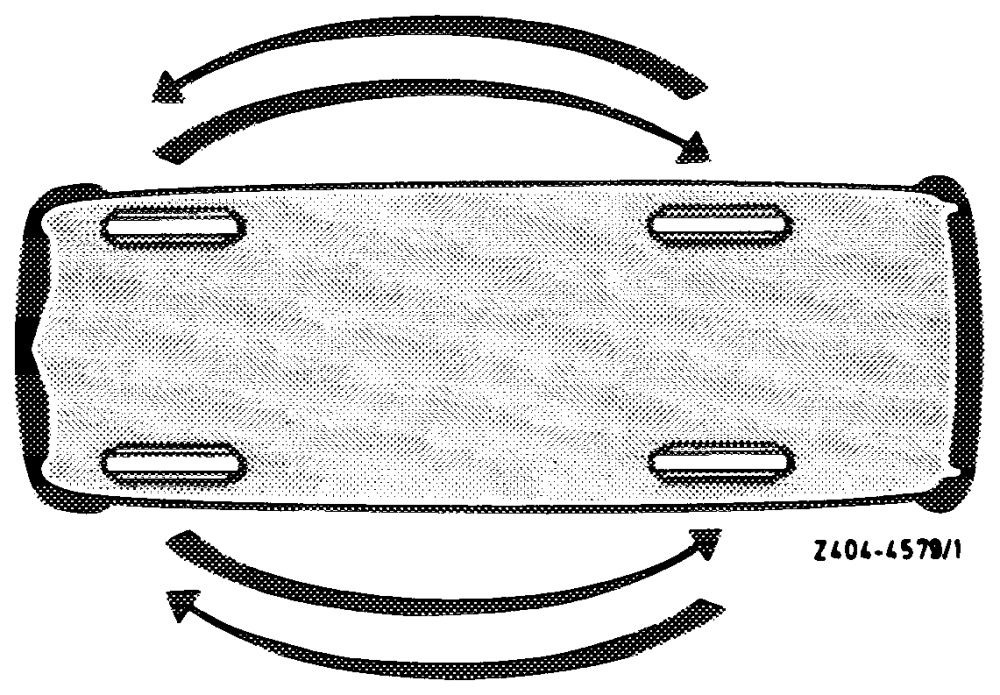
Rotation (switching) of wheels
Summer tires and winter tires (M + S):
For max. mileage while simultaneous!y maintaining good driving characteristics.
Rotate (switch) wheels depending on tire wear (that is, between 5000 and 10,000 km as shown by experience) while keeping driving direction of wheels the same.
However, the wheels should be rotated (switched) prior to attaining a distinctive, characteristic wear pattern, since otherwise driving characteristics will turn to the worse. Optimal driving characteristics, in turn, can be obtained only if the wheels are left in their position or are rotated (switched) at very short intervals (mileage).
Rebalancing of wheels may be required depending on driving style, wear pattern and condition of tires.
Upon rotation (switching) of wheels, make sure of correct tire inflation pressure.