Rims
WIS 40-102
Note Each vehicle should be provided with rims of the same version on principle.
Mount only rims approved by us. When in doubt, the MB part no. adjacent to general designation will be decisive.
Designation and part no. are located on wheel disk (on steel plate and light alloy rims outside, on forged light alloy rims inside). As an additional identification a Mercedes star is impressed on steel plate rims starting July 1973, on light alloy rims from start of production.
The additional identification A for symmetrical rim section, B for asymmetric rim section is no longer used on present passenger car rims, since only wheels with asymmetric rims are mounted. Mercedes-Benz wheels have an asymmetric rim and are provided outside and inside with a normal hump.
Rims with a hump at outside only are carrying the designation ‘’H’’. At high air loss of tire, the hump prevents sliding of tire bead into well-base rim, that is, a sudden venting of tire. For tubeless tires at least one hump on rim outer side is specified.
If, in connection with a change of tire size, vehicles are converted to another rim size, approved by the company, attention must be paid to national laws and regulations prior to conversion.
Rim designations
Example: 6 J x 14 H2
Rim width in inches _ T Code letter for height and contour of rim flange _ Designation for one-piece drop base rim Rimdia.ininches i Rim section outside and inside with hump shoulder _
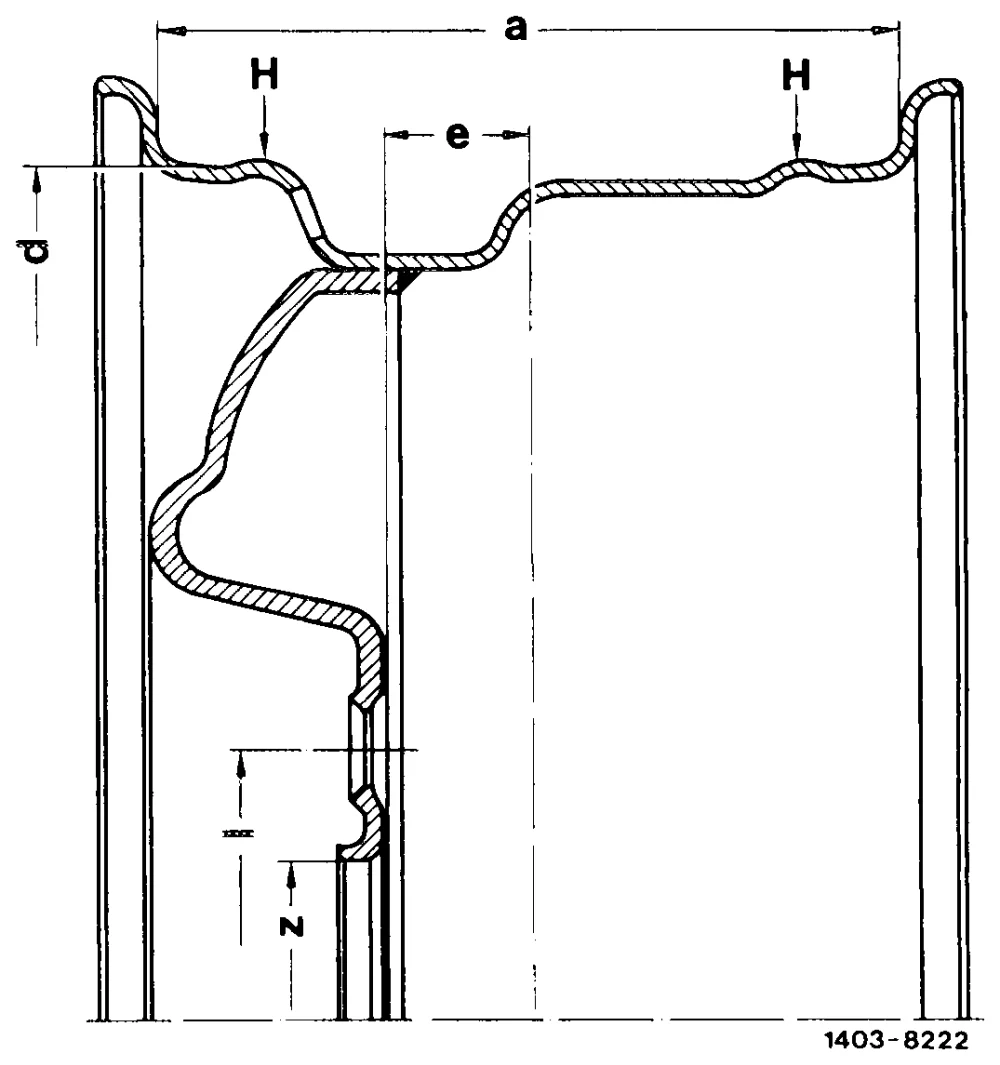
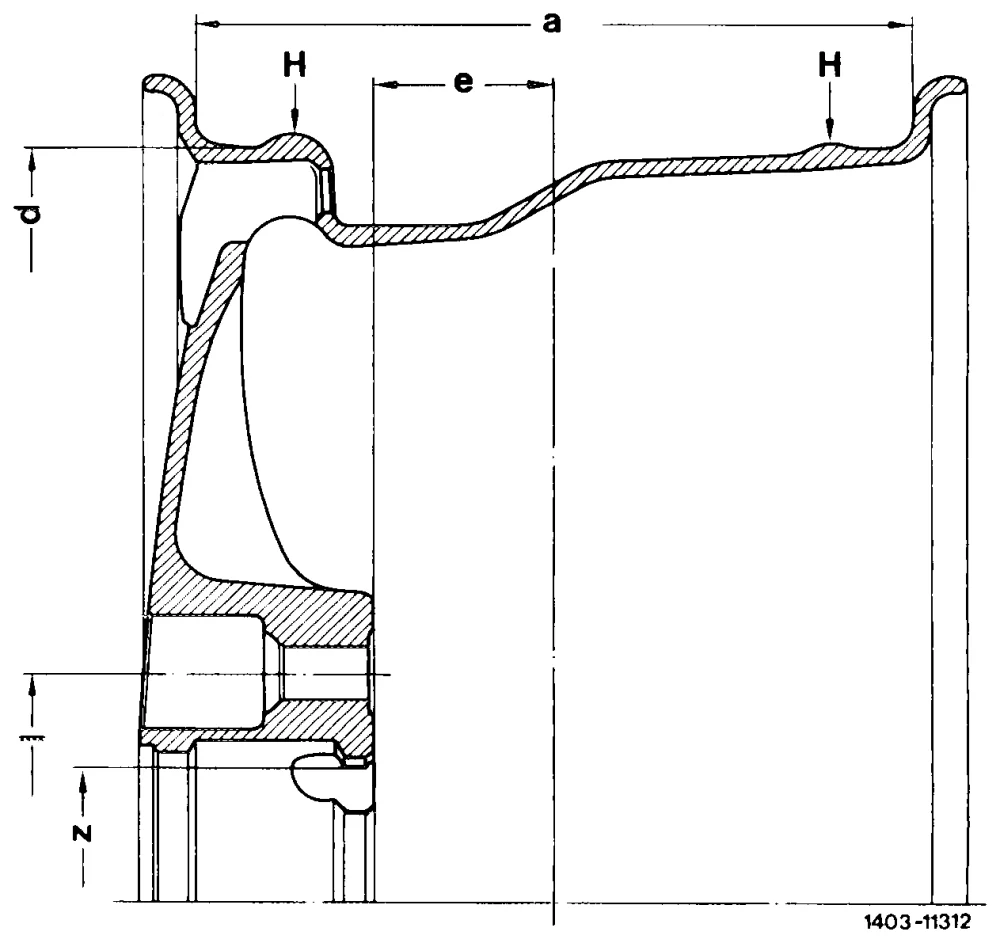
a Rim width in inches
d_ Rim dia. in inches (measuring points dia.)
e Rim offset — ET (distance from rim center to contact surface of wheel disk, measured in mm)
! Hole circle dia. = 112mm
z Centering bore dia. = 66.5+0.1mm
H Hump (rim with safety shoulder)
Steel plate and light alloy rim
Forged light alloy rim
Rim designation
1 Rim designatione.g. 6Jx 14H2
2 Part no. e.g. 108 400 14 02
3 Identification as original Mercedes-Benz part.
4 Production code number or production date
a) Identification of production plate including month/ year up to February 1978, e.g. = January 1978
b) Identification of production date including week/ year starting March 1978, e.g. 13 78 = 13th week 1978
5 Trademark of manufacturer
6 Part number of manufacturer
7 Rim offset — ET Designation of rim offset:
a) On steel plate rims for the first time with ET 50 (rim 5 J x 14 H2 only) starting with production code number 41 81.
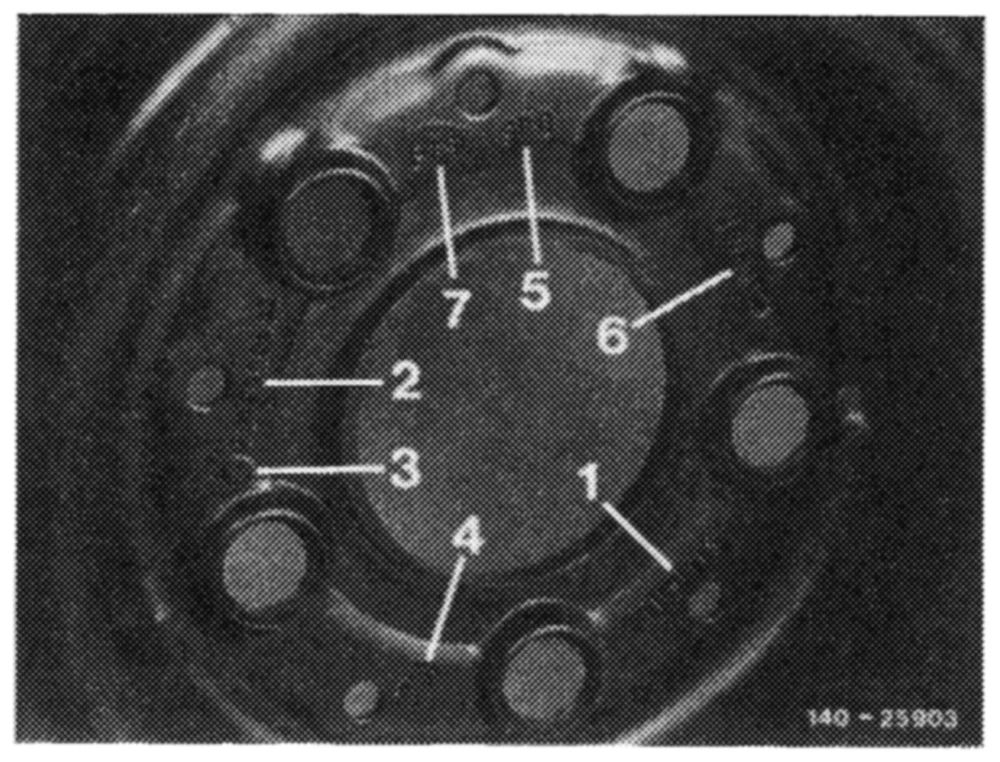
b) On forged light alloy rims starting with production code number 32 81.
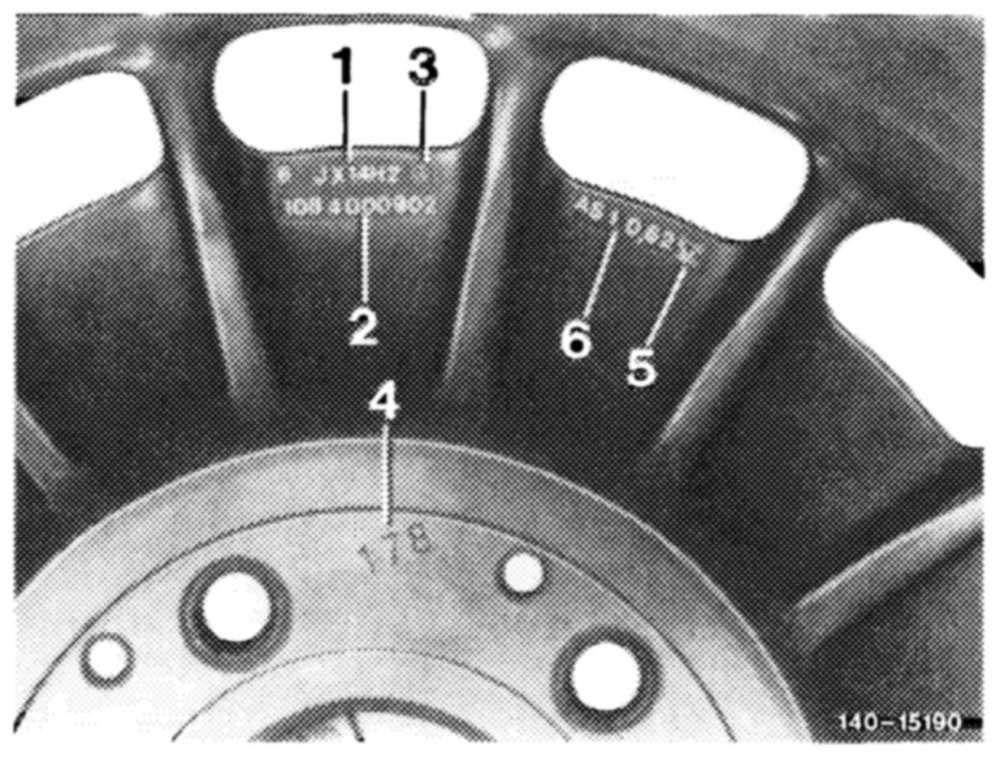
Identification on steel plate and light alloy rims outside
Identification on forged light-alloy rims inside
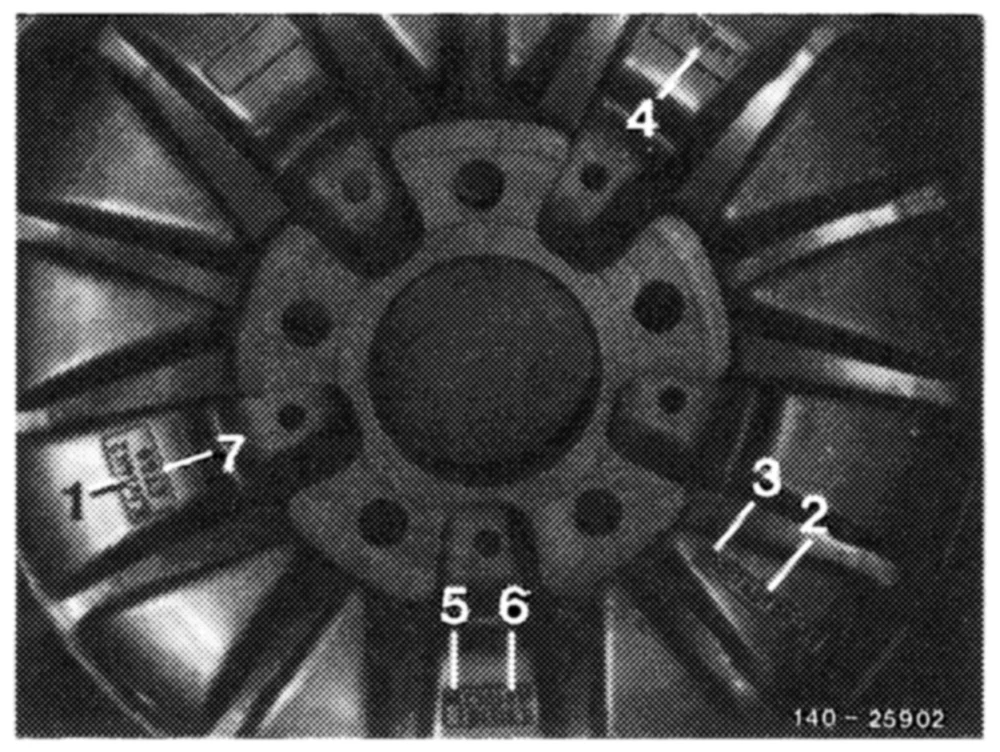
Version for models 107, 114, 115, 116, 123 and 126
Version for model 201
Steel plate rims
On steel plate rims the seat of the tire bead on radius toward rim flange and on rim flange itself, as well as the outer surfaces, particularly on inside of wheel, should not show any rust marks. Prior to fitting a new rubber valve, clean contact surfaces on rim. If required, derust surfaces and apply fresh paint.
Particularly during the six winter months, check rims inside for contamination and clean, if required.
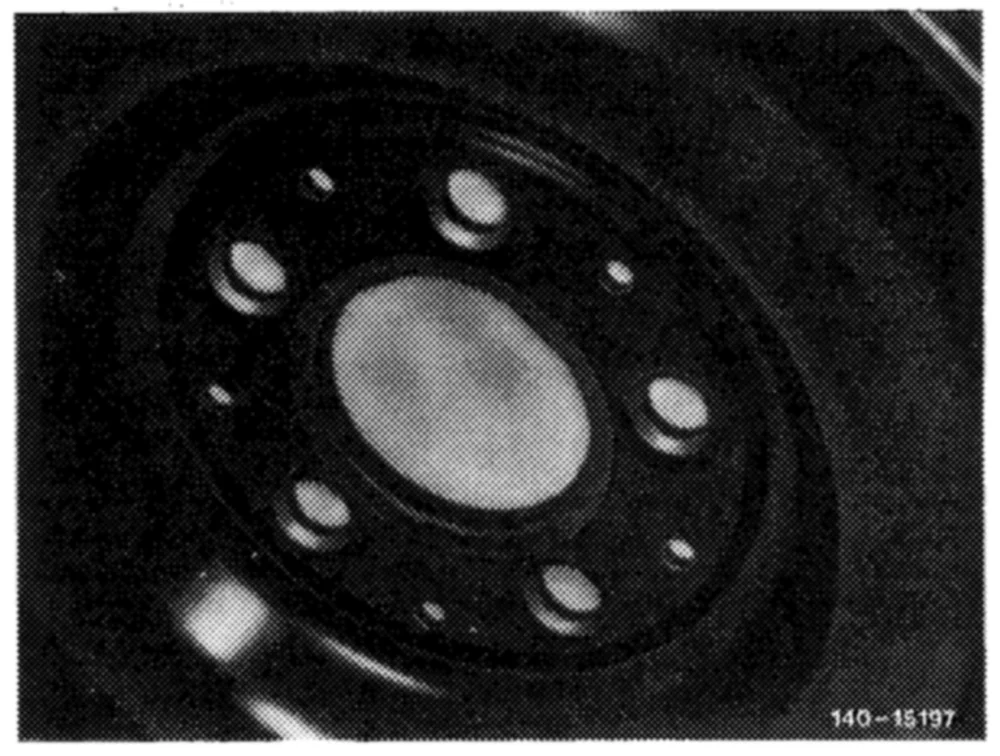
For steel plate rims the design of the fastening eyes is decisive for accurate fastening of wheels. Wheels with raised fastening eyes provide a very high degree of safety against excessive tightening of spherical collar bolts as compared with recessed fastening eyes used on former types of wheels.
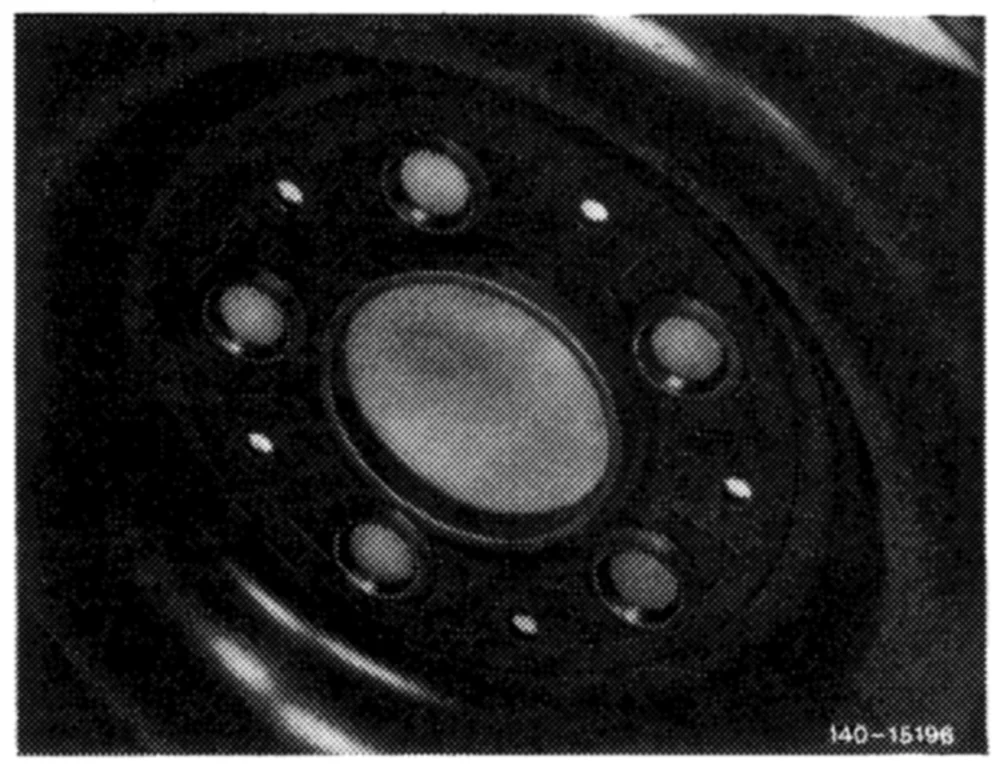
1st version Wheel with recessed fastening eyes
2nd version
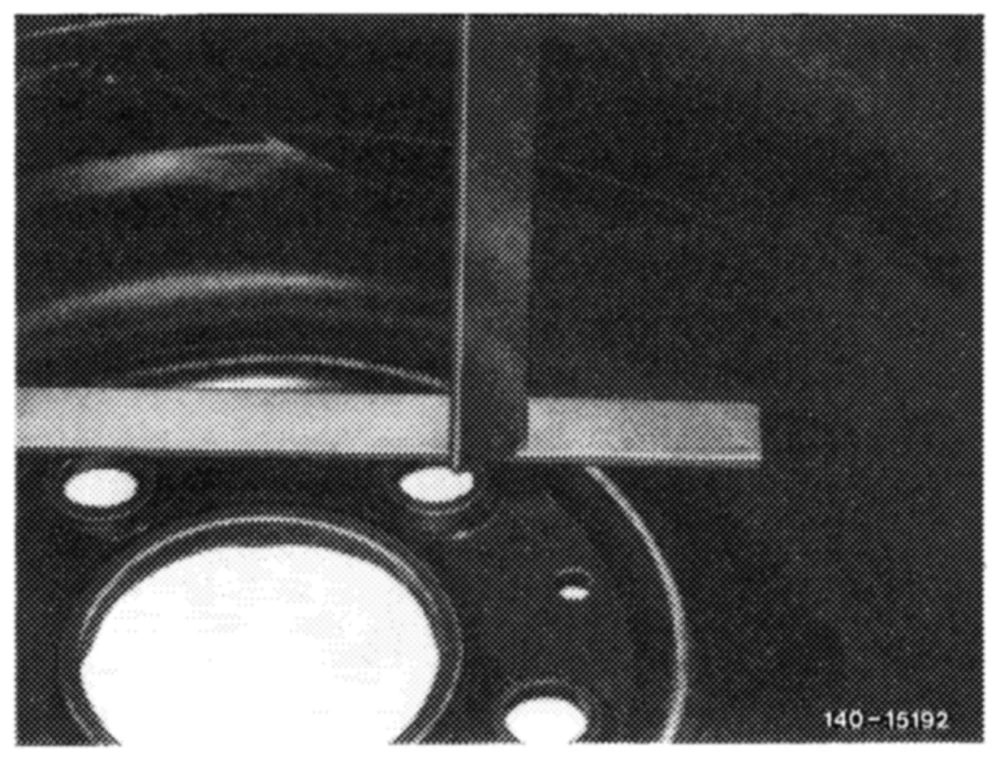
tact surface caused by often, excessive tightening of spherical collar bolts should no longer be mounted.
On a removed wheel, the distance between the contact surface and the range of the fastening eyes should amount to at least 0.7 mm. For measuring, use a straightedge and a sliding caliper with depth gage.
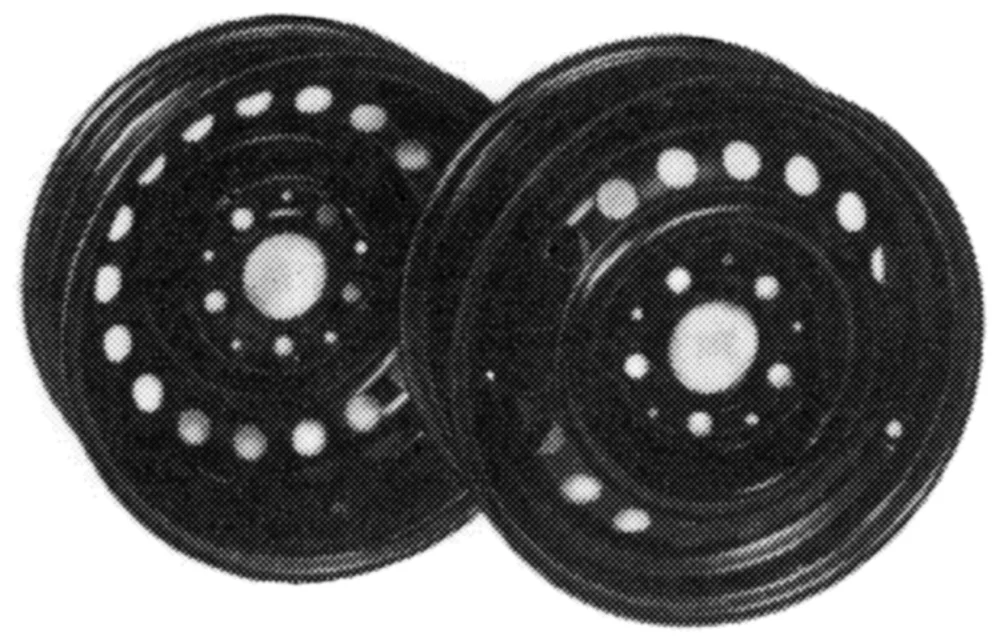
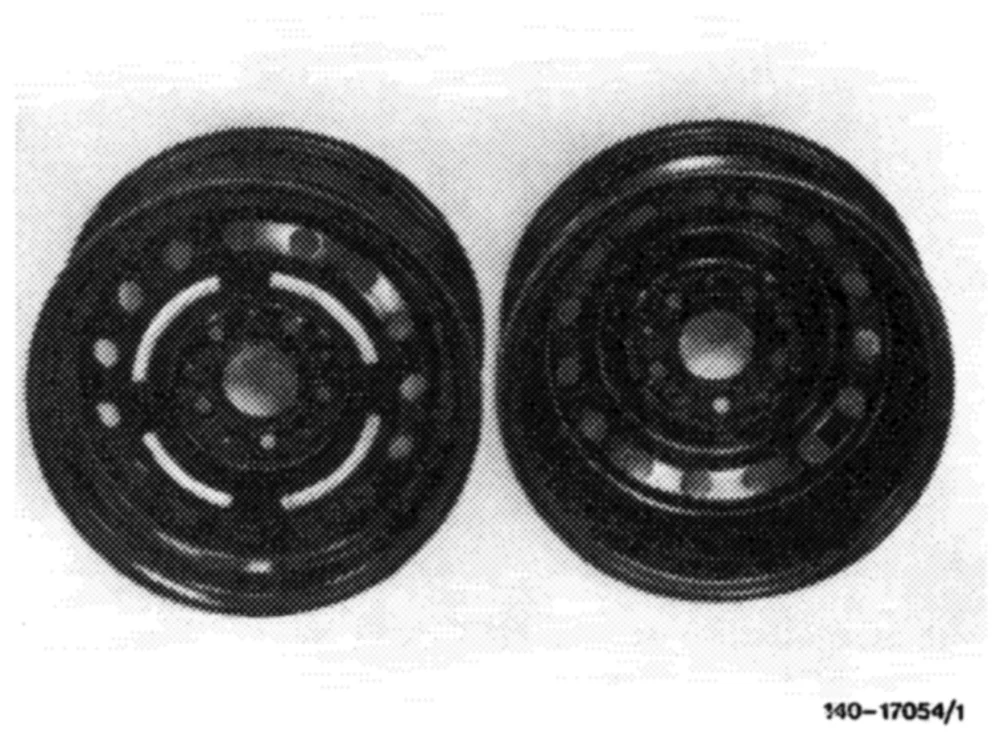
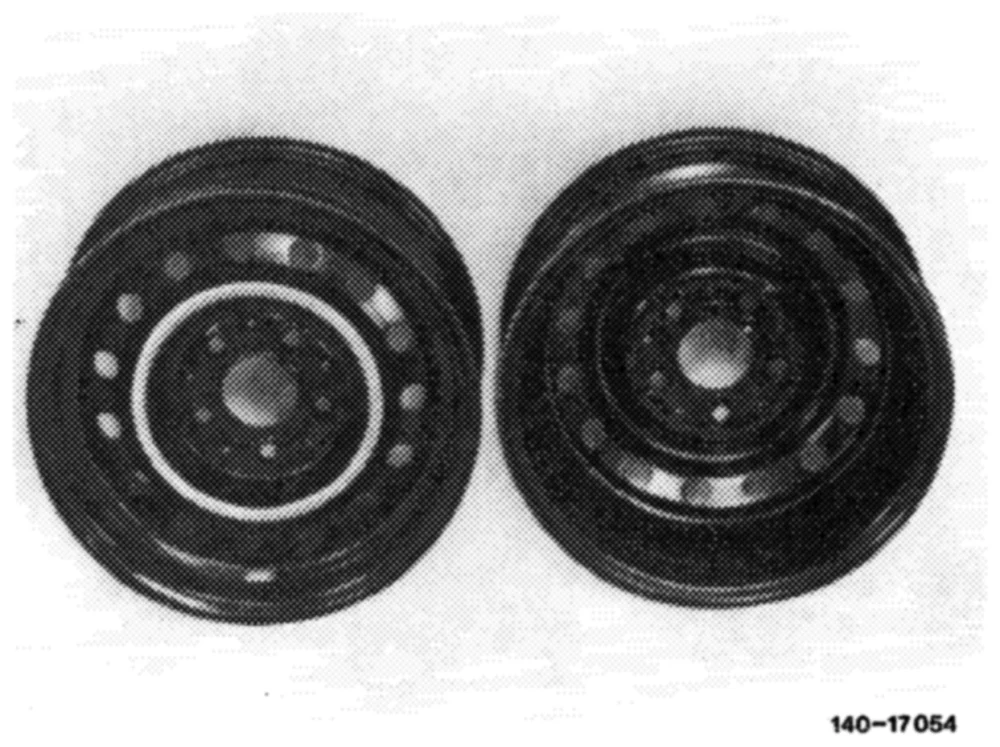
Steel plate rim 5Jx14H2 without inner venting ring wheel disk with 18 vent holes of 20 mm dia.
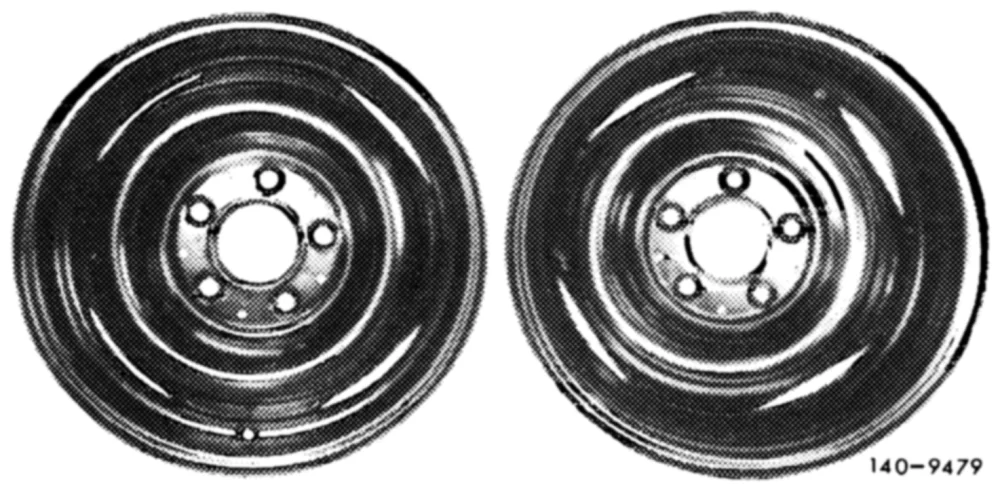
Steel plate rim 51/2Jx14H2 (version up to September 1977)
Steel plate rim 51/2Jx 14H2 (version starting October 1977)
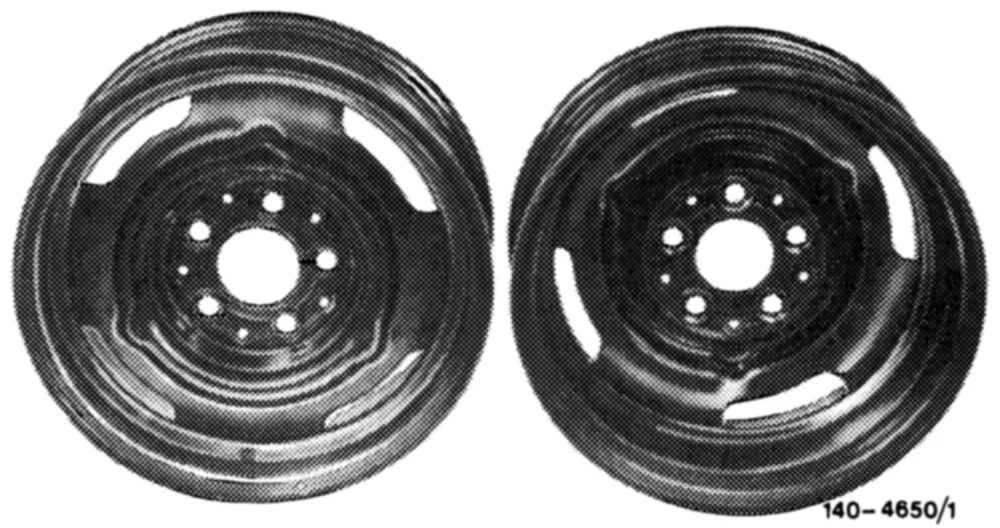
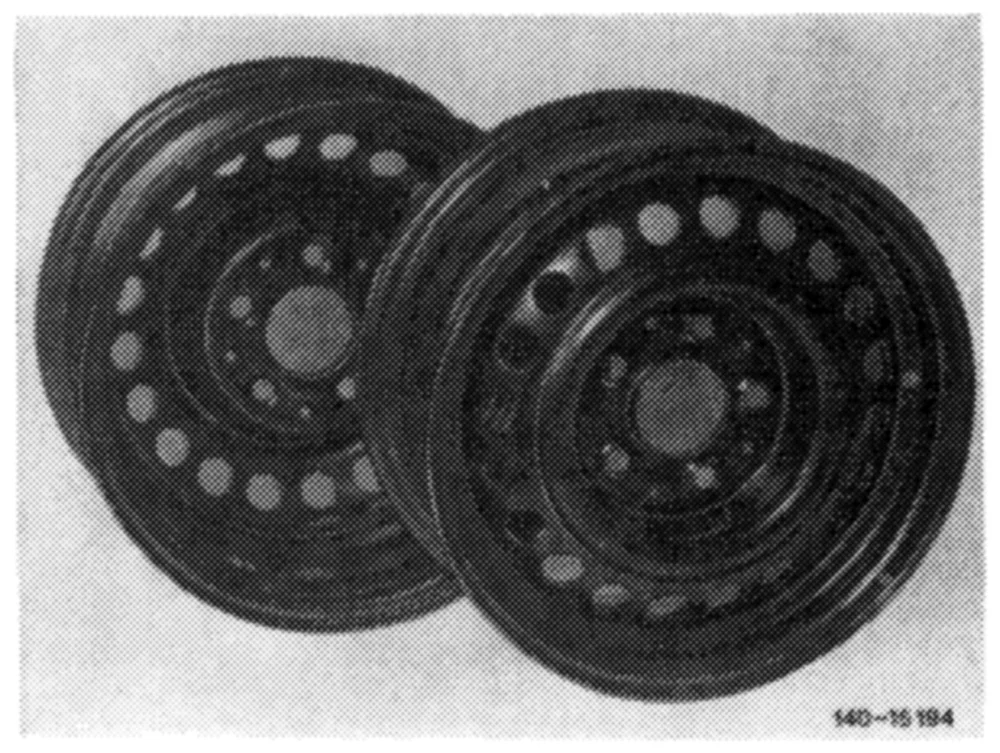
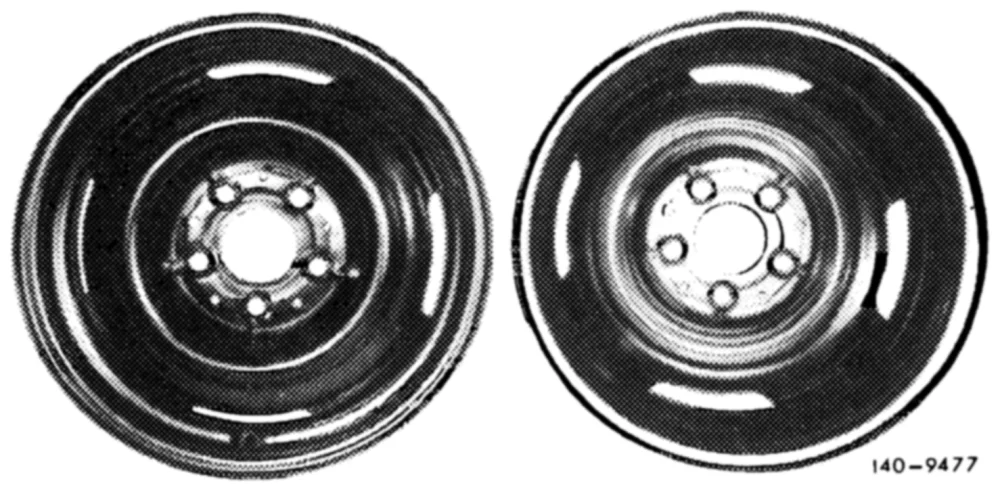
Steel plate rim 6Jx14H2 (version up to December 1969)
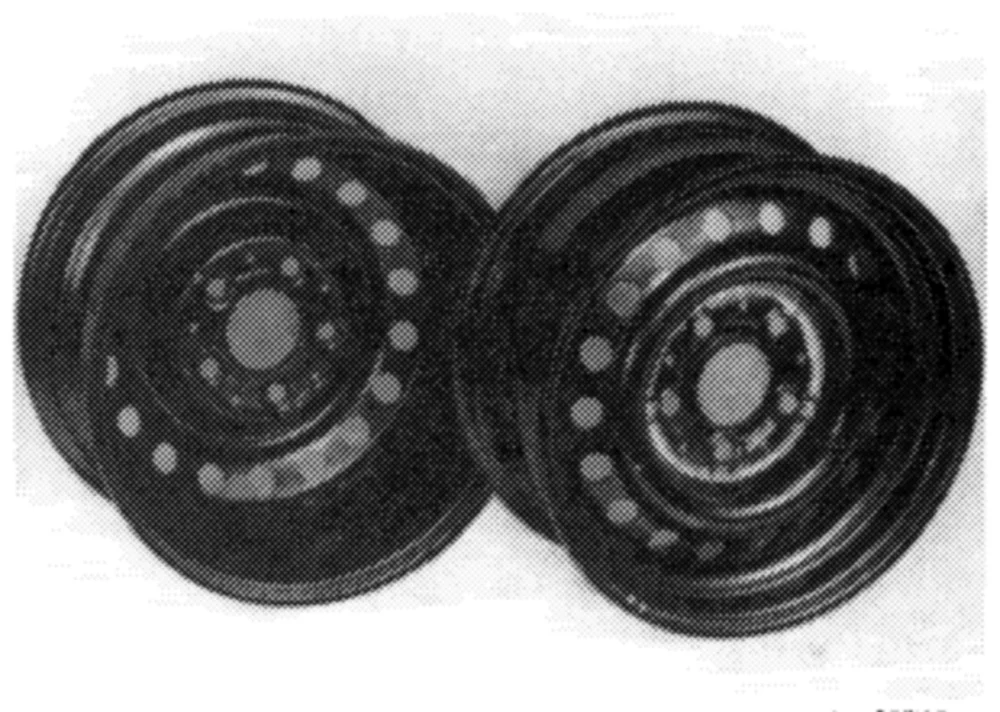
Steel plate rim 6Jx14H2 without inner venting ring Wheel disk with 20 vent holes of 28 mm dia. (version starting January 1970 up to October 1981)
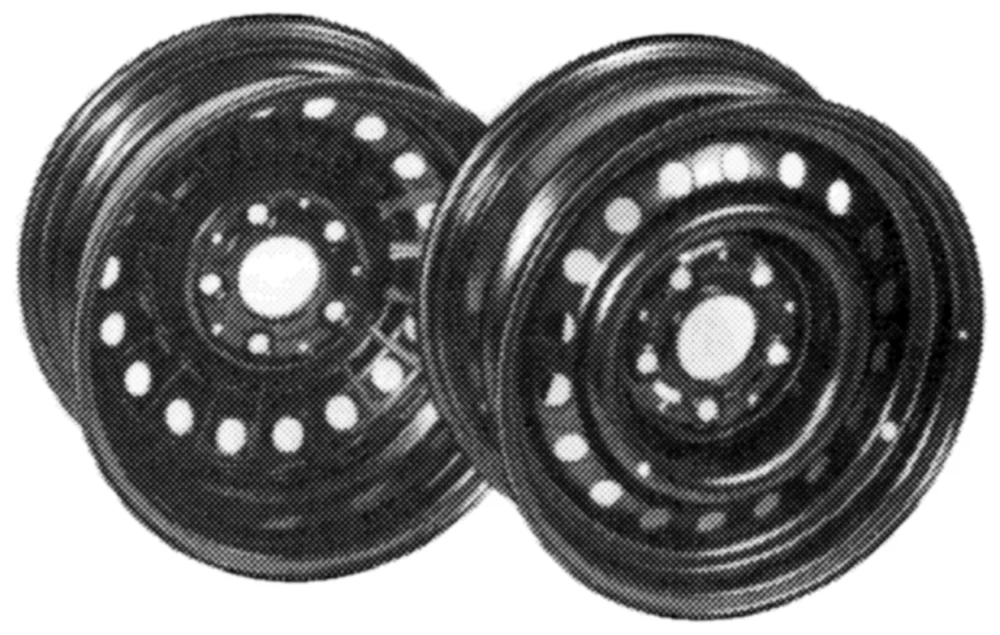
Steel plate rim 6Jx14H2 without inner venting ring Wheel disk with 18 vent holes of 25 mm dia. (version starting November 1981) 240 ~ 21545
Steel plate rim 6Jx14H2 with inner venting ring Wheel disk with 18 vent holes of 25 mm dia. 14020049
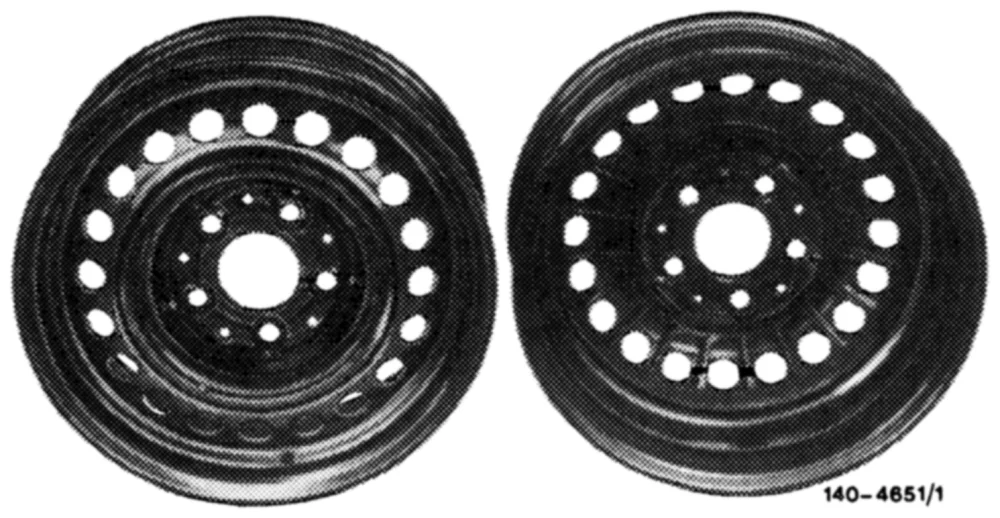
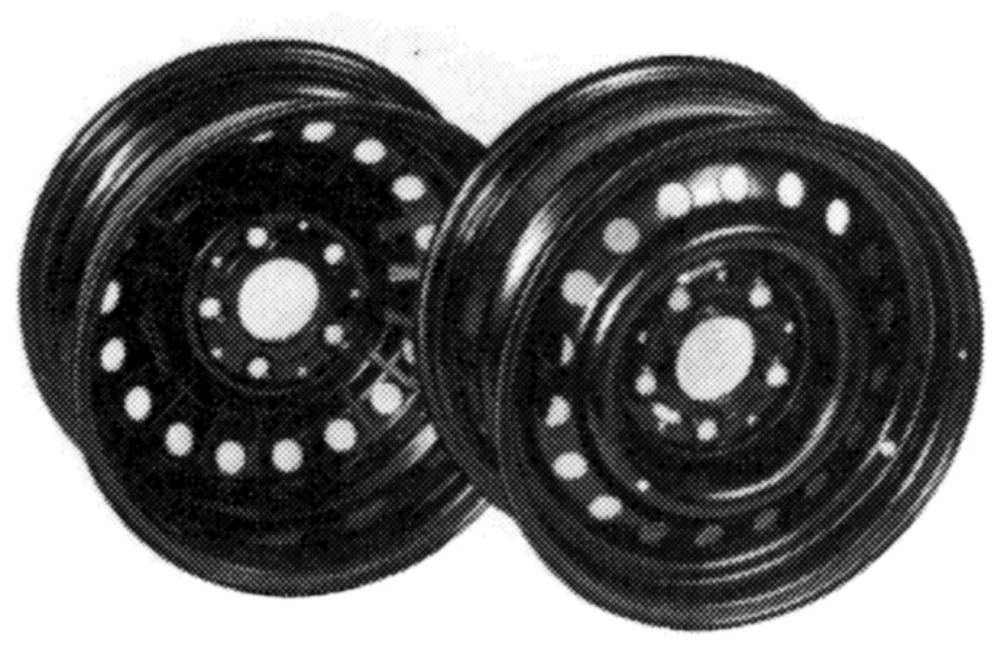
Steel plate rim 6 1/23x14H2 with inner venting ring Wheel disk with 20 vent holes of 28 mm dia. (version up to December 1979)
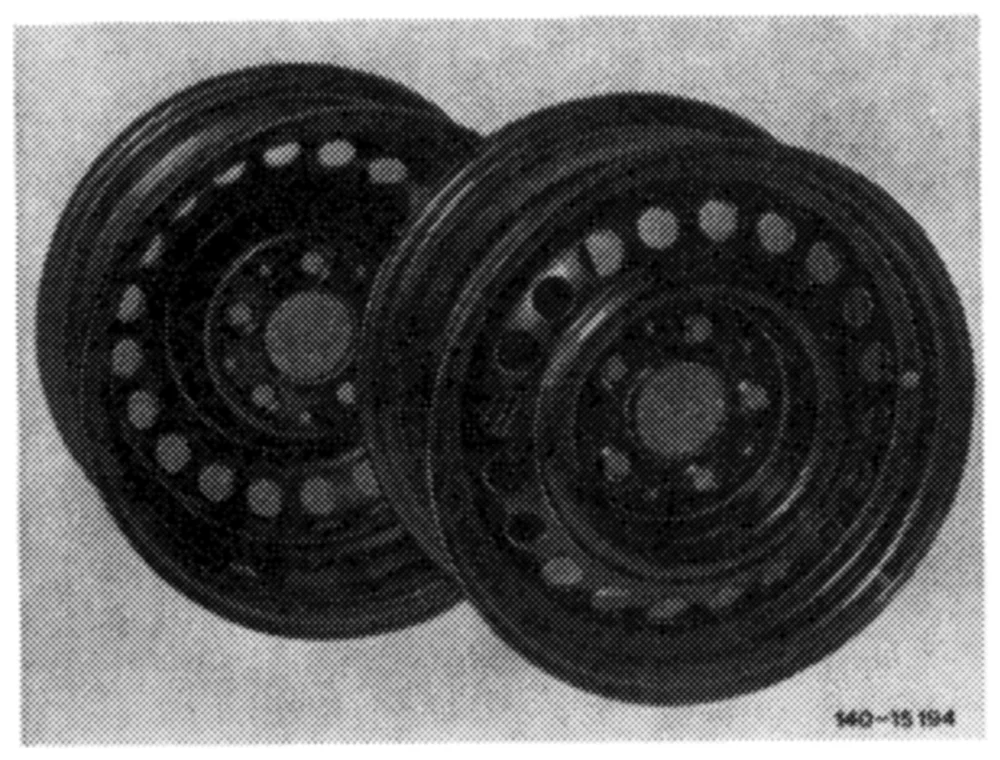
Steel plate rim 61/23x14H2 with inner venting ring Wheel disk with 18 vent holes of 25 mm dia. (version starting January 1980)
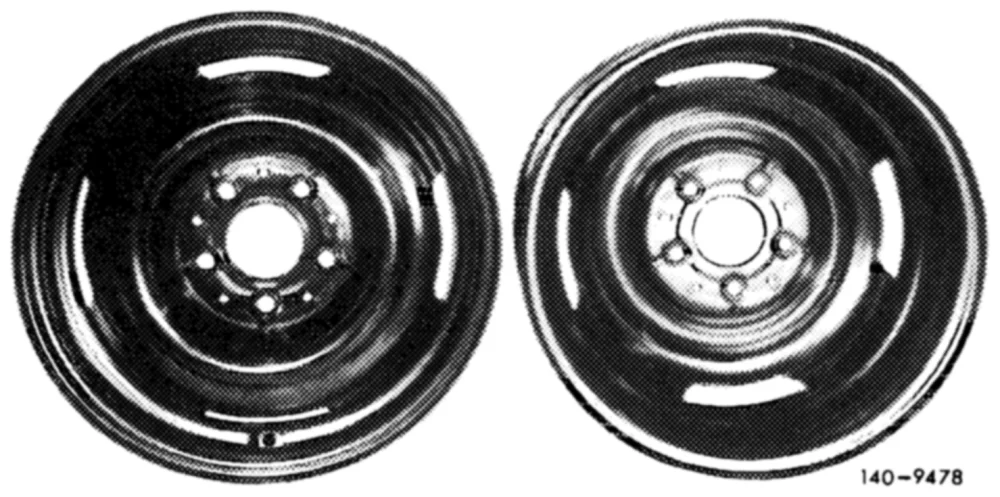
Steel plate rim 61/2Jx14H2 without inner venting ring Wheel disk with 18 vent holes of 25 mm dia.
Steel plate rim §1/2Jx15H2
Ga) light alloy rims
Light alloy rim §1/2Jx14H2
Light alloy rim 6Jx14H2
Forged light alloy rims
The rim flanges of light alloy rims may show increased wear under the following operating conditions: high load, trailer operation, not enough tire inflation pressure, use of unrecommended tire makes or tire versions, accumulation of dirt, sand and road salt (particularly during winter months). Prior to mounting a new tire, check rim flanges for wear. Remove burr, if any. Replace rim as soon as wear limit is attained (40–120).
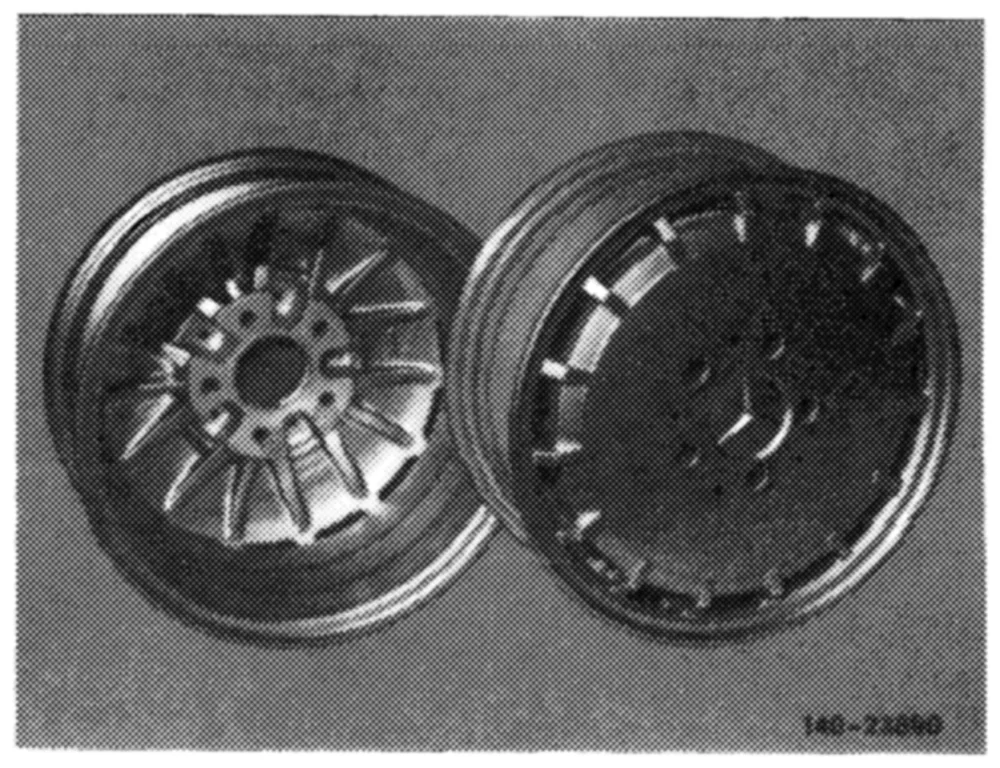
Particularly during the six winter months, check rims inside for contamination and clean, if required.
Forged light alloy rim 5Jx14H2
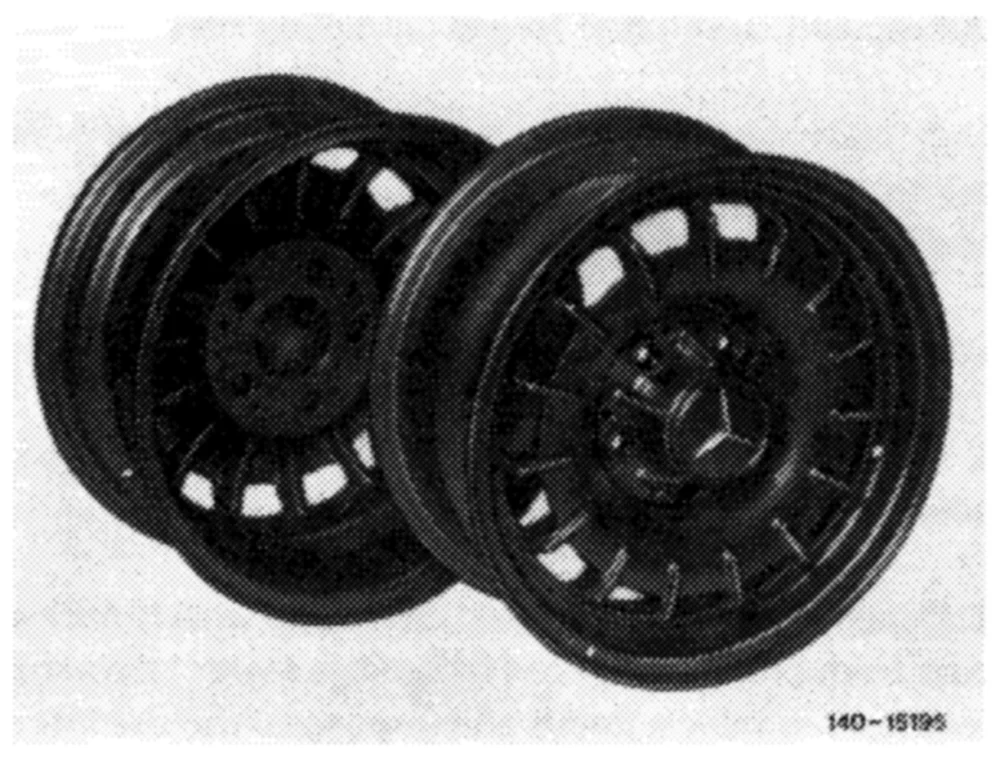
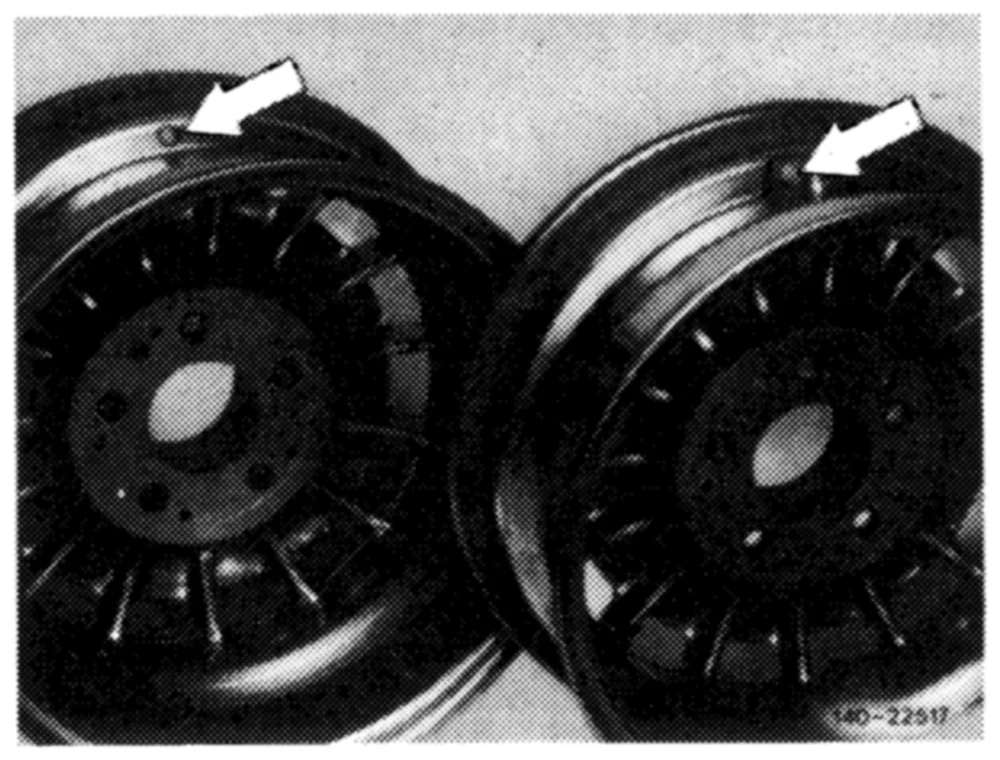
Forged light alloy rim 5 1/2Jx14H2,65x14H2,61/25x 14H 2, 74x 15H2
Version up to September 1981 (wihtout cavity on valve seat — for special meta! valve)
Version starting October 1981
(with cavity on valve seat —
for rubber valve)
Upkeep and cleaning of forged light alloy rims
Light alloy rims are coated with a special metallic paint. For this reason, they must be serviced and cleaned with paint-protecting compounds only, just like the vehicle body. Any damage to clear paint surface may lead to peeling.
For this reason, the following instructions should be observed and maintained for upkeep and cleaning.
1. Never treat light alloy rims with abrasive compounds, compounds or sponges which are containing acids or are heavily alkaline. High-pressure hot-water cleaning units should also not be used.
2. Depending on accumulated dirt, clean wheels once a week, whenever possible. Normal dirt including abrasive dust from brake linings can be removed with lukewarm water, a mild solvent for removing dirt (of the type used for cleaning vehicle body) and a sponge. Also use lots of water.
If the wheel cleaning job in combination with a normal vehicle wash is not enough, special preserving and cleaning compounds for light alloy rims are now available (used after precleaning with water).
If repainting of light alloy rims is required, refer to paintwork repair instructions.
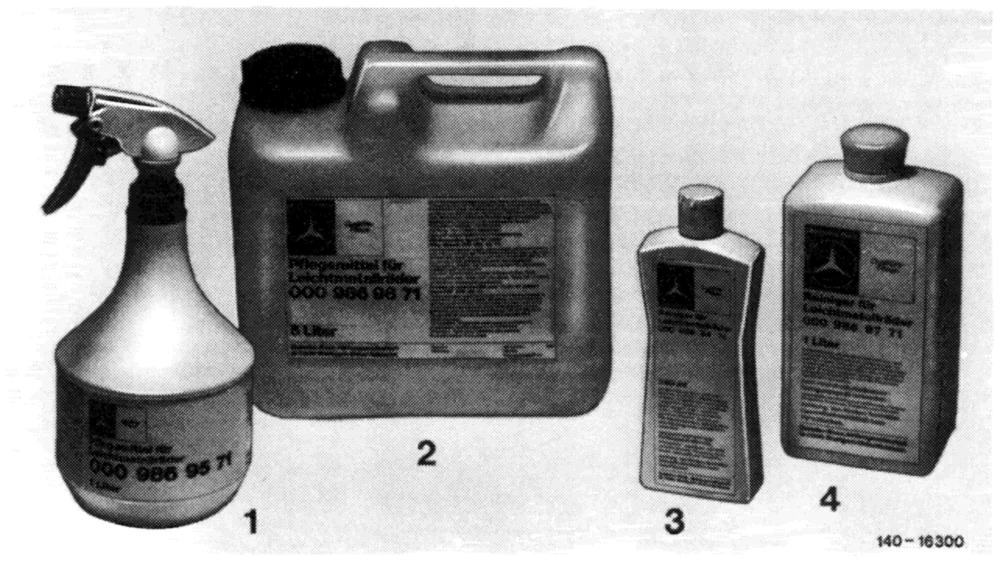
Service compounds and cleaners for light alloy rims
1 Spray bottle (1 liter) 3 Bottle (1/4 liter)
2 Canister — refill pack (5 liters) 4 Bottle — refill pack (1 liter}
Materials
Designation Part No.
Service compound for 000 986 95 71 1-liter spray bottle light alloy rims §-liter canister 000 986 98 71
For regular treatment of rims, also if heavily contaminated, but not for tightly sticking residual dirt. Compound has a preservating effect.
1/4-liter bottle Cleaner for 000 986 94 71 light alloy rims for approx. 5 treatments 1-liter bottle 000 986 97 71
For removing tightly sticking dirt which cannot be removed with service compounds for light alloy rims. After a cleaning job with this compound a subsequent preservation with gloss preservation 000 986 06 74 or service compound for light alloy rims 000 986 95 71 must be performed.
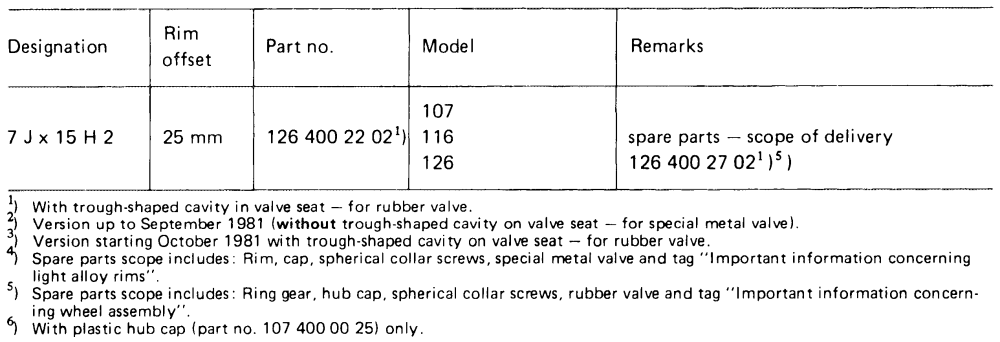
. . Rim Designation offset Part no. Model Remarks t
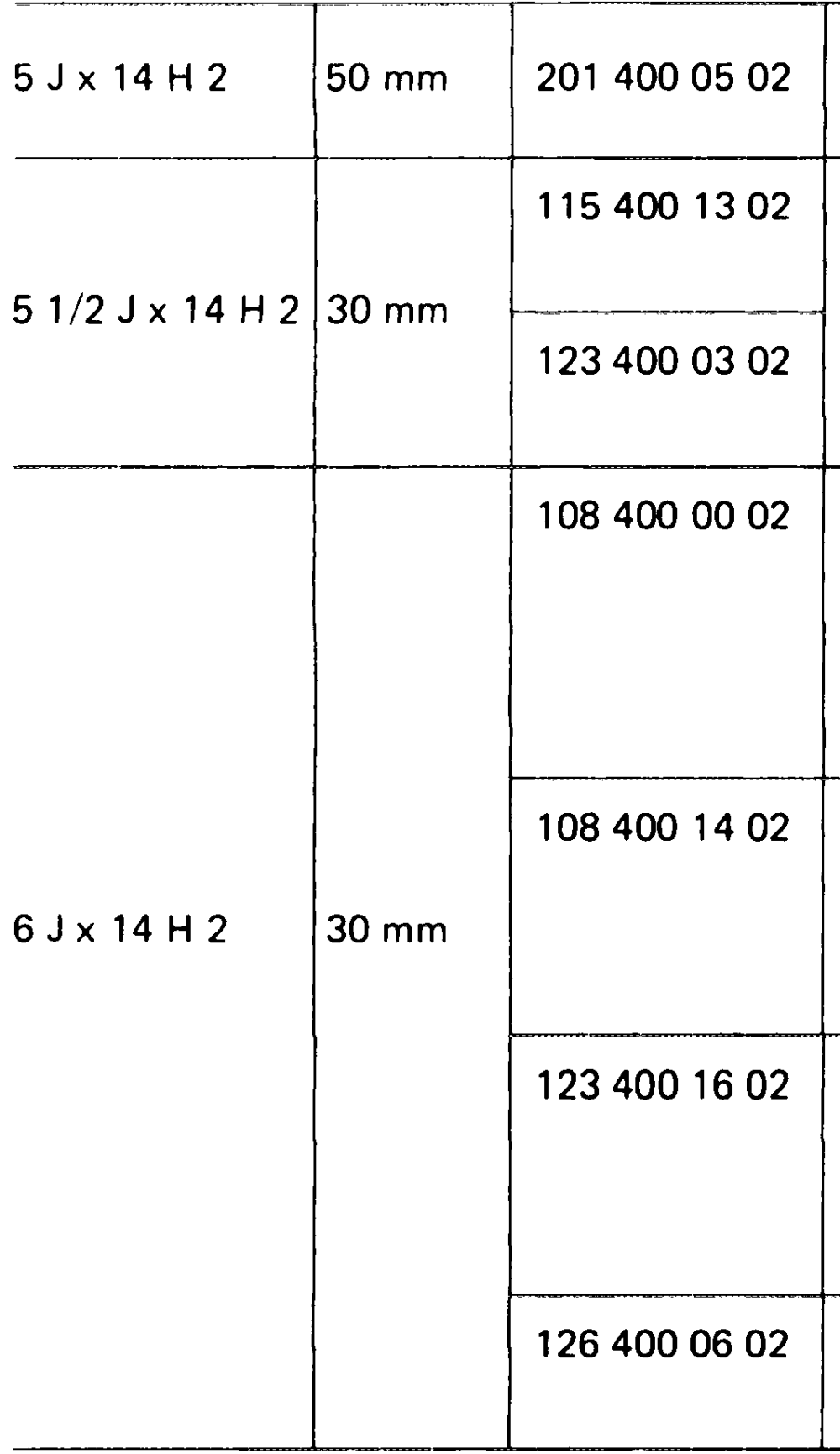
Steel plate rims
wihtout inner vent ring-wheel disk with 201 18 vent holes of 20 mm dia.
114 version up to September 1977 115 123 version starting October 1977 with modified wheel disk
114, 115 versions up to December 1969 special sedans with higher permissible rear axle load 1160 kg
114 version starting January 1970 to 116 October 1981 123
without inner vent ring — wheel disk
with 20 vent holes of 28 mm dia.
114 version starting November 1981 115 without inner vent ring-wheel disk 116 123 with 18 vent holes of 25 mm dia.
126 with inner vent ring — wheel disk with 18 vent holes of 25 mm dia.
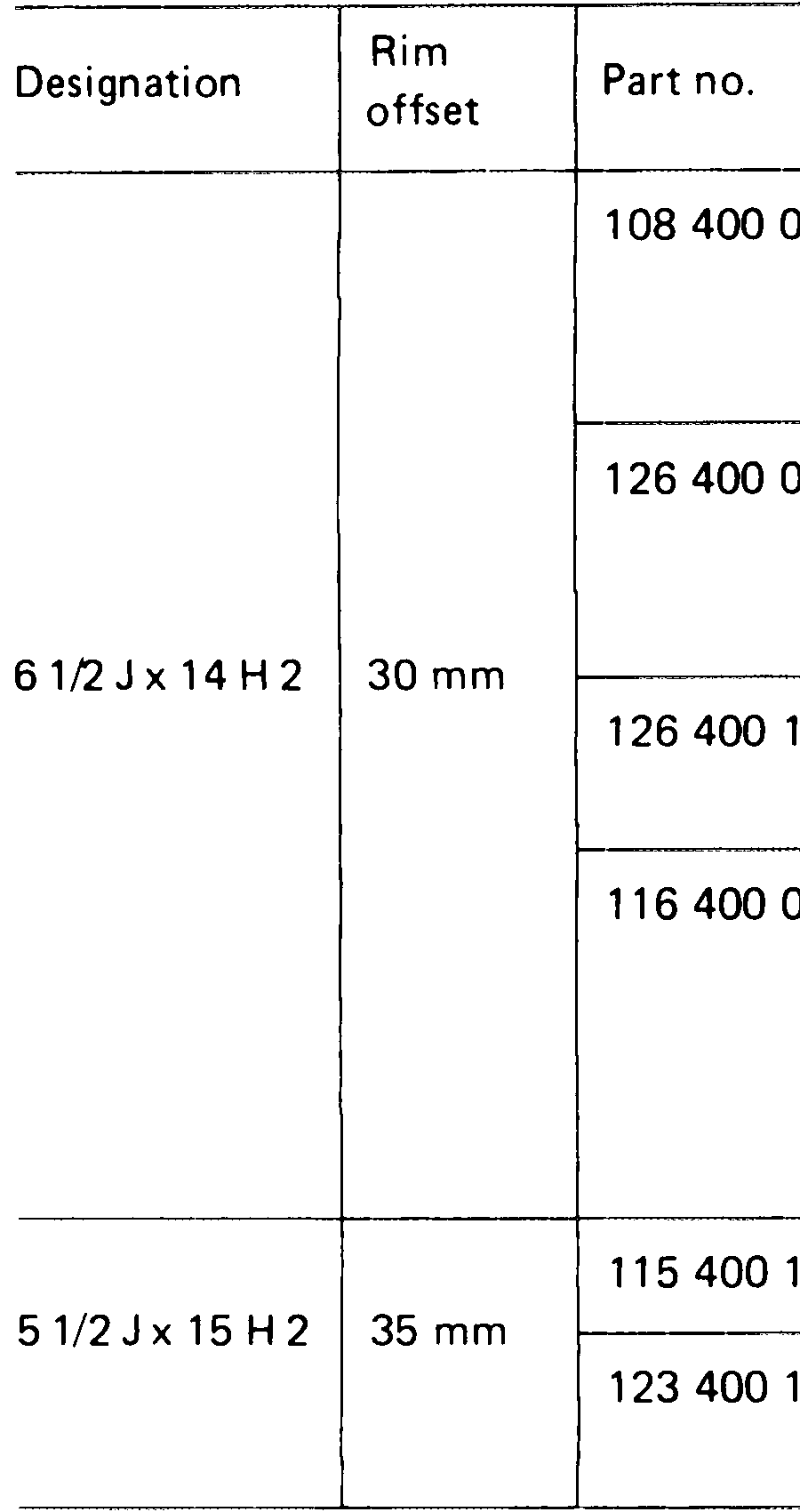
Remarks Model
version up to December 1979 08 02 107 116
with inner vent ring — wheel disk
with 20 vent holes of 28 mm dia.
version starting January 1980 07 02 107 126.02
with inner vent ring — wheel disk
126.03 with 18 vent holes of 25 mm dia.
15 02 126.04 without inner vent — wheel disk with 18 vent holes of 25 mm dia.
04 02 116.036 reinforced wheel disk with inner vent ring — wheel disk with 20 vent holes of 24 mm dia.
additional designation: white edge on vehicle disk
14 02 version up to October 1978 114 115 10 02 123 version starting November 1978 with modified wheel disk
Light alloy rims
123.123 Gs) 51/2Jx14H2 30mm 123 400 13 02
123.033 Gs 6Jx14H2 30 mm 123 400 15 02 123.130 Gd
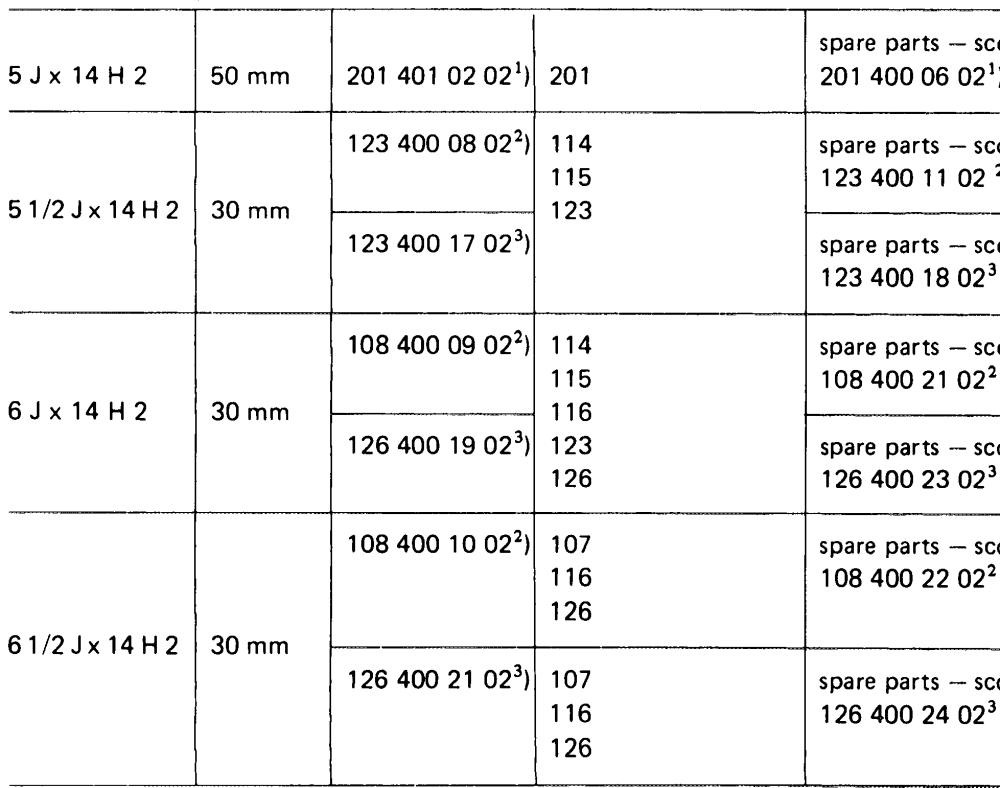
Forged light alloy rims
scope of delivery
scope of delivery 7)4)$)
scope of delivery
scope of delivery
scope of delivery
scope of delivery
scope of delivery