Reconditioning and squaring connecting rods
WIS 03-313
Data
| C. L. big-end bearing . | bore to C. L. small-end bushing . bore | 148.95 749.05 | |
| Width of connecting rod at big-end bearing bore and at small-end bushing bore | 31.84 31.88 | ||
| Basic . bore for big-end . | shell bearings | 55.60 5562 | |
| Basic bore for small-end bushing | Normal size . Repair epair stage st | 29.00 3902 a 29.50 5969 | |
| Small- mall-end bushing hing | OD | Normal size Repair stage | 29.096 29.058 -_aNs 29.596 |
| Small-end bushing !D | 26.012 36.018 | ||
| Peak-to-valley height of small-end bushing inside | 0.004 | ||
| Permissible twist of big-end bearing bore to small-end bushing bore, relative to lenght of 100 mm | 0.1 | ||
| Permissible parallel misalignment of big-end bearing bore axis to small-end bushing bore axis, relative to length of 100 mm | 0.045 | ||
| Permissible difference in weight between any two con-rod assemblies within one engine | 5 g |
Tightening torque
| Initial torque | (4— kpm) 40–50 Nm 5 |
| Final torquing angle | © 90–100° |
Special tool
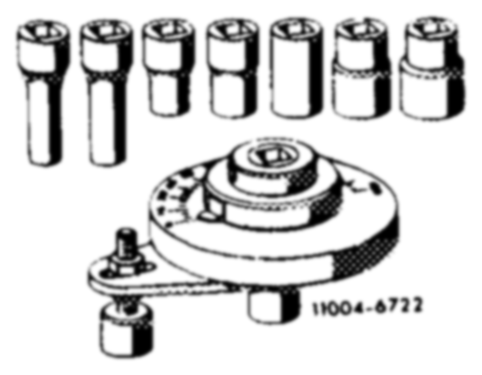
Torquing angle set – 116 589 01 13 00
Connecting rod straightener e.g. Hahn & Kolb, 7000 Stuttgart, model BC 503
Note
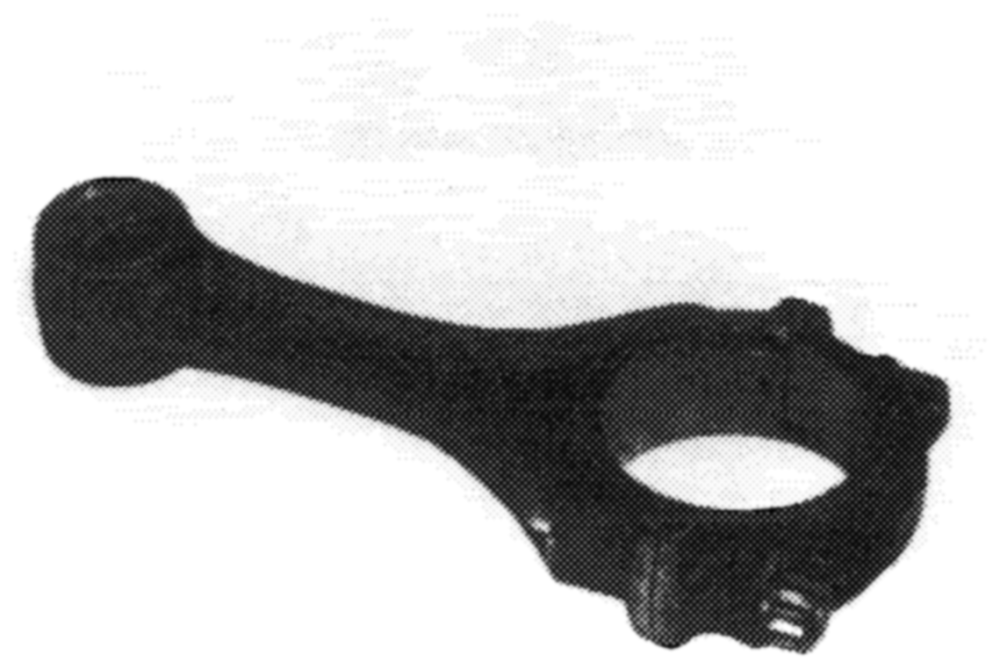
Connecting rods which have overheated as a result of bearing damage (blue discoloration) must not be reused.
Connecting rods and bearing caps are marked as complete assemblies. The connecting rod shank must not show transverse scoring or notching.
Connecting rods with finished small-end bushings are available as spares.
3~-14447
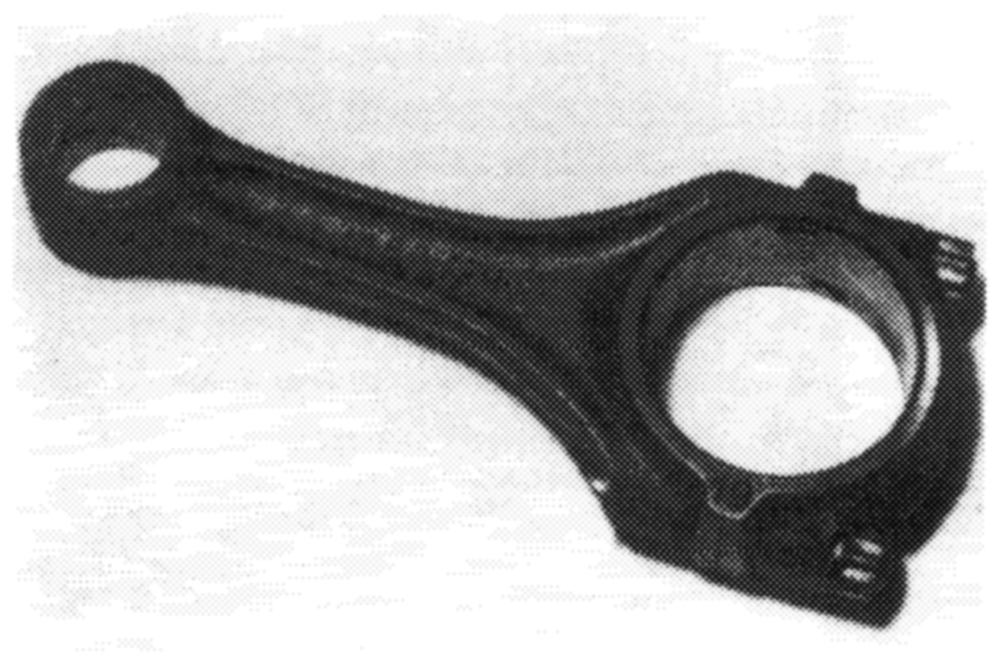
Connecting rods are classified by weights.
In one engine, all connecting rods are to be of the same weight category.
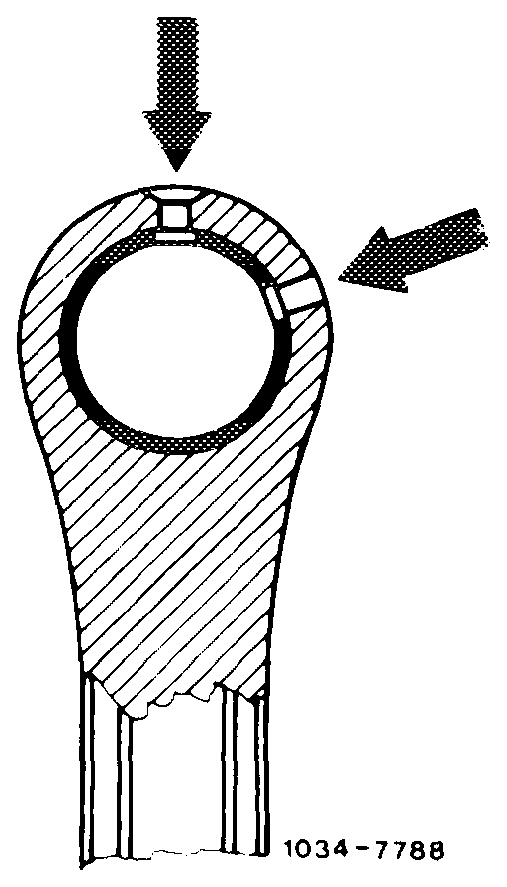
Figures indicating the weight category in question are stamped in the face of the big-end bearing bore (arrow).
In engine model 617.91 be sure to use no connecting rods other than those listed below:
Weight category Color mark
876-880 g red/yellow 881–885 g red/blue 886–890 g red/black 891–895 g red/green 896-900 g blue/blue diesel) must not be used in the above engine.
Reconditioning
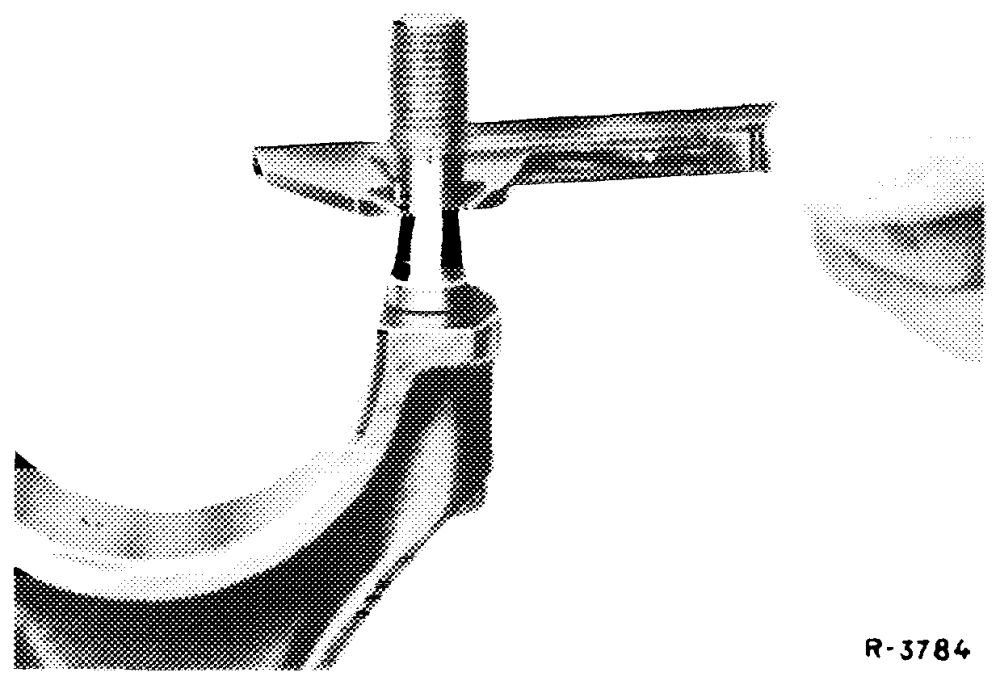
1 Check clamp bolts, replacing if necessary (03-310).
2 Check bores of clamp bolts.
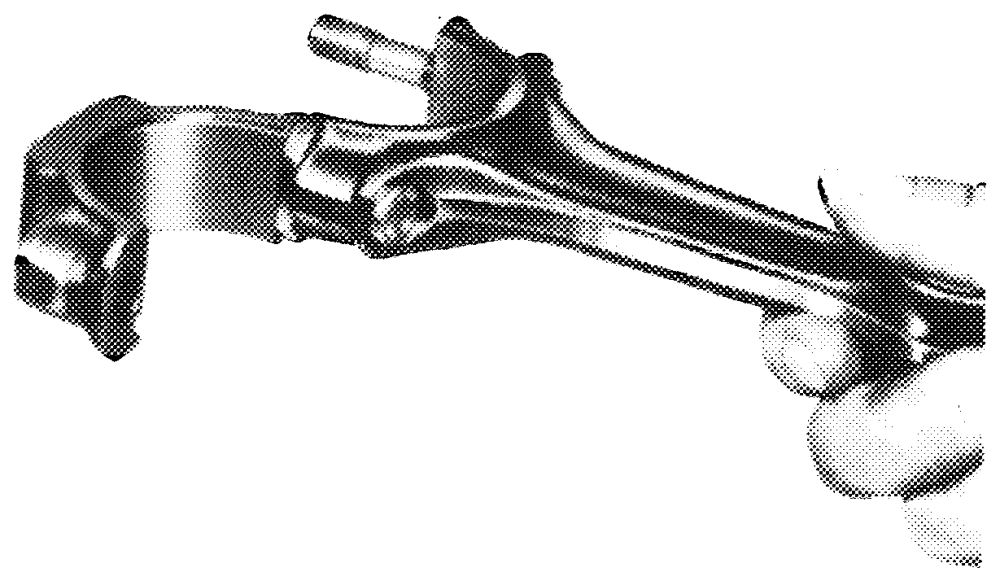
Slip bearing cap onto a clamp bolt. If bearing cap moves downward under its own weight, you will have to replace connecting rod.
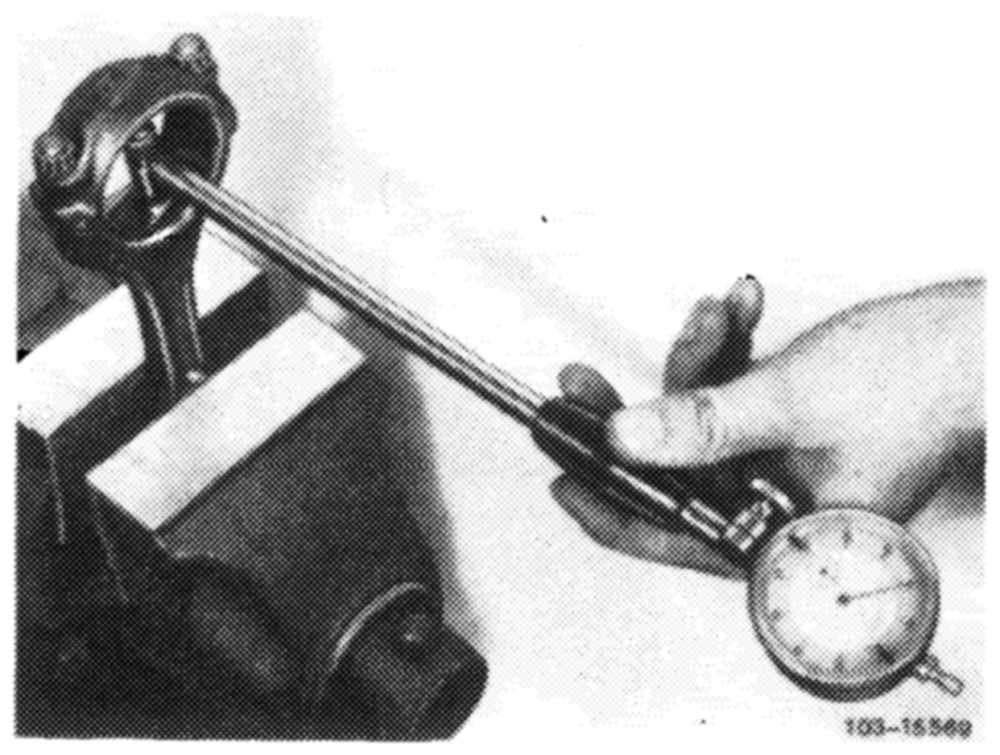
3 Fit bearing cap, tighten clamp nuts to 40—50 Nm (4—5 kpm) initial torque and then secure by 90—100° torquing angle.
4 Measure basic bore of big-end bearing. If any basic bore exceeds value of 55.62 mm or is tapered, dress supporting surface of bearing cap by max. 0.02 mm, using a surface plate for reference.
oil drillings correspond.
Fitting pressure 2500 N (250 kp).
6 Bore or ream small-end bushing.
7 Dress side thrust faces of connecting rod on straightening plate.
Squaring
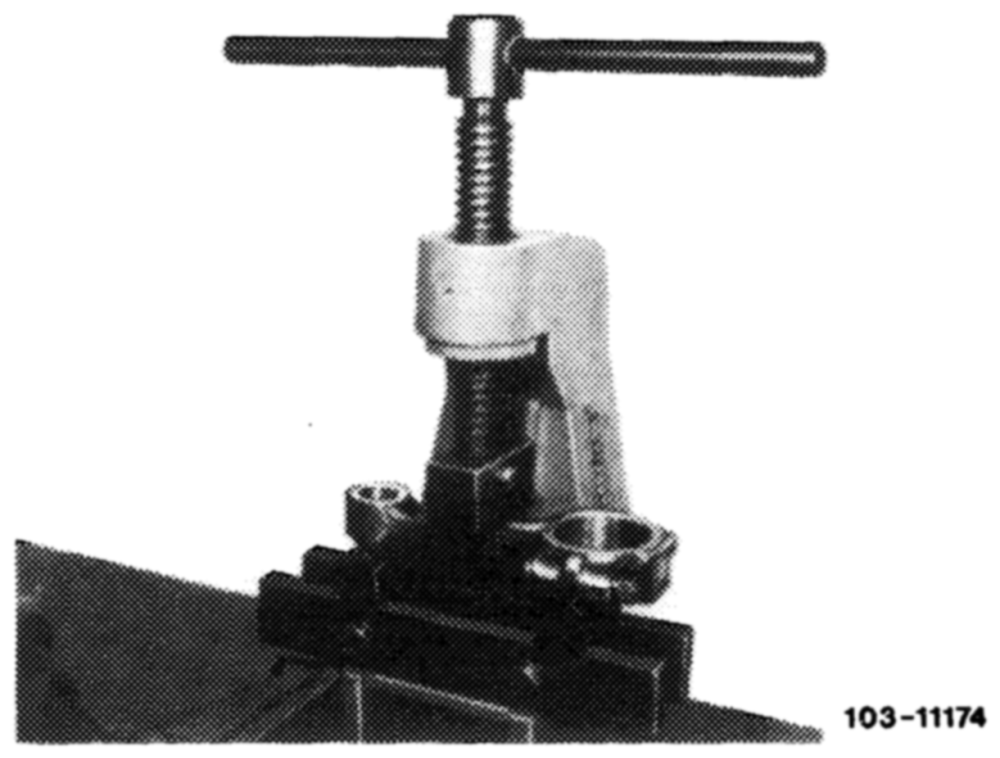
8 Square connecting rod, using a connecting rod tester.
9 Align big-end bore with small-end bushing bore (parallel alignment).
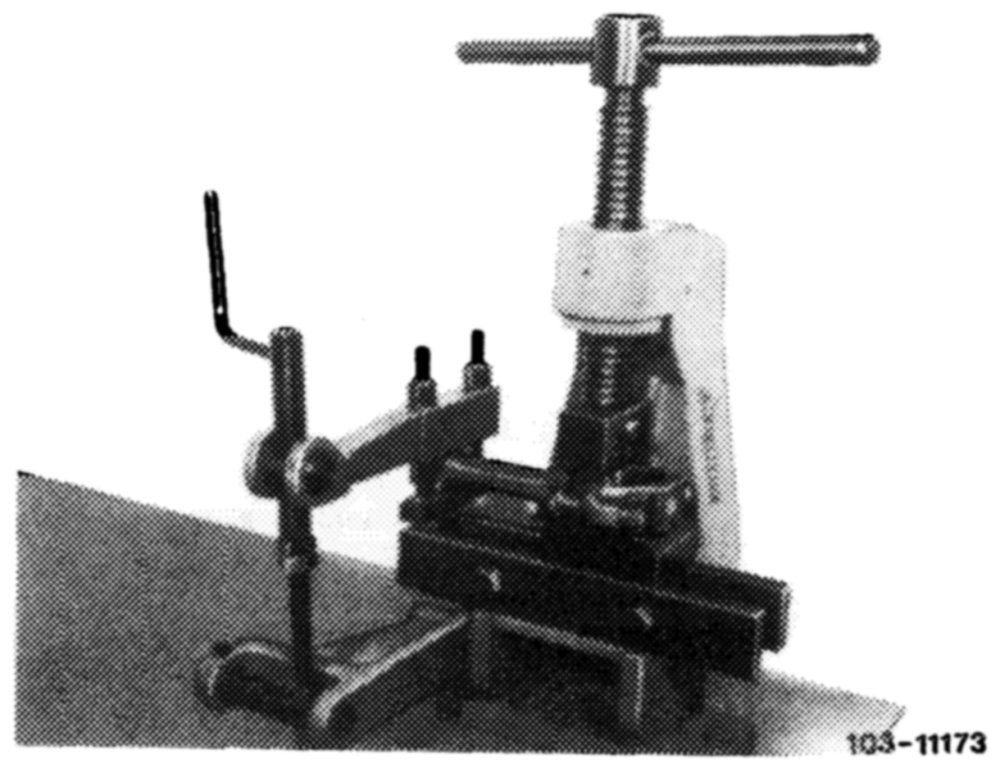
10 Check twist of big-end bearing bore to small-end bushing bore, correcting if necessary.