Performing cold start
WIS 07.2-128
Checkup
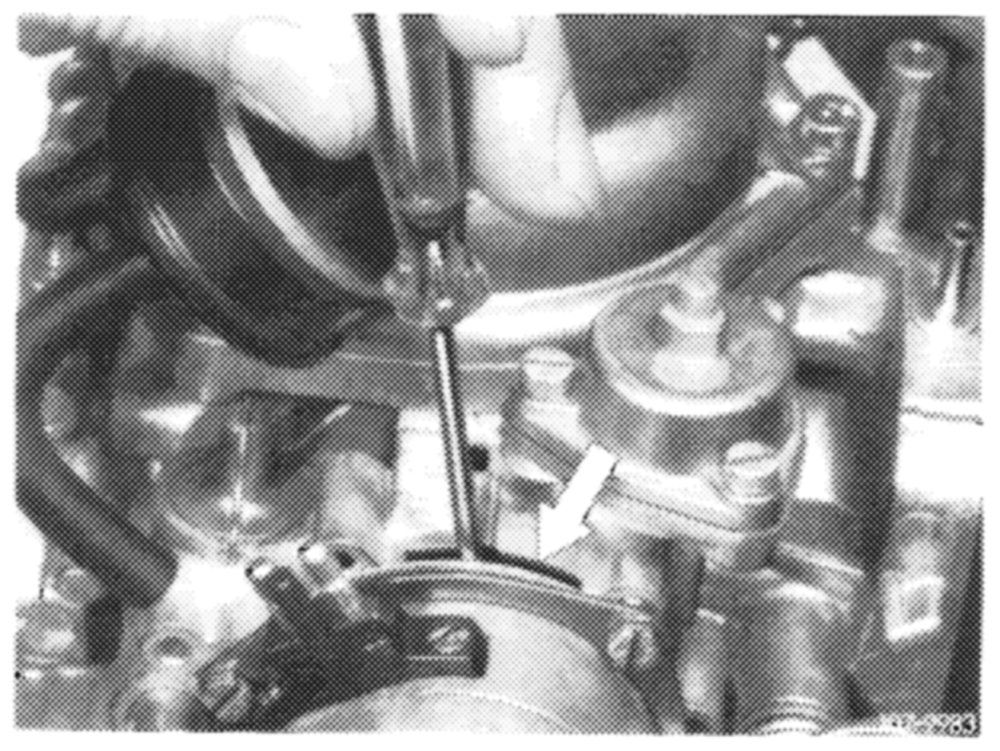
1 Let engine cool down, if possible overnight.
2 Check whether automatic choke is connecting.
For this purpose, accelerate slowly by means of throttle valve lever while simultaneously watching choke housing through slot (arrow) to check whether choke rod moves in direction of engine.
Position of choke rod (85) in relation to fast idle cam (87) in dependence of temperature:
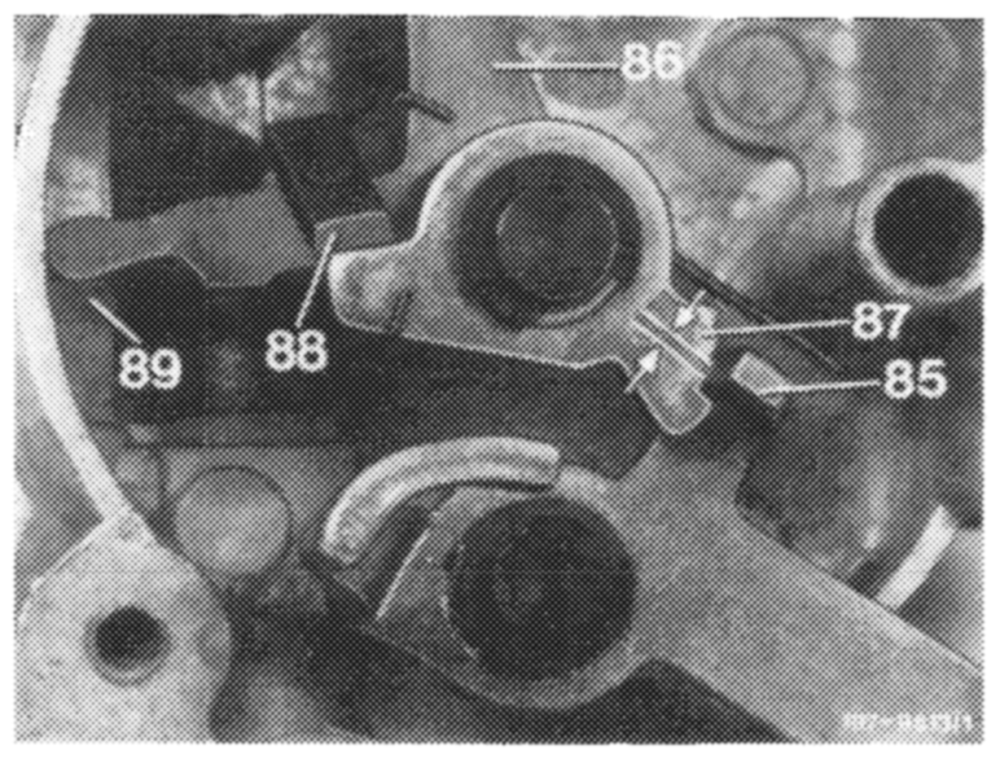
+ 20 °C =second-highest detent (pulldown detent) + 0 °C =highest detent (cold start detent)
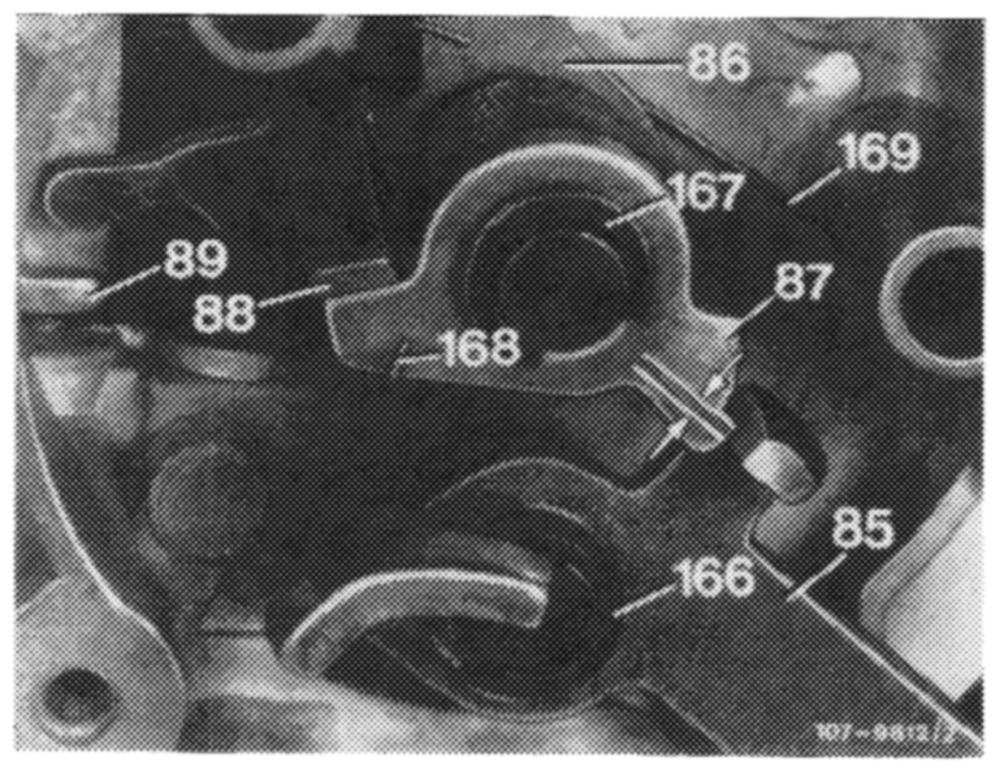
Position: pulldown detent
Position: cold start detent
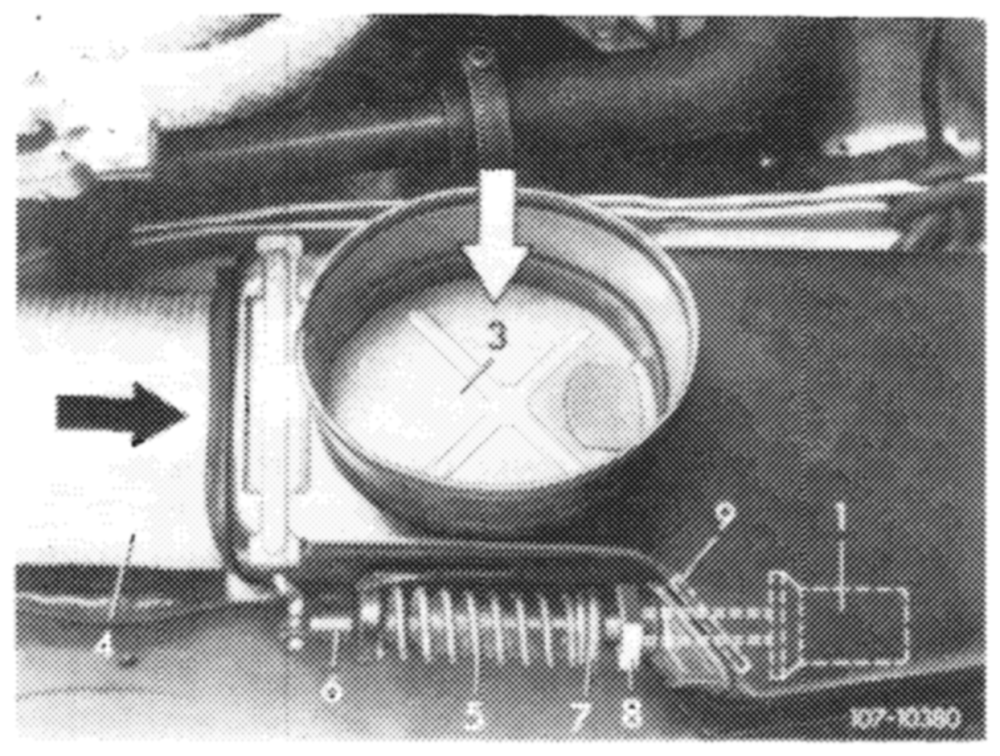
3 Check preheating of intake air:
a) Engine 115
Pull off cold air hose (2). At intake air temperatures below approx. +15 °C the air flap (3) should be in position “warm air’’, that is, flap should close fresh air duct (2).
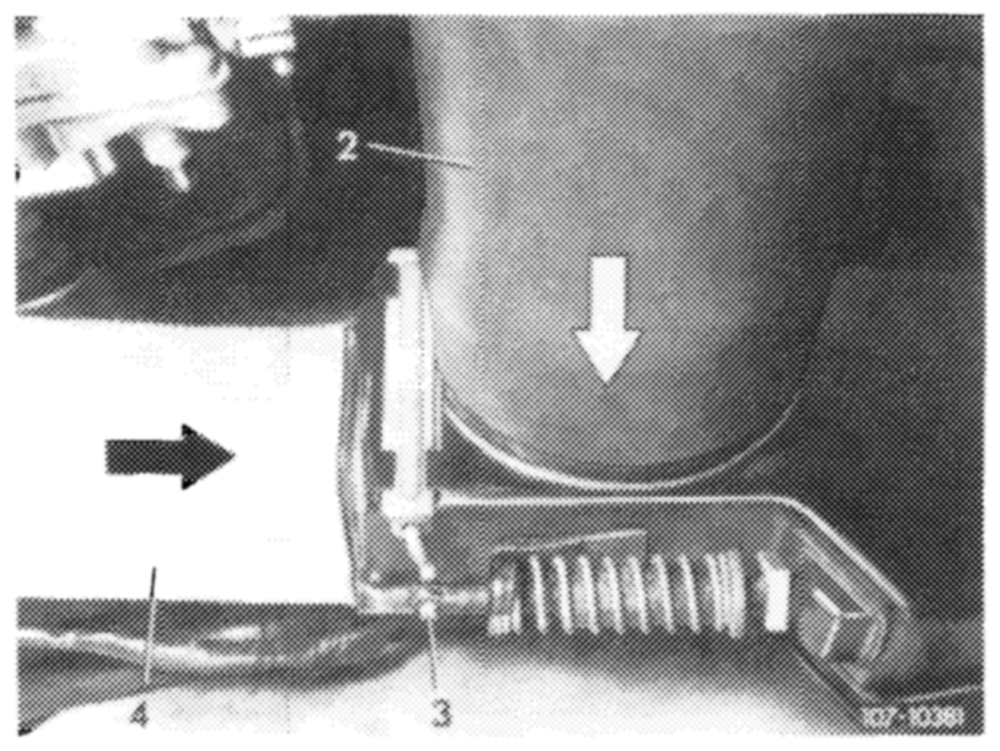
2 Cold air duct 3 Air flap in position ‘‘warm air” 4 Warm air duct
b) Engine 123
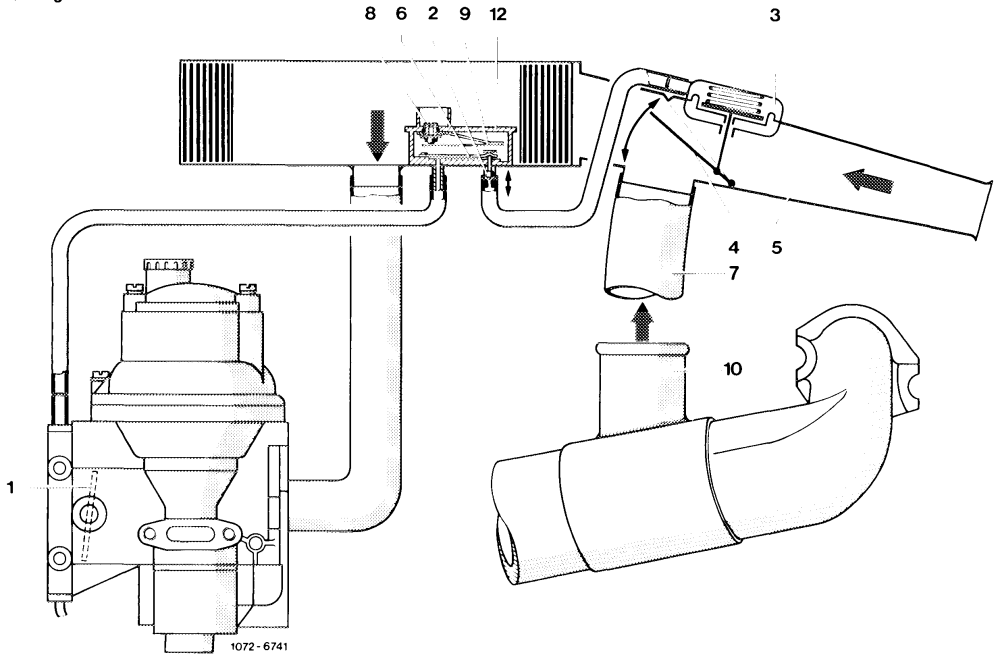
Throttle valve 7 Warm air duct OahwnCheck valve 8 Secondary air valve Vacuum control unit 9 Bimetallic spring Air flap 10 Warm air scoop on exhaust manifold Cold air duct 12 Temperature regulator Bimetallic spring
Pull off warm air hose (7). Run engine, at intake air temperature below approx. +40 °C the air flap should be pulled into position ‘‘warm air’’, that is, flap should close cold air duct (5).
4 Run engine warm until operation temperature is attained.
For this purpose, stop every 100-150 meters for approx. 15 seconds, on vehicles with automatic transmission with driving position engaged, while simultaneously evaluating engine for continuous and smooth operation. When driving on, engine and accelerator should respond perfectly.