Operation of electrical oil level gauge
WIS 18-3050
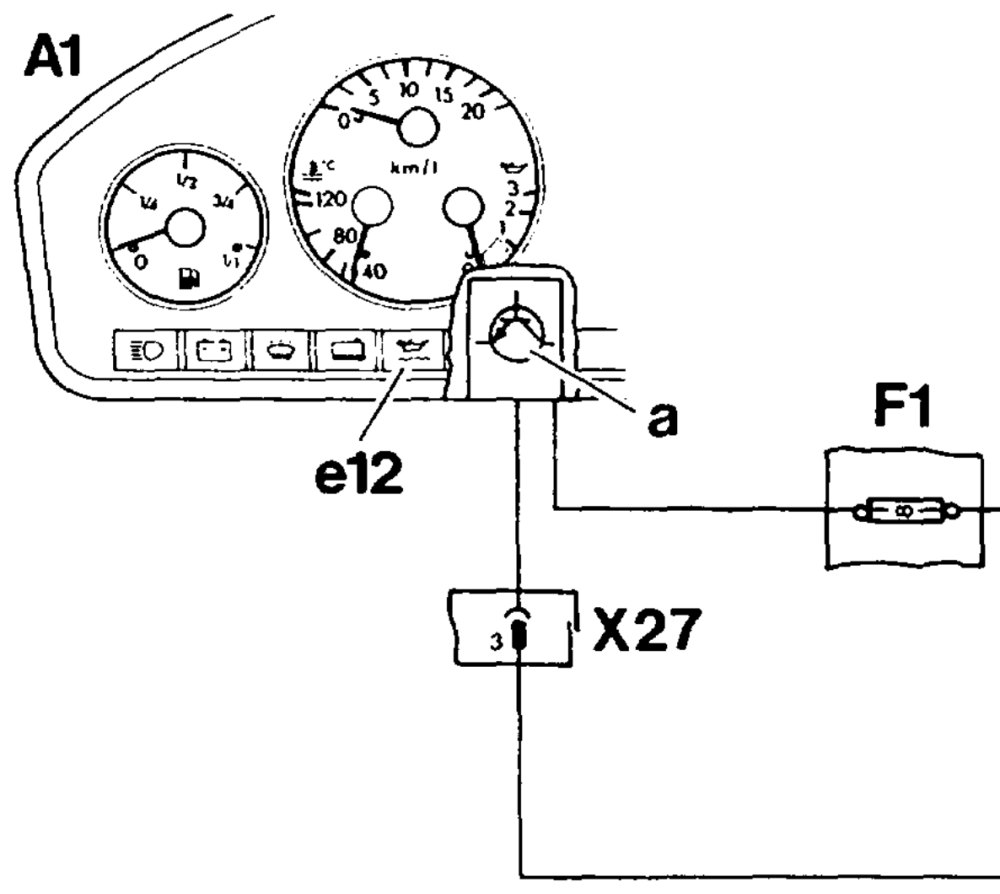
P18 – 5117–55
ignition starter switch s2it Al Instrument panel Oil level sensor $43 a Microprocessor (Base plate) Plug connection, starter harness X27 e12 Oil level indicator lamp Fl Fuse and relay box
General
The electrical oil level gauge monitors the oil level in the sump when the engine is running and the engine oil temperature is above 60 °C. When the ignition is switched on, the indicator lamp lights up and goes out as soon as the engine is started.
mime §=RA 18 1111-3050/1
Operation
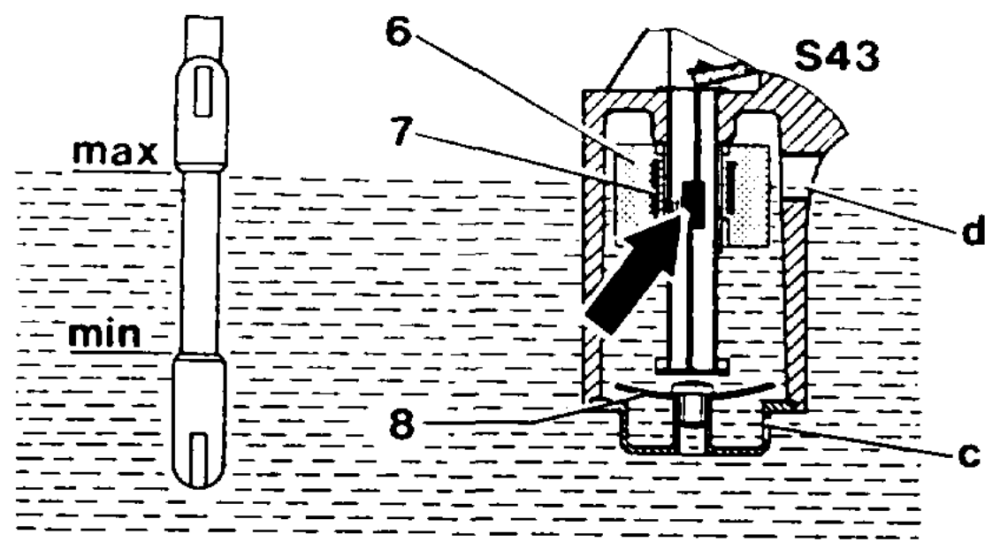
The engine oil in the oil level sensor (S43) is matched to the engine oil level in the sump through the drain hole (c). If the engine oil is at the correct level, the contact (arrow) is closed by the float (6) with a solenoid (7) and a permanent input signal (vehicle ground) is supplied to the microprocessor (a) in the electrical base plate of the instrument panel (A1).
P18-0148–13
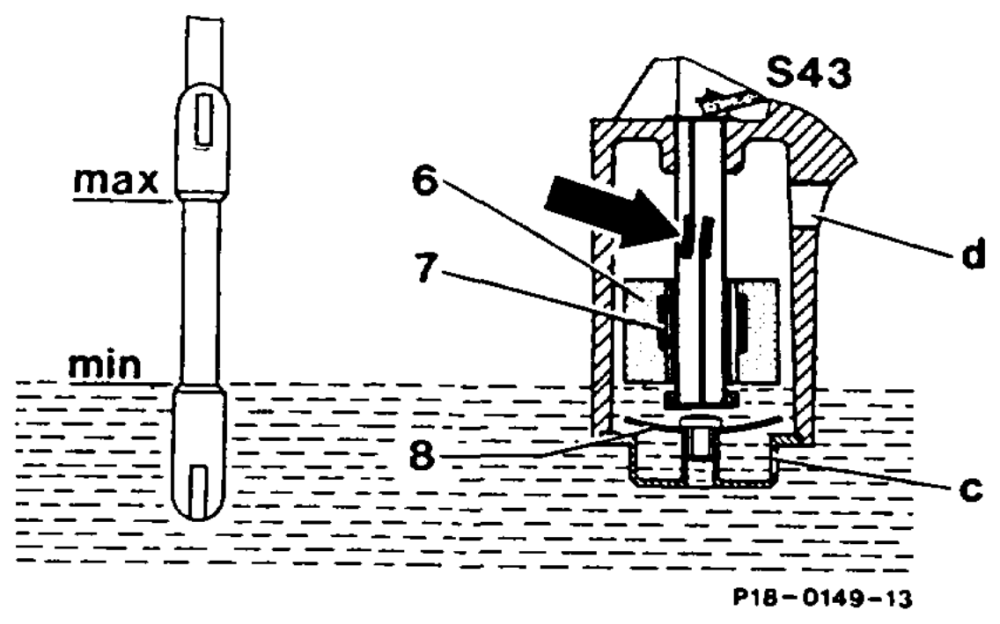
If the engine oil level is too low, the float (6) moves down and opens the contact (arrow). The input signal is thus interrupted and after 60 seconds (switching lag of microprocessor (a) in the base plate), the oil level indicator lamp (e) lights up. If the engine oil level is too low or if there is an open circuit in the wiring, the oil level indicator lamp (e12) remains on after the engine is started. The drain hole (c) is opened by the bi-metal snap plate (8) from an engine oil temperature of 60 °C and the engine oil level in the oil level sensor is matched to that in the sump.
AN Engine oil change Below 60 °C the engine oil is viscous and flows back only slowly into the sump; ie. a reading measured below 60 °C does not correspond to the actual oil capacity. When changing the engine oil, the oil level sensor (S43) is filed through the vent hole (d) as the hole (c) is closed as a result of the cold engine oil at approx. 30 °C.
mite RA 18.1111-3050/2