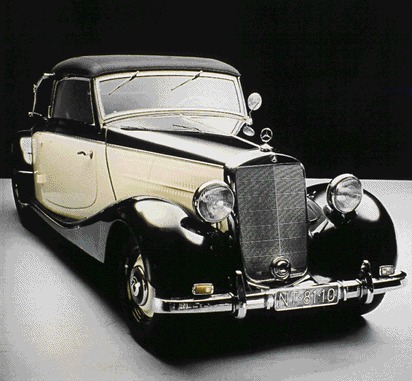
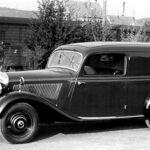
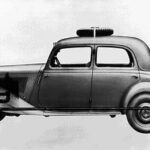
Type 170 V (W 136)
Production: 1936 - 1942

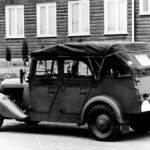
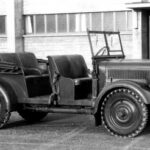
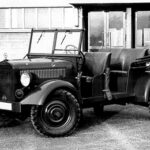
Types
| Type | Model | Production | Number produced |
|---|---|---|---|
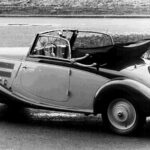
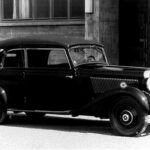
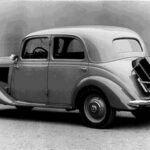
| 170 V | W 136 | 1936 - 1942 | 71.973 |
| 170 V delivery vehicle | W 136 | 1937 - 1942 | 989 |
| 170 VG | W 136 G | 1939 - 1943 | not documented |
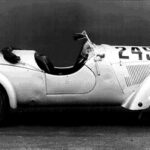
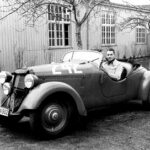
| 170 VS | W 136 S | 1938 - 1939 | app. 30 (types 170 VS and 200 V, all engine versions) |
| 170 VS | W 136 S | 1938 - 1939 | app. 30 (types 170 VS and 200 V, all engine versions) |
| 200 V | W 149 | 1938 - 1939 | app. 30 (types 170 VS and 200 V, all engine versions) |
| 200 V | W 149 | 1938 - 1939 | app. 30 (types 170 VS and 200 V, all engine versions) |
| 170 VK | W 136 K | 1938 - 1942 | 19.075 |
| 170 VG | W 133 III | 1935 | 62 |
| 170 VL | W 139 | 1936 | 42 |
History
The type 170 V with a four-cylinder engine became the most-constructed Mercedes-Benz passenger-car of the pre-war period (internal designation: W 136). It was presented in Berlin together with the 170 H and the 260 D and superseded the six-cylinder type 170 (W 15). In the years from 1936 to 1941 overall more than 70,000 units of all bodywork variations were produced. Its 1.7-litre had a performance of 38 hp at 3,400 r/m. The type 170 V was also the starting point for the post-war production taken up in 1946 at Daimler-Benz.