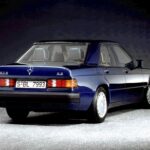
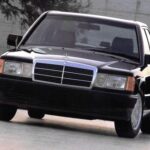
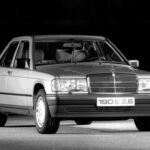
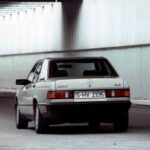
Limuzyny klasy kompaktowej serii 201
Produkcja: 1982 - 1993
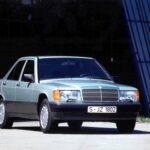
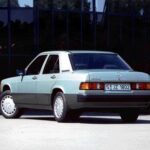
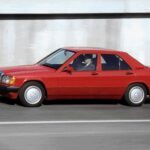
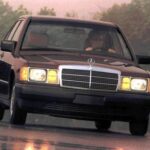
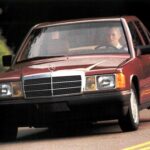
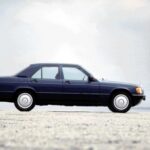
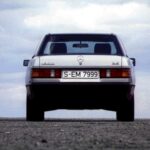
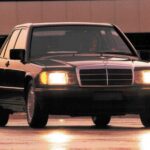
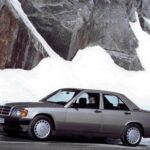
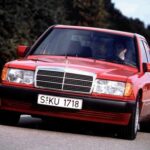
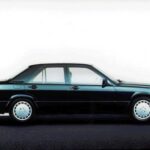
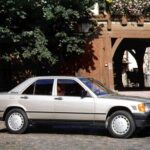
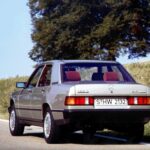
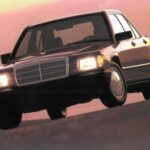
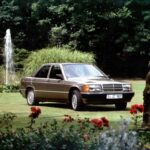
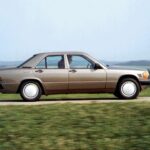
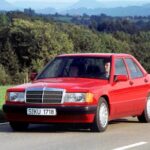
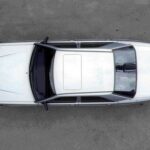
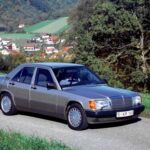
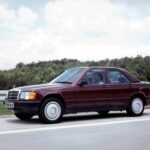
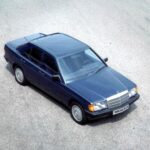
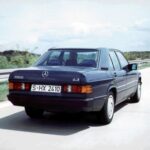
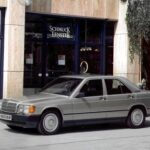
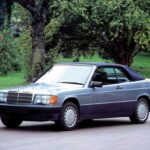
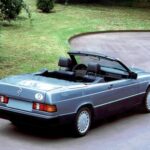
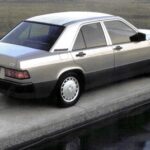
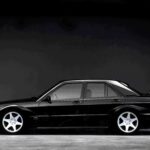
Typy
| Typ | Oznaczenie | Lata produkcji | Wyprodukowano |
|---|---|---|---|
| 190 D | W 201 D 20 | 08.82/11.83 - 08.88 | łącznie 452.806 (do 08.93) |
| 190 D | W 201 D 20 | 09.88 - 08.93 | łącznie 452.806 (od 08.82) |
| 190 D 2.2 | W 201 D 22 | 02.83/11.83 - 08.85 | 10.560 |
| 190 D 2.5 | W 201 D 25 | 08.84/06.85 - 08.88 | łącznie 147.502 (do 08.93) |
| 190 D 2.5 | W 201 D 25 | 09.88 - 08.93 | łącznie 147.502 (od 08.84) |
| 190 D 2.5 turbo | W 201 D 25 A | 02.86 - 08.88 | łącznie 20.915 (do 08.93) |
| 190 D 2.5 turbo | W 201 D 25 A | 09.88 - 08.93 | łącznie 20.915 (od 02.86) |
| 190 | W 201 V 20 | 02.82/10.82 - 09.84 | 35.021 |
| 190 | W 201 V 20/1 | 08.84/10.84 - 08.88 | łącznie 83.540 (do 01.91) |
| 190 | W 201 V 20/1 | 09.88 - 01.91 | łącznie 83.540 (od 08.84) |
| 190 E | W 201 E 20 | 02.82/10.82 - 08.88 | łącznie 638.180 (do 08.93) |
| 190 E, od 01.91: 190 E 2.0 | W 201 E 20 | 09.88 - 08.93 | łącznie 638.180 (od 02.82) |
| 190 E 2.3 | W 201 E 23 | 03.83/09.83 - 08.88 | łącznie 186.610 (do 08.93) |
| 190 E 2.3 | W 201 E 23 | 09.88 - 08.93 | łącznie 186.610 (od 03.83) |
| 190 E 2.6 | W 201 E 26 | 04.86 - 08.88 | łącznie 104.907 (do 08.93) |
| 190 E 2.6 | W 201 E 26 | 09.88 - 08.93 | łącznie 104.907 (od 04.86) |
| 190 E 1.8 | W 201 E 18 | 01.90/03.90 - 08.93 | 173.354 |
| 190 E 2.3-16 | W 201 E 23/2 | 09.83/09.84 - 06.88 | 19.487 |
| 190 E 2.5-16 | W 201 E 25/2 | 07.88 - 06.93 | 5.743 |
| 190 E 2.5-16 Evolution | W 201 E 25/2 | 02.89/03.89 - 05.89 | 502 |
| 190 E 2.5-16 Evolution II | W 201 E 25/2 | 01.90/05.90 - 07.90 | 502 |
Historia
Historia tej serii nie jest jeszcze przetłumaczona; poniżej oryginał angielski.
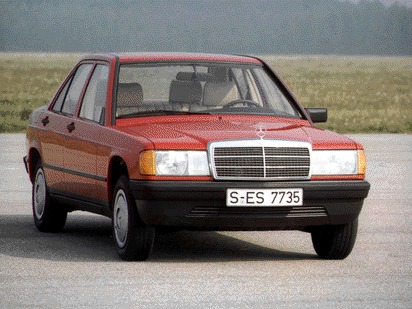
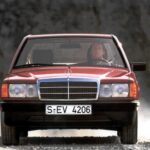
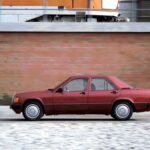
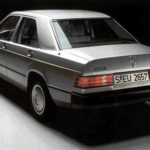
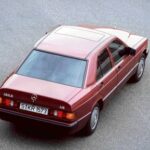
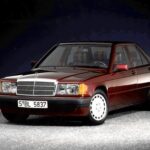
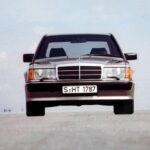
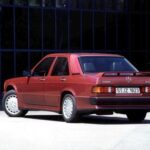
The public and the press were looking towards December 8, 1982 with great expectations, when the compact limousines of type 190 and190 E were represented. These models did not replace previous types, but completed the traditional Mercedes-Benz passenger car program by a third main line. The new range of models was characterised by more compact measures, reduced weight and increased economy without making any compromises as to handling performance, safety and reliability.
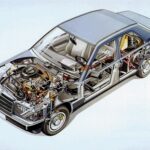
Minimised energy consumption was reached by using high-strength sheet steel and other weight- reducing materials as well as by aerodynamic optimisation. Passive safety had been the reason for providing series 126 with a forked beam in the front end. With it also the vehicles of the compact class fulfilled the criterion of an asymmetric head-on impact with 40 % overlapping and 55 km/h. Thus the 190 models were absolutely as safe as the big S-.class limousines.
Excellent handling performance was made possible by newly developed front and rear axle constructions. The damper strut front axle with individual A-arm suspension and anti-dive device guarantees a good straight-running stability. Its low overall height created favourable conditions in the engine compartment. A revolutionary novelty was the multilink rear suspension, in which each rear wheel is led by an independent control arm. This optimal wheel control largely compensates lateral and longitudinal forces at all driving conditions, thus avoiding unwanted steering movements of the wheel. Further advantages of this innovative construction are its low weight and the little space it takes.
On account of their parking brakes the compact-class types held a special position. After all new passenger car models since 1968 had been equipped with a foot-operated variant, due to lack of space a conventional hand brake between the front seats was now used again.
The production of the compact-class limousines was first carried out in Sindelfingen. From November 1983 on, also parallel at the plant in Bremen, which had been largely and with high investments expanded for that purpose. However, the former Borgward-plant Bremen-Sebaldsbrück, where already from the beginning of 1978 the T-models of series 123 had been built, did not function as a pure assembly plant, but was linked to Sindelfingen in flexible production union. This way of co-operation, which for the first time in the history of the company had been practised at such a large extent, was characterised by a reciprocal delivery of body components. In Bremen the engine bonnet, the floor assembly, the fuel tank and the doors were produced. In Sindelfingen all other parts of sheet panels were made. Both plants received their engines, gear boxes and axles as usual from Untertürkheim.
Originally, series 201 only comprised the types 190 and 190 E, which had been equipped with 2,0 ltr.-4 cyl.-engines. Both aggregates belonged to the engine family M 102 and were based on the engine-transmission unit that had been used for two and a half years in type 200. Type 190 had a carburettor engine which by reducing the inlet and oulet passages as well as by using a modified camshaft and smaller valves had been throttled from 109 PS to 90 PS. The 190 E was, however, powered by a newly developed variant with petrol injection. It mobilised 122 PS and - for the first time in a Daimler-Benz car - was provided with the mechanically-electronically controlled injection system Bosch KE=Jetronic.
In autumn 1983 the range of models was extended by types 190 D and 190 E 2.3=16. The 190 D was provided with a totally redeveloped 2,0 ltr.-4 cyl.-Diesel engine. It mobilised 72 PS and was the pre-runner of a new generation of especially economical and powerful diesel engines. A remarkable innovation was the encapsulation of the engine-gearbox unit, for the first time applied in a standard passenger car. Thus the sound emission of the engine was reduced by more than half.
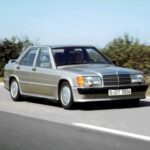
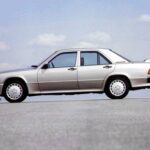
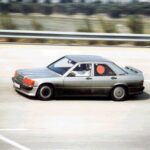
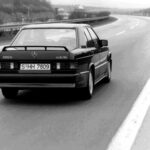
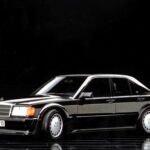
The 190 E 2.3=16 became the top model of the series. Even from the outside it differed from its less sportive brothers by a wing spoiler on the rear lid . It was powered by a 2,3 ltr.- 4 cyl.- aggregate which also belonged to the engine family M 102 and had been developed from the time-tested engine gearbox unit of the 230 E. A newly constructed four-valve cylinder head and several other measures made an increase in power from 136 PS to 185 PS possible. Even four weeks before its presentation at the motor show IAA in Frankfurt the new type was able to meet with sportive success. Three prototypes on the circuit in Nardo, Southern Italy, achieved a long-distance world record of more than 25.000 km, 25.000 miles and 50.000 km with an average speed of almost 250 km/h. The standard production of the ,six-teen valve" car - which was only available in ,blue-black" and ,smoke-grey" - was only taken up one year later in September 1984.
From September 1983 on the US-market, too, was open for the compact class. With the 190 D 2.2 and the 190 E 2.3, two modified models were exported that were not available on the domestic market. In the diesel variant the displacement had been englarged by prolonging the piston stroke to 2.2 ltr in order to compensate the power reduction due to the installation of an exhaust-gas recirculation. The power of the 2,2 ltr.-diesel, the exhaust-gas recirculation of which was indespensible in order to fulfill the strict Californian emission limits, corresponded to the 72 PS of the domestic version with weaker displacement. The petrol car was in a similar situation. A modified low compression version of the engine known from the 230 E was used. Its displacement had also been enlarged. Due to the regulated exhaust-gas recirculation it mobilised only 113 PS which was almost 10 PS under the power potential of the 190 E. One year later this shortcoming was redressed. The 190 E 2.3 received a modified intake manifold, a sharper camshaft as well as a newly adapted injection system. Thus it reached 122 PS, the power level of the 2,0 ltr.-domestic model.
At the same time type 190 with carburettor engine was also improved. In stead of the throttled version with 90 PS the unthrottled engine of type 200 was now used. Furthermore its compression was slightly increased. The now stronger 190, internally called type 190/1, disposed of 105 PS - 15 PS more than before. Due to the stronger throttled exhaust system of the compact model the power of type 200,however, could not quite be reached.
With the market introduction of the new medium-size range W 124 in January 1985 all compact-class models also received 15 inch wheels, electrically heated washer jets and panorama wipers with a considerably larger wipe pattern.
In the course of the year 1985, the range of models of the compcat class was extended by three more types. First in May, the 190 D 2.5 appeared with the fife-cylinder engine already know from type 250 D. Its power of 90 PS permitted quite good driving performance with an economical consumption of power. At the motor show IAA in September types 190 E 2.3 and 190 E 2.6 were presented besides the new T-model and the redesigned program of the S-class and SL-models.
In contrast to ist USA-export variant, the 190 E 2.3 was provided with the nomally compressed four-cylinder engine of the 230 E. It mobilised a power of 136 PS. A small sensation was the 190 E 2.6 which was equipped with the 166 PS six-cylinder engine-gearbox unit of the 260 E 2.6. Surprisingly it had been possible to find room for a six-cylinder engine in spite of the narrow space available. Differing from its less powerfull sister models, the 190 E 2.6 had a dual exhaust system as well as a deeper and steeper pulled down front apron with broad ventilation slots. The series production of the 190 E 2.6 was taken up in April 1986.
For all petrol powered variants of the extended range of models a regulated emission control system with a lambda-probe equipped catalyst was provided on demand, except for type 190 which was equipped with a carburettor. An other special alternative was the so-called ,RÜF-version; here the vehicle was delivered without catalyst and lambda probe but with a multifunctional mixture preparation and ignition system. Retrofitting a ,back fitting vehicle" with regulated catalyst was always possible and without problems. This handling allowed the client the highest possible flexibility as to the time of refitting. Since, at that time, unleaded petrol was not available everywhere, this was a considerable advantage.
From September 1986, the carburettor model was also available with an emission control system. Since that time the regulated catalyst has been part of the standard equipment of all Mercedes Benz passenger car models with Otto-engine. Back fitting models continued to be available on demand till August 1989 with a respective price deduction .
In September 1987 another compact-class model was presented at the motor show IAA in Frankfurt. The 190 D 2,5 turbo was equipped with a 122 PS strong fife-cylinder-turbo aggregate, was based on the time-tested suction engine. Due to supercharging it now was able to develope 32 PS more. A characteristic of the new type, which had already been exported to the USA from autumn 1986 on, were six air inlet slots allocated between turn-signal lamp and wheel cutout in the right front wing. They provide intake air for the turbo charger. In addition, the 190 D 2.5 turbo - in contrast to its sister model with suction motor - was equipped with a twin-scroll rear silence.
At the Paris car salon in September 1988, a thoroughly redesigned program of the compact class was presented. Six months before, the 1,000,000st vehicle of range 201 left the conveyor line in Bremen. In the forefront of the improvement were the stylistical reworking of the body and the restructuring of the interior. The most noticeable characteristic of the improved types were the lateral protection stripes with integrated longitudinal sill covers, introduced in a similar form with th coupes of series 124.
Front and rear amprons were now pulled down further and provided with voluminous bumpers. Thanks to their new supporting parts and modified shock absorbers a higher energy absorption was possible. With the front apron taken over from the 190 E 2.6 the lift of the front acxle could be reduced once more. With the help of modified rear aprons the down stream at the tail had been optimised. A further improvement was the right outside mirrorwhich now became part of the standard equipment. The newly designed interior made a more comfortable and generous impression. There was more knee and overhead space in the back as well as improved seats in the front and back.
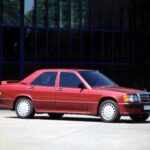
Together with the improved model variant the new type 190 E 2.5=16 was presented. It replaced the ,six-teen cylinder valve" car with the 2.3 ltr.-engine. The 2,5 ltr.=aggregate, developed from the preceding model by prolonging the piston stroke, mobilised a top power of 195 PS- 25 PS more than its predecessor. From the outside no change could be registered, except from the type label, the right outside mirror and two new coats of painting. In addition to the two paint coats of the predecessor two new metallic-paints ,almandine red" and ,astral silver" were available.
The 190 E 2.5=16 formed the base for the racing touring cars group A used in the German Touring Car Championship. However, the built-in engine did not show the prerequisites necessary for racing. It did not have the right bor/stroke ratio. Due to ist long piston stroke it was not suitable for high rotational speed. Furthermore there was no room for power increasing measures. Therefore the idea suggested itself to create a completely new engine with the same piston displacement. Within the FIA regulations, however, a new engine in an aproved vehicle was only accepted if it was integrated into the further development of the series with at least 10 %.
Therefore, of the 5,000 cars of group A, which had to be built, it was necessary to provide at least 500 with the new engine. Since the 190 E 2.3=16 was already such an approved basic model, one could continue on this path. At the Geneva car salon type 190 E 2.5=16 Evolution was presented in March 1989 as a result of this development. The newly constructed 2,5 ltr.-short-stroke aggregate with constant speed made 195 PS in the standard version, was, however, prepared for a power increasing step.
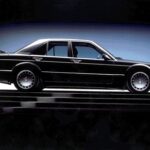
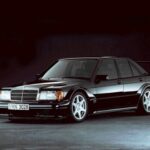
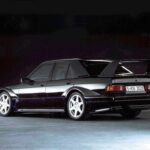
In view of the planned use for racing, the chassis and the brake system were modified as well as 16 inch wheels installed. The changes in the body comprised a front flat spoiler, an enlarged rear wing with triangular wedge as well as larger wheel cutouts with a considerable broader wing extension. Within three months exactly 502 ,blue-black metallic" cars were produced and delivered by the sales organisation to clients interested in motor sport.
One year later type 190 E 2.5=16 Evolution II represented a further step of development -again at the Geneva car salon. The engine now mobilised 235 PS and permitted an even better driving performance. Undercarriage and brake system had almost been left untouched, however, 17 inch wheels were used. The modifications in the body were salient. They were meant to reduce
aerodynamic resistance and increase the downforce of the front and rear axle. Nose and tail bumpers were newly designed with integrated spoilers, as well as with wing flarings integrated into the body line. In addition, the front wing was quite prominent. Again, within a few months, exactly 502 ,Evo II" were produced. As their predecessors they were all painted in ,blue-black metallic".
Within the initiative ,diesel '89", from February 1989 on, all passenger car diesel models were equipped with redesigned engines. Their particulate emission had been reduced by 40 % due to an improvement of the combustion process. Thus the improved diesel models fulfilled the strict USA praticulate matter limit values even without a particulate filter. They practically worked smokefree. This was made possible by a newly constructed prechamber with angular injection which guaranteed a more efficient combustion. In addition, the injection pumps of all diesel suction engines were equipped with an altitude pressure compensator in order to keep down emissions in altitudes as well. A pleasant side effect of the new diesel technology was an increase of power by 3 PS in the 190 D and 4 PS in the 190 D 2.5. The diesel passenger cars with turbo engines had already been provided with a similar technology adjusted to the needs of supercharged engines.
From that time on the 190 D 2.5 turbo mobilised 126 PS. The pollutant emission was even further reduced with the help of an intriguing
emission control system in which an oxidation catalyst, especially developed for diesel engines, was combined with a carefully adjusted exhaust gas recirculation. `From October 1990 on this very efficiant system was available for the diesel passenger car with suction engine, six months later also as a special version of the types with turbo engine.
In June 1989 the range of equipment was extended by the ,sports line"-package. It was available on demand for all models of the series with the exception of 190 E 2.5=16. The sports line equipment comprised a body that was allocated lower by 21 mm. Springs and bumpers were more closely adapted. It had all-aluminium wheels - dimension 7 J x 15 - with wide base tyres in the formate of 205/55 R 15 as well as the seat arrangement of the ,sixteen-valve" car.
In March 1990, after more than seven years, type 190 E 1.8 with the newly developed 1,8 ltr.-injection engine replaced the carburettor type 190. Since types 200 and 200 T were also dropped atthe same time, this meant the end of an era for Mercedes-Benz. Now even the last passenger cars with carburettor had disappeared from the domestic selling program. The new 1,8 ltr.-aggregate, powered by catalyst 109 PS, had been developed from the 2,0 ltr.=engine of the 190 E by reducing the piston stroke. The mechanically-electronically controlled injection system Bosch KE=Jetronic remained.
In January 1991 the compact class models were improved once more. All types, with the exception of the entry-level cars 190 D and 190 E 1.8, were now equipped with ALS as well as a centerconsole under the instrument panel. An eye-catching characteristic of the '91-models were the outside-mirror bodies painted in the body colour of the car. The 190 E, now called 190 E 2.0, had experienced a power increase of 3 kW i.e. 4 PS just as the 190 E 2.3. That was made possible by using a less resistant exhaust gas system. Now both types were provided with a dual-branch exhaust system - as the six-cylinder model.
In March 1992, as the time of series 201 was coming slowly to an end, three special models were presented, based on types 190 E 1.8, 190 E 2.3 and 190 D 2.5. Thus the existing offer of equipment had been expanded by three modern and young variants corresponding to the time-tested standard of technology and body. An international Mercedes-Benz team of designer ladies styled the ,avantgarde"-models with surprising details, fresh and modern colours and a standard equipment of noble materials. The 190 E 1.8 AVANTGARDE ROSSO presented itself, nomen est omen, in a rich red pearl colour coating, The 190 E 2.3 AVANTGARDE AZZURRO in a cool metallic blue and finally the 190 D 2.5 AVANTGARDE VERDE in a dark green lustrous pearl colour paint. All three ,avantgarde" models were produced in a unique limited edition of 4,600 cars.
More than ten years after the introduction into the market, the plant in Sindelfingen stopped the production of the first compact-class generation in February 1993. In Bremen the 190-car was continued to be built till August, mostly for export. The total amount of 1,879,629 cars produced documents in an impressive way the great success of this new Mercedes-Benz production line. Successors were the C-limousines of series 202 presented in May 1993. Their series production had already been started in February/March.