"/8"-Limousines, type 200 D - 280 E (series 114, 115)
Production: 1967 - 1976

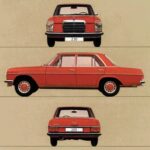
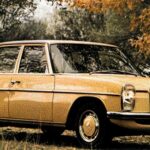

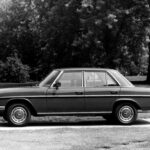
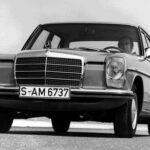



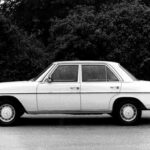
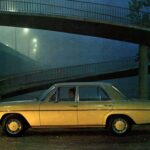
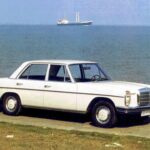
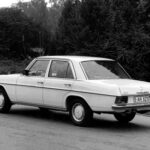

Types
| Type | Model | Production | Number produced |
|---|---|---|---|
| 200 D/8 | W 115 D 20 | 10.67/01.68 - 08.73 | 187.873 |
| 200 D/8 | W 115 D 20 | 08.73 - 12.76 | 152.054 |
| 220 D/8 | W 115 D 22 | 07.67/01.68 - 08.73 | 345.376 saloons |
| 220 D/8 | W 115 D 22 | 08.73 - 12.76 | 67.453 saloons |
| 240 D | W 115 D 24 | 02.73/08.73 - 12.76 | 126.148 saloons |
| 240 D 3.0 | W 115 D 30 | 03.74/10.74 - 11.76 | 53.690 |
| 200/8 | W 115 V 20 | 10.67/01.68 - 08.73 | 175.242 |
| 200/8 | W 115 V 20 | 08.73 - 12.76 | 113.543 |
| 220/8 | W 115 V 22 | 10.67/02.68 - 08.73 | 128.398 saloons |
| 230.4 | W 115 V 23 | 11.72/08.73 - 12.76 | 87.609 saloons |
| 230/8 | W 114 V 23 | 09.67/01.68 - 08.73 | 152.822 saloons |
| 230.6 | W 114 V 23 | 09.73 - 11.76 | 63.497 saloons |
| 250 | W 114 V 25 | 07.67/12.67 - 05.72 | 78.303 |
| 250 | W 114 V 28 | 03.70/07.70 - 08.73 | 22.624 |
| 250 | W 114 V 28 | 08.73 - 07.76 | 11.437 |
| 280 | W 114 V 28 | 10.71/05.72 - 08.73 | 19.537 |
| 280 | W 114 V 28 | 08.73 - 09.76 | 25.000 |
| 280 E | W 114 E 28 | 01.71/04.72 - 08.73 | 13.711 |
| 280 E | W 114 E 28 | 08.73 - 09.76 | 9.125 |
| 220 D/8 long | V 115 D 22 | 03.68 - 07.73 | 4.027 saloons |
| 240 D long | V 115 D 24 | 08.73 - 11.76 | 3.655 saloons |
| 230/8 long | V 114 V 23 | 08.68 - 07.73 | 1.082 saloons |
| 230.6 long | V 114 V 23 | 08.73 - 10.76 | 1.131 saloons |
| 220 D/8 chassis for special-purpose bodies | F 115 D 22 | 03.68 - 07.73 | 2.327 chassis |
| 240 D chassis for special-purpose bodies | F 115 D 24 | 08.73 - 11.76 | 581 chassis |
| 220/8 chassis for special-purpose bodies | F 115 V 22 | 04.68 - 06.73 | 334 chassis |
| 230.4 chassis for special-purpose bodies | F 115 V 23 | 08.73 - 08.76 | 156 chassis |
| 230/8 chassis for special-purpose bodies | F 114 V 23 | 04.68 - 07.73 | 240 chassis |
| 230.6 chassis for special-purpose bodies | F 114 V 23 | 08.73 - 10.76 | 77 chassis |
| 220 D/8 chassis with elongated wheelbase | VF 115 D 22 | 03.68 - 07.73 | 1.087 chassis |
| 240 D chassis with elongated wheelbase | VF 115 D 24 | 07.73 - 09.76 | 935 chassis |
| 230/8 chassis with elongated wheelbase | VF 114 V 23 | 04.68 - 07.73 | 1.567 chassis |
| 230.6 chassis with elongated wheelbase | VF 114 V 23 | 08.73 - 10.76 | 1.367 chassis |
History
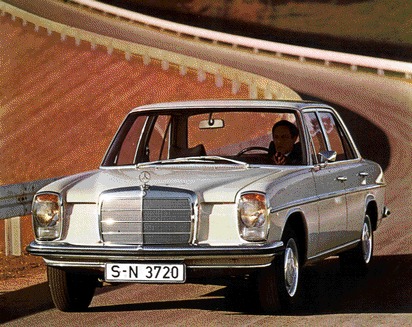
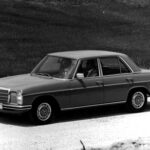
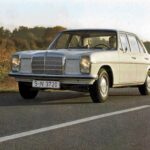
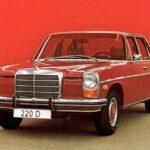
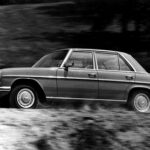
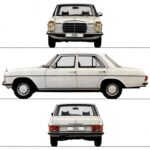
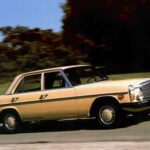
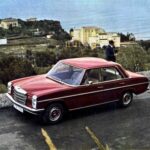
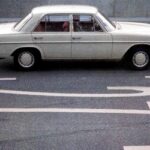
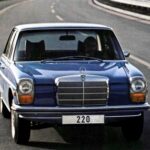
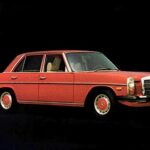
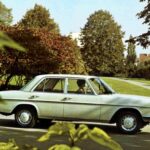
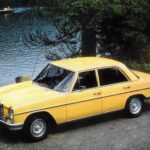
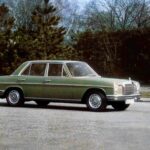
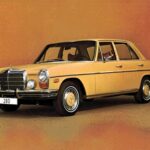
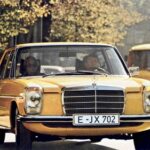
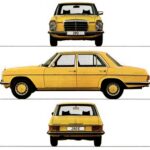
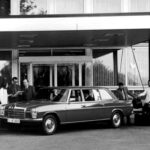
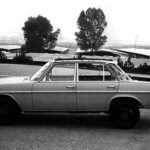
At the same time as the 280 S, 280 SE and 280 SL types, in January 1968, a "new generation" of intermediate-class cars, too, was presented. The original range of models of the product lines internally called W 114/115, comprised six types, from the 200 D with 55 bhp-4 cyl. Diesel engine to the 250 type with 130 bhp-6 cyl. carburettor engine. The top model, the 250 type, could be distinguished by its exterior from its more profane brethren; it was the only model to sport a double fender at the front.
The four cylinder types 200 D to 220 were bracketed together in product line W 115, while both six cylinder models 230 and 250 belonged to product line W 114. The models of the "new generation" are called "Strich-Acht-Types" [dash-eight types], a reference to the date of their appearance.
The salient feature of the new models from a construction point of view was the so-called "diagonal- jointed cross shaft axle". For the first time, a serially produced Mercedes-Benz passenger car was built with a tilted-shaft rear axle. Profound work on the development had resulted in a significantly improved driving perfomance, compared to the preceding models, without compromising handling quality.
In November 1968, the new type programme of the "new generation" was rounded off at the upper end by the addition of the two coupe models 250 C and 250 CE. The presentation of these types was also a debut: For the first time, an exclusive coupe version had become available within the intermediate-class product line.
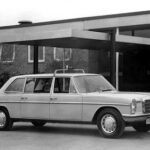
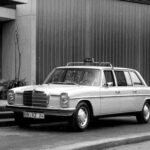
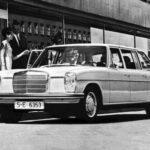
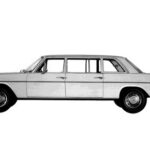
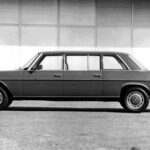
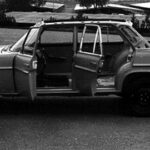
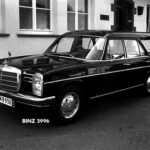
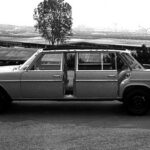
Another body version, which was presented in 1968, possessed even more exclusive character, at least as far as its sales price and the number of units produced is concerned: An eight-seater saloon car with a wheelbase that had been extended by 650 mm and three rows of seats. It was available as Type 220 D and 230, and from autumn 1973 as 240 D and 230.6. This version, of which almost 10.000 units were produced, was used primarily by taxi services and travel agencies, air carriers, embassies and public authorities. The share of Diesel-powered cars was particularly high among the eight-seated models - with a share of 78 %, this figure was significantly higher than the share of conventional eight-seated models saloon cars.
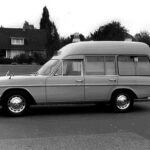
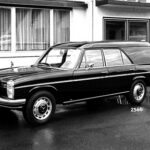
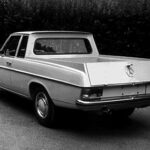
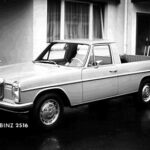
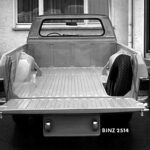
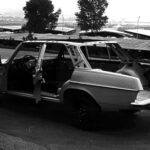
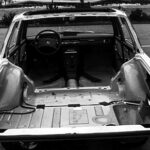
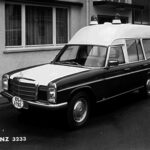
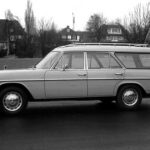
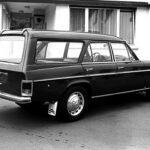
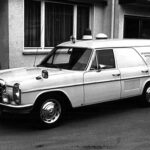
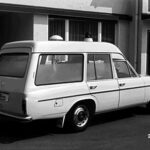
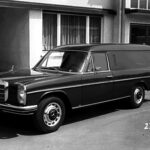
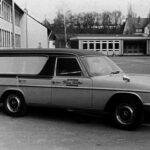
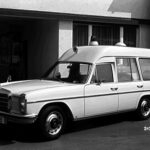
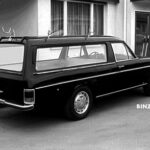
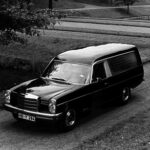
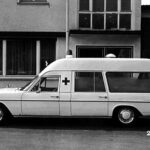
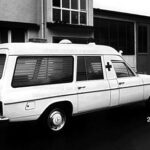
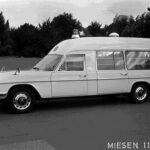
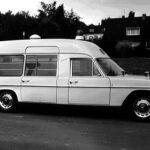
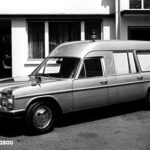
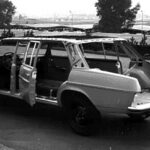
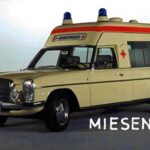
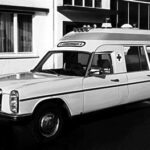
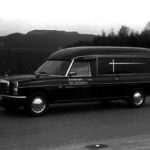
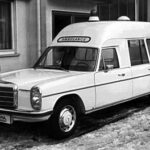
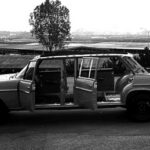
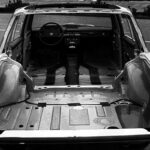
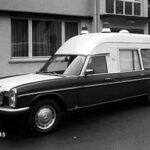
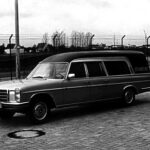
In keeping with tradition, Saloon car and long saloon were available as chassis with partial car body, which were then built into ambulance cars, station wagons or other speical bodies by body makers at home and abroad. Part of the sales programme with a normal wheelbase first were the types 220 D, 220 and 230 and with an extended wheelbase the types 220 D and 230. The chassis, too, underwent Model revision in autumn 1973: the 220 D was replaced by the 240 D and the 220 by the 230.4. The six-cylinder type 230 continued to be produced as a 230.6. The ambulance bodies built by the Binz company in Lorch and Miesen company in Bonn were particularly popular. The bodymakers Pollmann in Bremen, Rappold in Wülfrath, Stolle in Hannover and Welsch in Mayen were the best-known firms for the production of funeral car bodies.
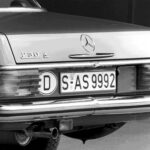
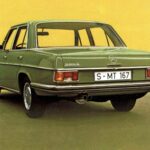
in April the range of saloon models was completed in April 1972 by the types 280 and 280 E. Both were furnished with a new 2,8 litre-dohc-6 cyl. engine which delivered 160 bhp in its carburettor version and 185 bhp in its fuel-injection version. Most of the new Top models of this product line could be distinguished from their less powerful counterparts even without a glance at the type label; Beside the double fender of the 250 type they were the only saloon cars of the product line with a rear fender, reaching right up to the rear wheel arches, and with two exhaust tail pipes.
Since the 280 and 280 E had appeared on the market, the 250 type was no longer delivered with the former 2,5 litre-engine but also with the
2,8 litre unit, which was already familiar from the Type 280 S but was now used in slightly derated form giving 130 bhp. The export version of the 250 type for the United States and Canada had been fitted with this type of engine as early as July 1970.
In September 1973, the whole product line underwent extensive model revision; countless details, which had been introduced into the SL- and SLC=Types respectively, and also in the S=Class now were incorporated into the models of the less prestigious product line, improving the general safety concept. To name but a few: exterior rear mirrors, which could be adjusted from inside the car, dirt repelling decorative trims at the A-pillars, which kept the side windows clean even in poor weather, profiled, soil-repellent taillights as well as a roof rail at the rear window. The four-spoke security steering wheel, which was a familiar feature of product lines 107 and 116, had been integrated into serial production of the "dash-eight" types half-a year prior to model revision. From March 1973, head rests and automatic safety belts became part of the serial equipment of product line 114/115 models.
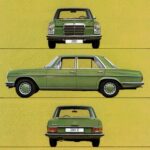
Also the visual appearance of the models was brought up to date and adjusted to the exterior of the S=class. The radiator grill had been lowered and had become broader, the number plate panel was now attached on the front fender rather than underneath it as before; also the handle of the boot lid was changed. The front of the model was brought in line with the outfit of its older brother. Like the coupe-models, the types 250 to 280 E were no longer fitted with the double fender; The only saloon cars of the product line with a revised exterior were the types 280 and 280 E, which still retained their long rear fenders.
Following model revision in autumn 1973, two new four-cylinder engines were used; the 240 D type rounded off the range Diesel-powered model at its upper end, while the Type 230.4 replaced the 220. The additional figure "4" in the new type label had become necessary in order to prevent confusion beween this model and the original version of the 230 model, which had a six-cylinder engine and was still on sale as type 230.6.
In July 1974, the model range was augumented yet again: The first five-cylinder Diesel powered passenger car of the world was presented with the type 240 D 3.0, which had a 3,0 litre engine delivering an impressive 80 bhp - a respectable feat for a Diesel passenger car in those times.
In January 1976 the successor models of product lines 114/115 were presented in the shape of the types of product line 123; serial production had already been started. Production of the "dash-eight" types was not wound up immediately, however, but continued until December 1976, so that both product lines were produced in parallel for one year. An exception were the types 250 to 280 E and the Coupes, production of which ended a few months earlier - between June and September 1976, depending on the model. In all, more than 1,9 Million cars of product line W 114/115 were produced in nine years.