Operation
WIS 54-500
The cruise-control system is ready for operation when the ignition is sitched on. For actual operation, the vehicle speed should be around approx. 40 km/h. When the vehicle is running at the desired speed, brief tipping against switch in direction “ACCEL—SET” or DECEL-—SET” is enough to keep this speed constant until the driver sets a new speed or the brake pedal is depressed. To match this set speed, for example, to traffic conditions, hold switch in direction “ACCEL—SET” or “DECEL—SET” until the desired speed is attained. Upon release of switch the new speed is held constant. Short tipping against switch in direction “OFF” or stepping down on brake or clutch pedal will switch off the cruise-control system. But the system remains ready for operation until the ignition is switched off. If following deceleration, operation of clutch or after switching off, the switch is briefly tipped in the direction of “RESUME” at a vehicle speed above approx. 40 km/h, the vehicle will automatically accelerate to the speed “SET” last.
If the speed is exceeded by acceleration, for example while passing, the vehicle will automatically return to the previously set speed when the accelerator pedal is released.
Resume: On the 1st version up to approx. March 1976 with the exception of model 116.036 the speed set last will remain for several hours also after stopping the vehicle. On the 2nd version starting approx. March 1976 (model 116.036 and 123 from begin of production) the speed set last will be cancelled when the ignition is switched on. In addition, the 8-cylinder models will accelerate in switch position “RESUME” approx. 4 s later and will only then move to full acceleration.
For safety reasons, the cruise-control system is switched off if for some reason or other the selected speed is reduced by more than approx. 20%. For example, if the speed drops while driving up hill or when the vehicle is decelerated as a result of a defective brake light switch.
Attention!While driving with the cruise-control system, do not engage the selector lever position ‘‘N”’ of the automatic transmission, since this will speed up the engine.
The cruise-control system comprises essentially four design elements: the switch, the sensor, the control unit and the actuator.
Vehicles with manual transmission are provided with an additional switch which is operated by clutch pedal.
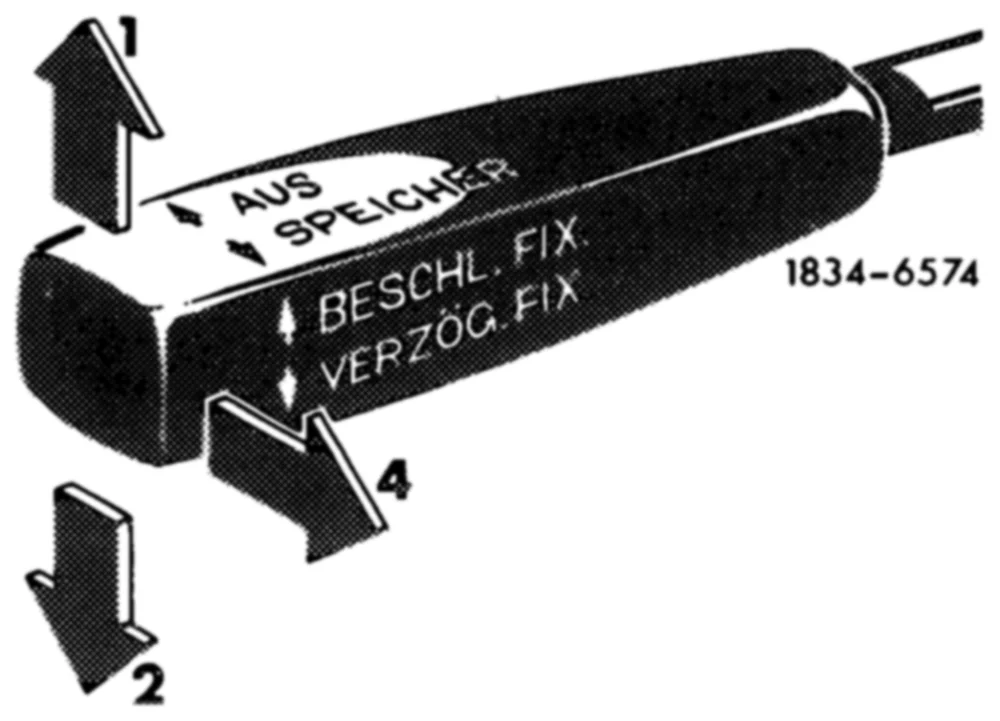
Switch
Position 1″ or “2″touch speed is set Position ”1” hold = set speed is increased Position ”2″’ hold = set speed is reduced Position ‘’3’’ touch cruise-control is switched off Position ’4″’ touch speed set prior to switchingoff returns automatically at a speed above approx. 40 km/h
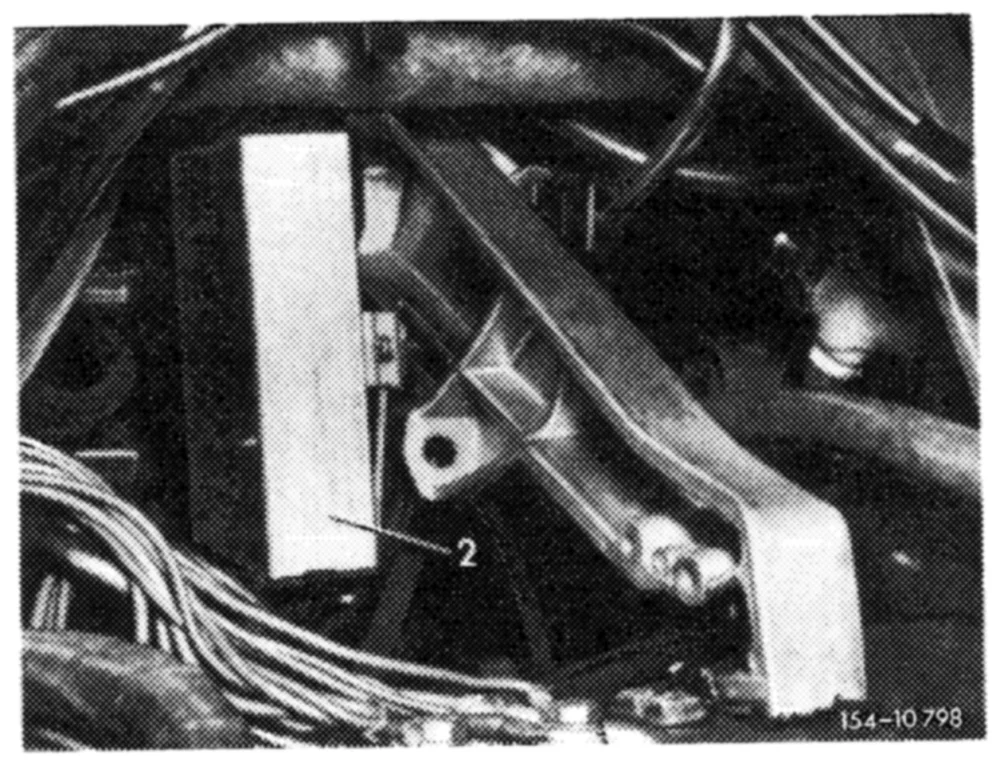
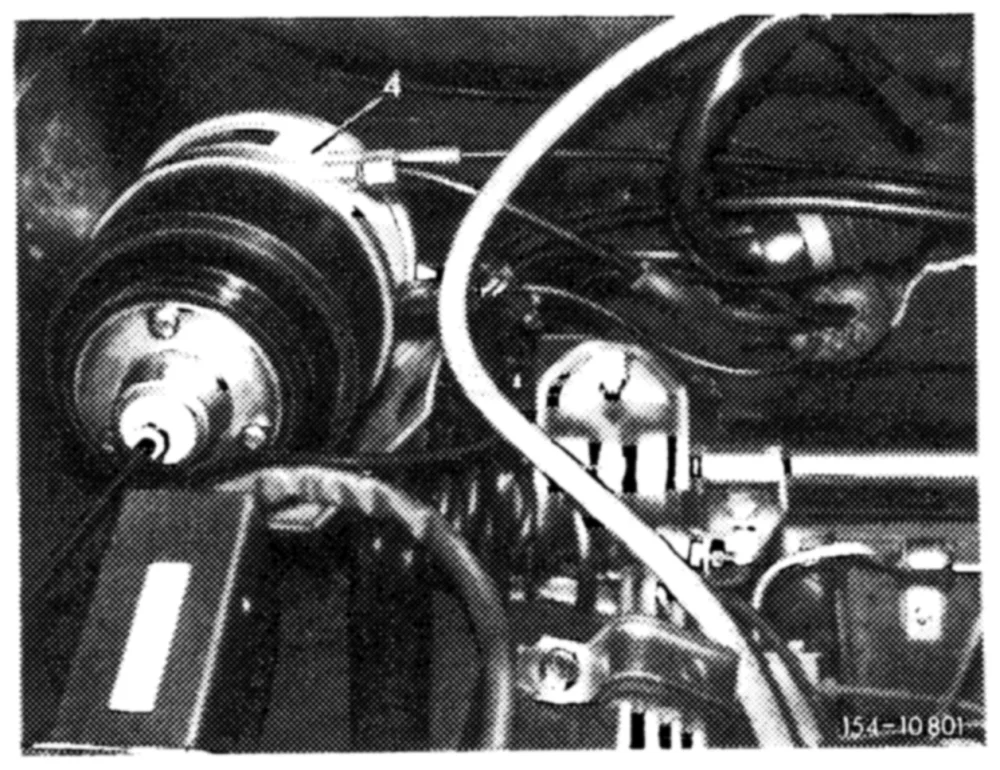
The control unit (2) compares the actual and the selected speed. In the event of a deviation from the selected speed the control unit (2) sends pertinent control signals to the vacuum operated actuator (4) until the actual and the selected speeds are again in agreement.
Sensor
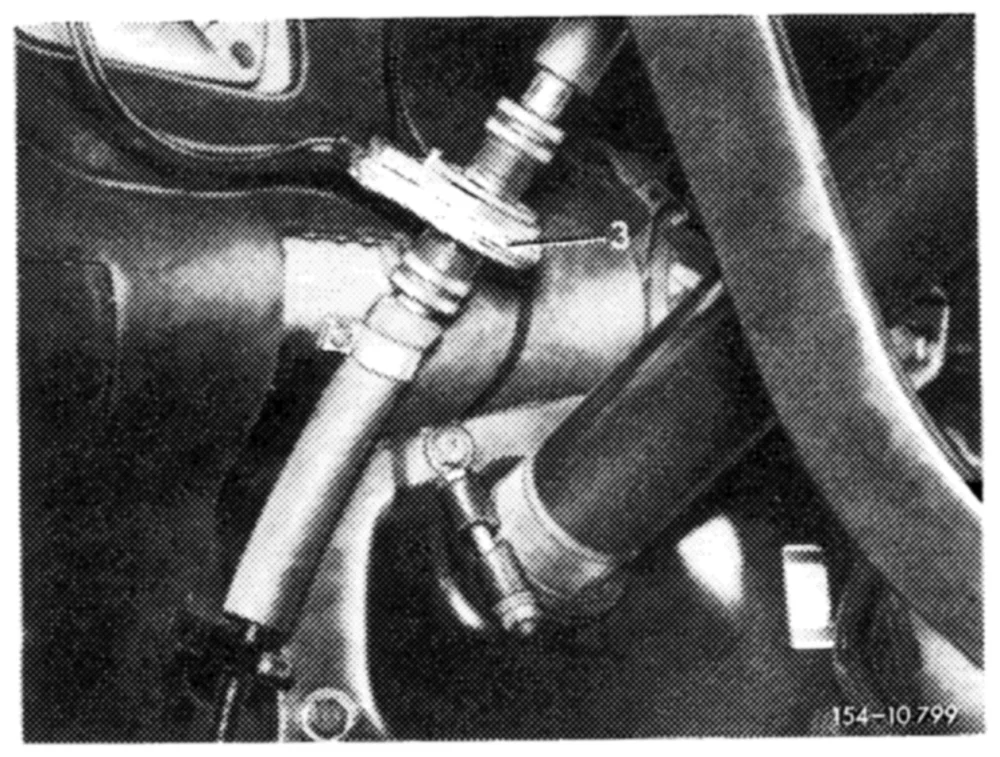
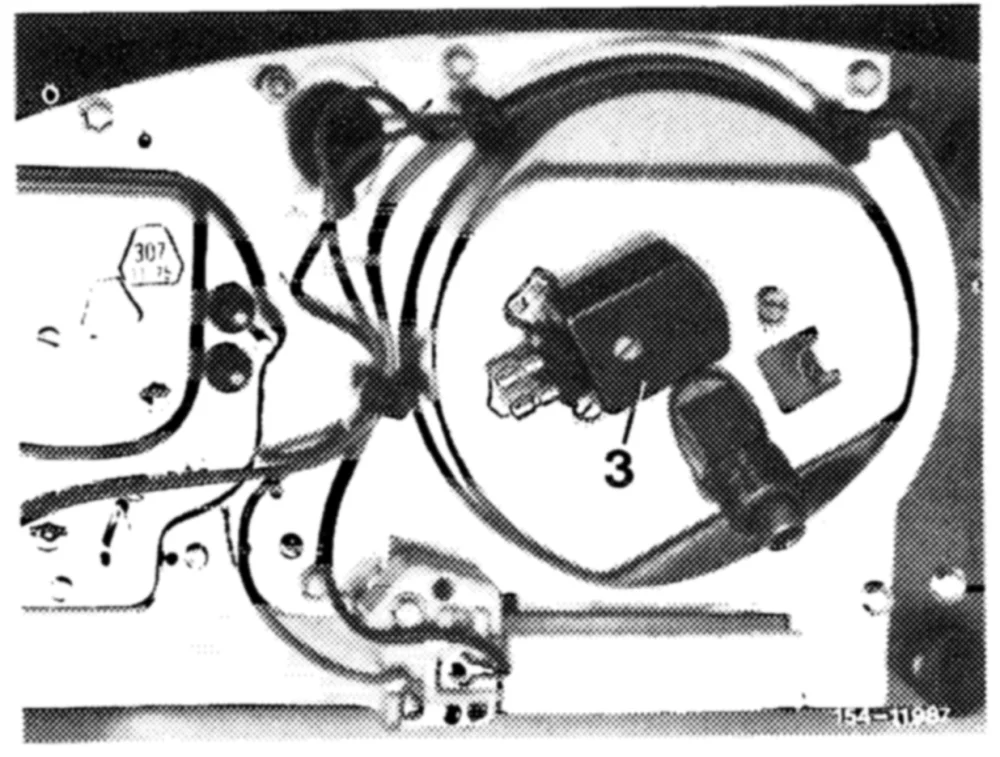
Sensor (3} transmits the actual speed to the control unit (2).
Note: The sensor (3) of the 1st version is mounted between the two-piece speedometer shaft. The sensor of the 2nd version is screwed to speedometer.
ist version
2nd version
Actuator
The vacuum-operated actuator (4) receives its control impulses from the control unit and actuates the control linkage by means of a cable control system.
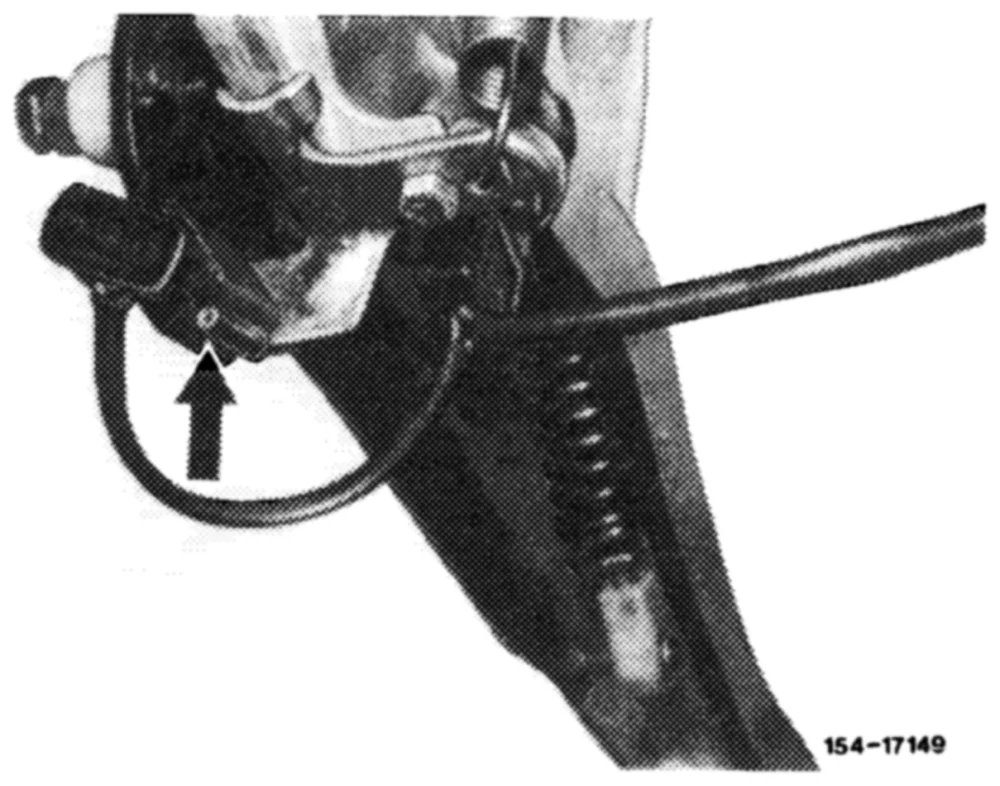
When stepping down on clutch pedal, the ground connection from stop lamps to control unit will be interrupted by switch (arrow). As a result, cruise control will be switched off similar to braking or when tipping cruise control switch in direction of “off”.