Checking of shock absorber
WIS 32-120
Test values for shock absorbers
Designation Part no. Color code (on housing Adjustment in N at Check of oi! reserve for front shock absorber, 100/min and 50 mm in shock absorber on lower suspension eye stroke for new or for rear shock absorber) exchange shock absorber Piston rod exposure ,,a‘’ 3) Adjustments Max. for new shock perm. absorbers values Extension Compression mm mm
Front shock absorbers
Gas pressure shock absorber with separating piston‘)
107 32300 00!) 4 lengthwise lines, green 1050 520
107 323 01 002) 4 lengthwise lines, green 1080 550 Bilstein 115 323 10 006) 1 lengthwise line, red 760 400 115 323 11 00 2 lengthwise lines, red 1020 390 gt2 38
107 323 04 00 4 crosswise lines, green 1080 550
F&s 115 323 25 003) 1 crosswise line, red 760 _ 400 115 323 26 003) 2 crosswise lines, red 1020 390
Gas pressure shock absorber without separating pistons)
107 323 02 00!) 4 crosswise lines, green 1180 600 107 323 03 002) 4 crosswise lines, green 1100 670 115 323 13 003) 1 crosswise line, red 900 440
F&S 115 323 14003) 2 crosswise lines, red 1050 490 22+2 0 115 323 17 002) 1 crosswise line, red 870 490 115 323 20 003)
115 323 18 002) 2 crosswise lines, red 1150 500 115 323 21 003)
Boge 115 323 23 00 1 slanted line, red 770 390 1442 0
1) 1st version 2) 2nd version 3) 3rd version 4) After exceeding max. exposed piston rod value the shock absorber is losing in effect. 5) After falling below max. exposed piston rod value the shock absorber loses in effect. 6) Standard version model 107.026.
Designation Part no Color code (on housing Adjustment in N at Check of oil reserve for front shock absorber, 100/min and 50 mm in shock absorber on lower suspension eye stroke for new or for rear shock absorber) exchange shock absorber Piston rod exposure ,a’ 3} Adjustments Max. for new shock perm. absorbers values Extension Compression mm mm
Rear shock absorbers
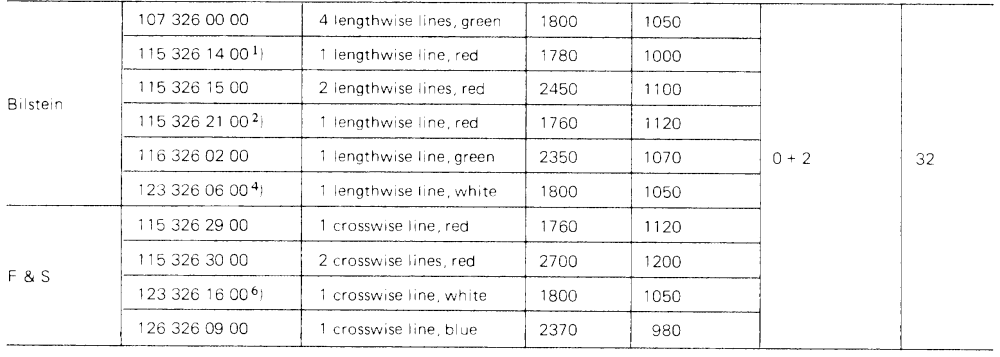
Gas pressure shock absorber with separating piston?)
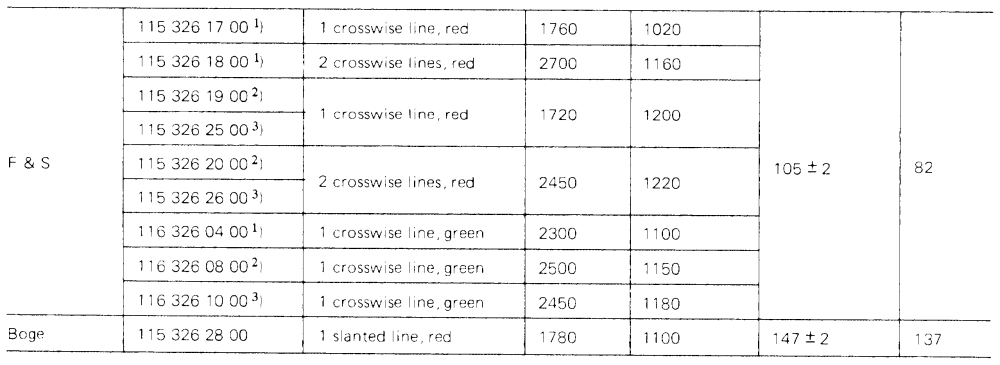
Gas pressure shock absorber without separating pistons)
ist version 2) 2nd version 3) 3rd version After exceeding max. exposed piston rod value the shock absorber is iosing in effect. After falling below max, exposed piston rod vaiue the shock absorber loses in effect, 6) Standard version model 107.026
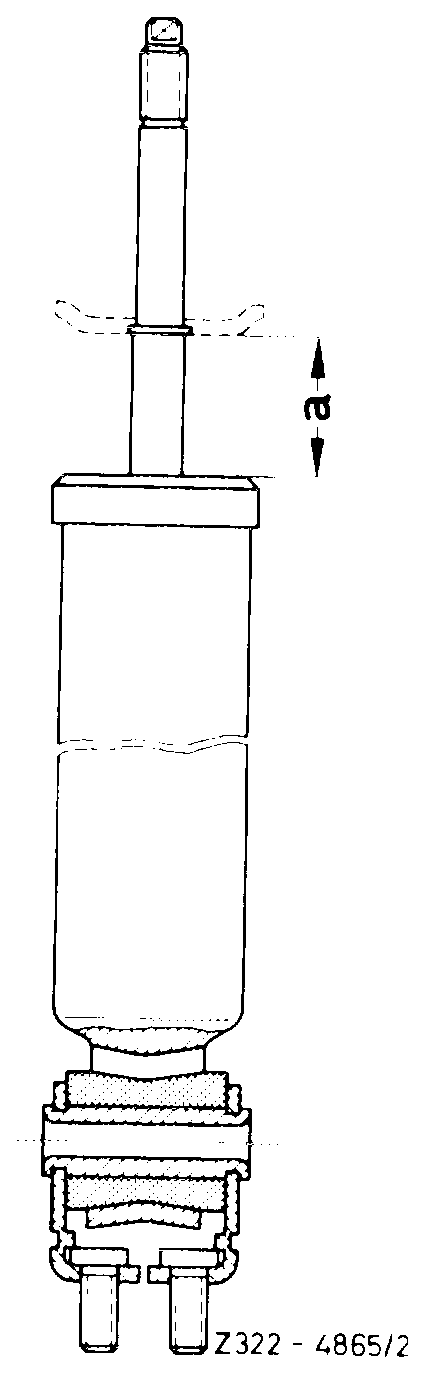
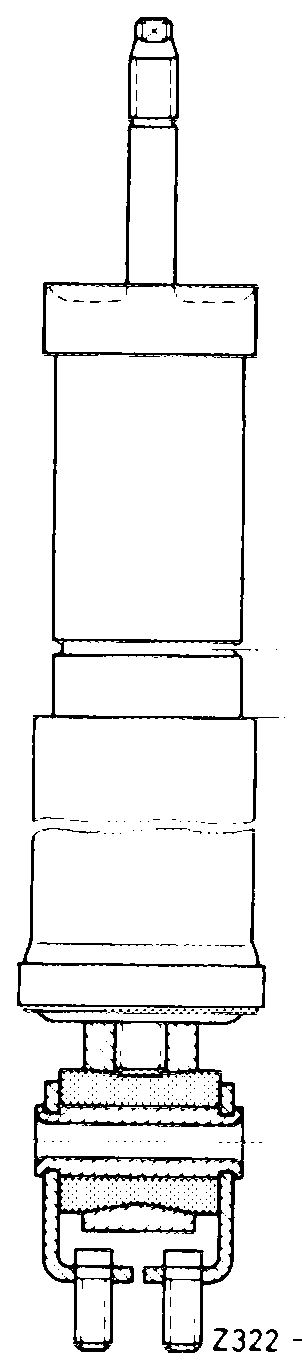
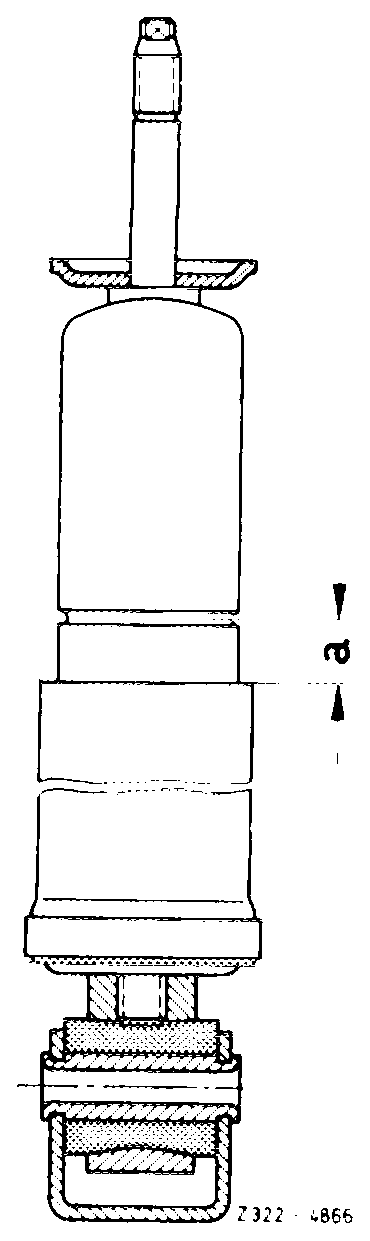
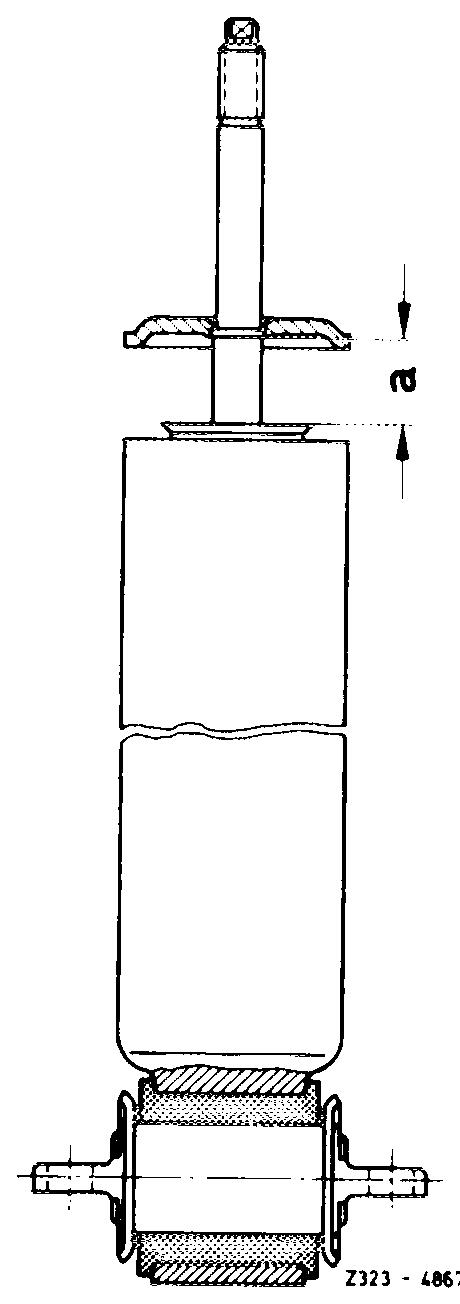
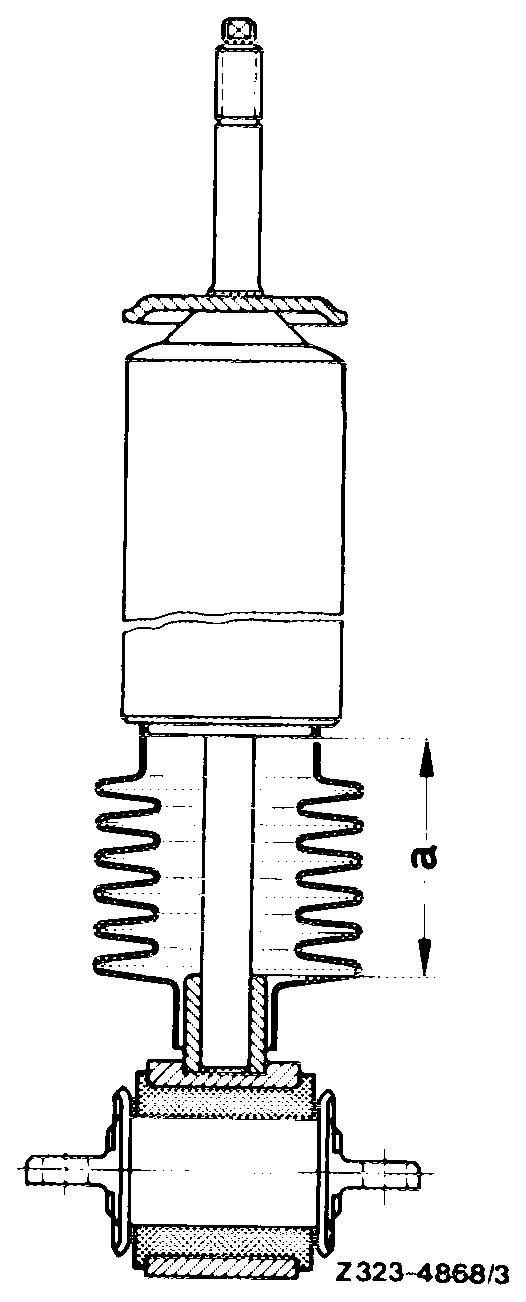
– 4866/2 Front shock absorbers Bilstein F&S F&S F &S (starting 11.1980) (version up to 1974} (version starting a_ Length of exposed piston rod with separating piston without separating piston 1975 up to 10.1980)
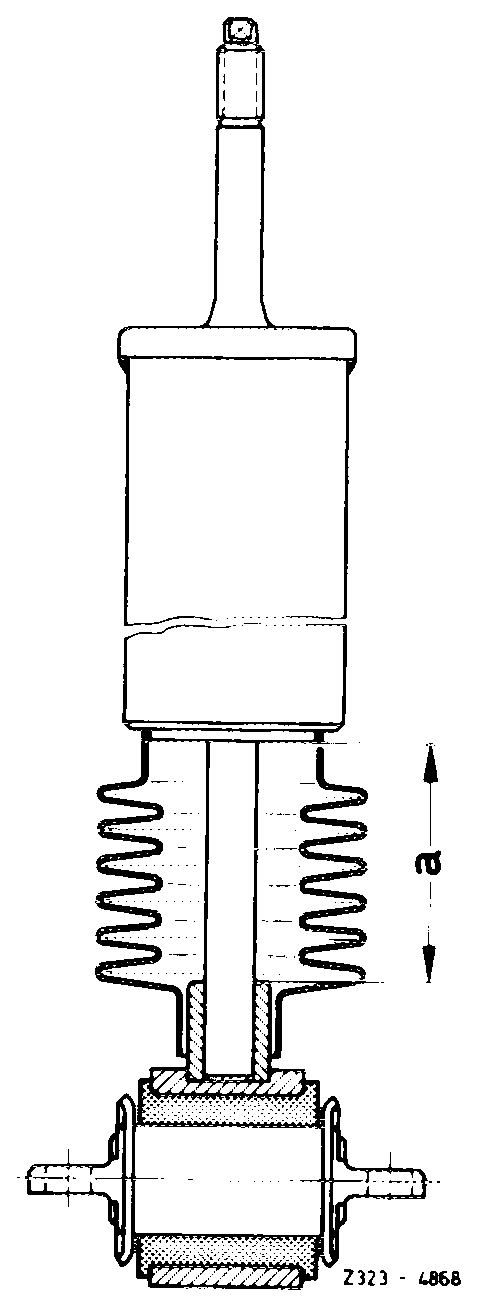
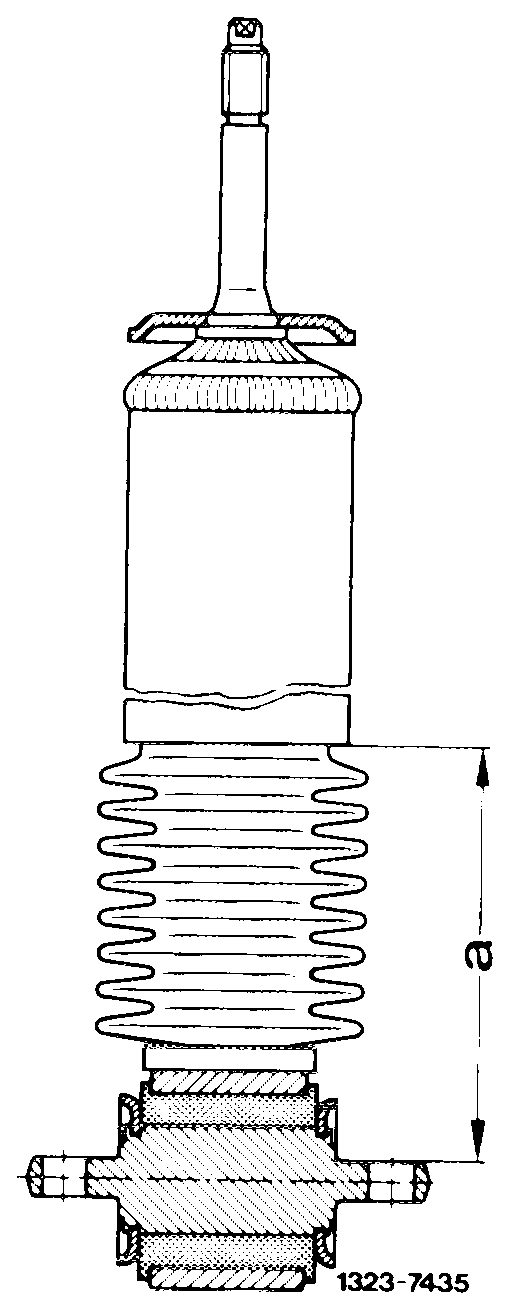
Rear shock absorbers Bilstein F&S F&s Boge F & S (starting (version up to (version starting a Length of exposed piston rod 11.1980) with 1974) without 1975 up to separating piston separating piston 10.1980)
When testing and evaluating gas pressure shock absorbers, a fundamental difference between two designs must be made. Difference refers to expansion and to the separation of oil and gas chamber.
Gas pressure shock absorber with separating piston between oi! and gas chamber (Bilstein, F & S starting November 1980).
Installation position of shock absorber with piston
rod in upward direction.
Gas pressure shock absorber without separating piston between oil and gas chamber (F & S up to October 1980 and Boge).
Installation position of shock absorber with piston
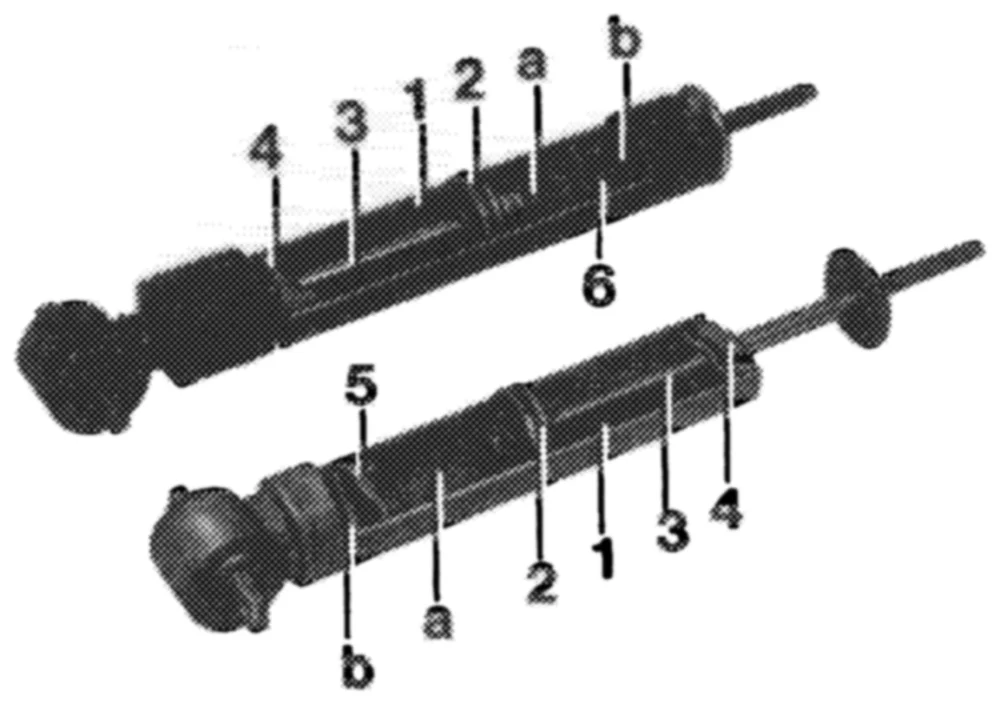
rod in downward direction.
Cylinder BWNOn Operating piston with spring washers Piston rod Closing package with piston rod seal and piston rod guide Separating pistons Baffle plate Oil chamber oo Gas chamber
Oil reserve in shock absorber
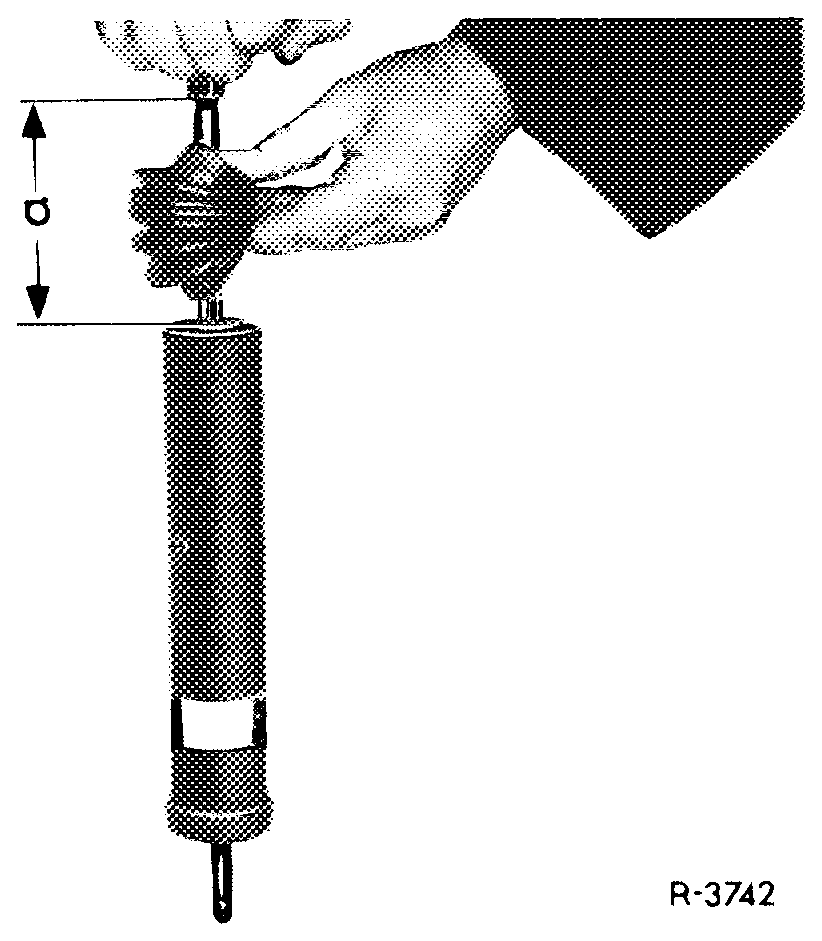
The oil reserve in the shock absorber is determined by the length of exposed piston rod ,,a’’.
The temperature of the shock absorber should be ° . . approx. 20 C when the oil reserve is measured.
In the event of an oil loss, the length of the exposed piston rod increases on shock absorber with separating piston; the length decreases on shock absorbers without separating piston.
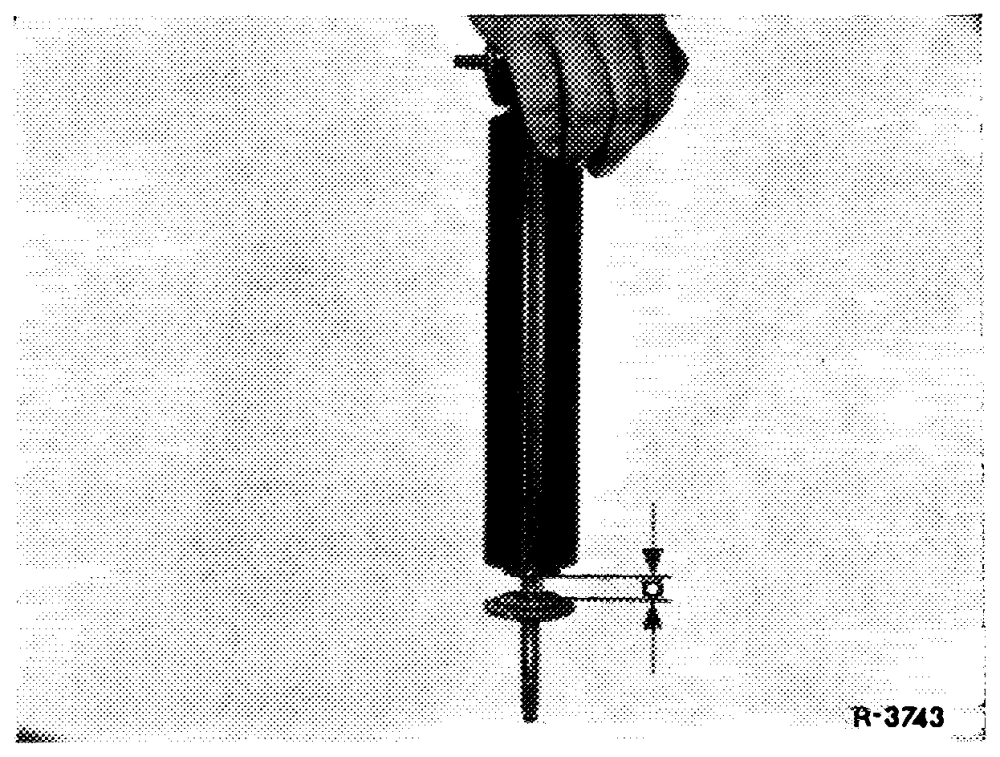
If the permissible length are exceeded or not met, replace shock absorber because it has lost its effectiveness.
Shock absorber with separating piston
Push-in piston rod up to stop of operating piston on separating piston. Now measure exposed length ‘’a”’.
a Length of exposed piston rod
Shock absorber without separating piston
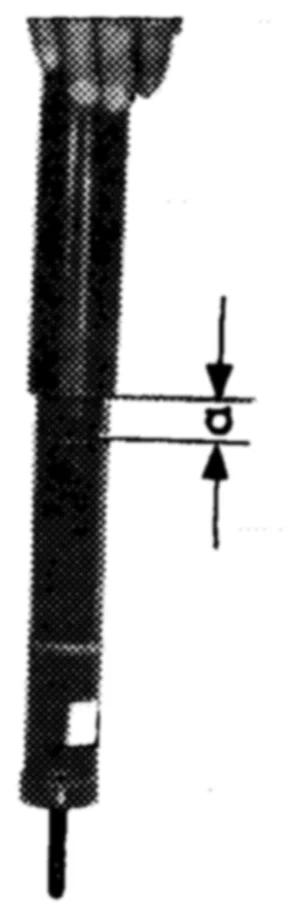
Compress shock absorber — with piston rod in up-
ward direction — until a clearly noticeable, additional
resistance begins, that is until the piston makes contact with oil column. Now measure length of exposed piston ‘a’.
Note: When checking oil reserve in shock absorbers without separating piston, any occurring intermediate noises are without significance.
a Length of exposed piston rod R-3744
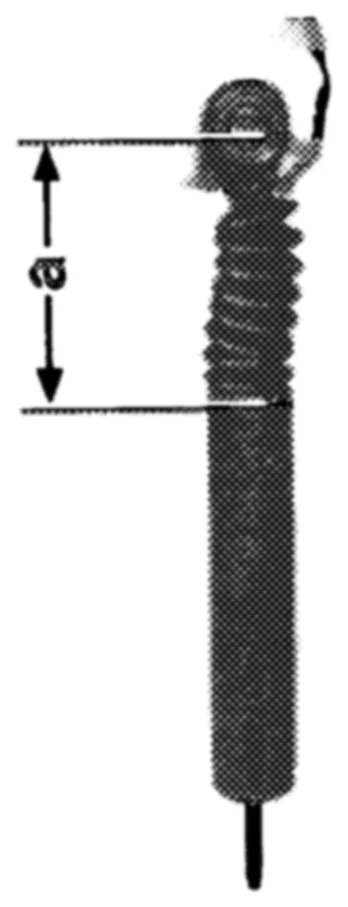
Rear shock absorber F & S up to October 1980 a Length of exposed piston rod
Rear shock absorber Boge a Length of exposed piston rod 1982-16308
Sight test
Check piston rod carefully for surface damage.
Check piston rod for bends. A bent piston rod is recognized by binding when inserted into guide bushing.
Note: For lubricating guide bushing outside piston rod seal, the piston rod is designed to provide a slight oil film.
The alignment of the suspension points is important for the correct function of the piston rod seal. In the event of leaks on piston rod seal, be sure to check whether alignment of suspension points is in order.
Rumbling and knocking noises
Check upper suspension for correct assembly, ]ower suspension for tight seat of fastening bracket and rubber mount in housing eye.
Determine oil reserve. If oil loss is very high, shock. absorbers with separating piston show a tendency toward knocking, since during deflection the piston rod may knock against separating piston, On rear mounted shock absorbers, check alignment of upper suspension point on frame floor to lower suspension point on semitrailing arm (32-126).
A loose operating piston may be responsible for the knocking. To check, push piston rod inwards in installation position of shock absorber, release and push-in again. If the operating piston is loose, a change between pushing and pulling will be noticed by a knocking noise.
Hissing noises
Shock absorbers with separating piston have a tendency toward hissing noises if the separating piston is leaking, since gas will enter oi! system and will cause foaming. Such shock absorbers may actually still be fully operational, but should nevertheless be replaced.
Attention! Shock absorbers with separating piston without an absolutely solid separation of oil and gas chamber can be checked for noises etc. in installation position, that is, with piston rod in downward direction. If the noise test has been preceded by testing the oil reserve (with piston rod pointing in upward direction) or if the shock absorber has been in storage with piston rod pointing in upward direction, the oil is mixed with gas.
Noises can be evaluated only after pushing the piston
rod several times inwards.