Assessment of cylinder bores
WIS 03-008
Tightening torques Nm (kpm) Cap nuts for injection lines _ 7 25 (2.5) Bolts for valve cover (engine 61 5) 7 _ 5 (0.5) Nuts for valve pave (engines 615, 616, 617) 15 (1 5) Screw collar for precombustion chamber in cylinder head 150-180 (15–18)
70–80 (7–8) Injection nozzle in precombustion chamber
Special tools
Go Box-wrench socket open, 17 mm, 1/2″ drive for injection lines – 000 589 68 03 00
Socket 27 mm, 1/2” drive – 001 589 65 09 00
Pin wrench for screw collar of precombustion chamber – 615 589 00 07 00
a Extractor for precombustion chambers 1004–63 – 615 589 00 33 00
Commercially available tool
e.g. Autoskop TW 8/330 and TW 8/190 Franz Welger, Siidstrasse 9, 3280 Bad Pyrmont
Cylinder inspection lamp e.g. Aviaskop, SWV 120 L Karlheinz Hinze, Eibgaustrasse 112, 2000 Hamburg 53
Note
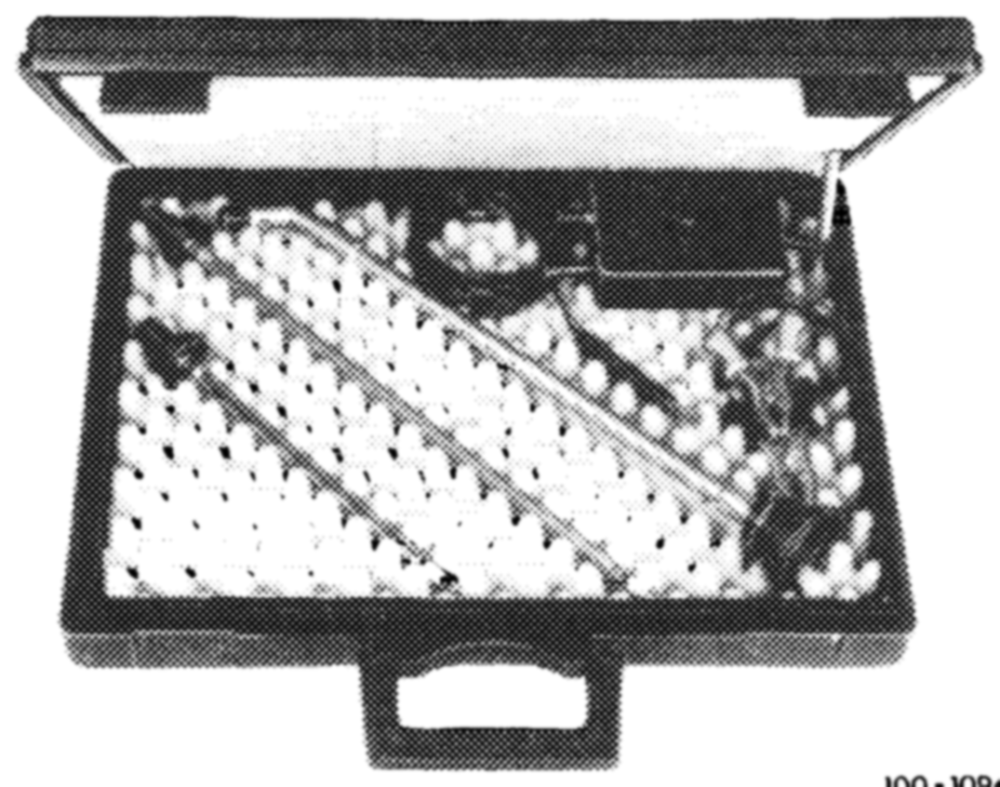
A visual inspection is to be carried out with a cylinder inspection lamp, the cylinder head being in situ. To do so, first remove the precombustion chambers (O5–117).
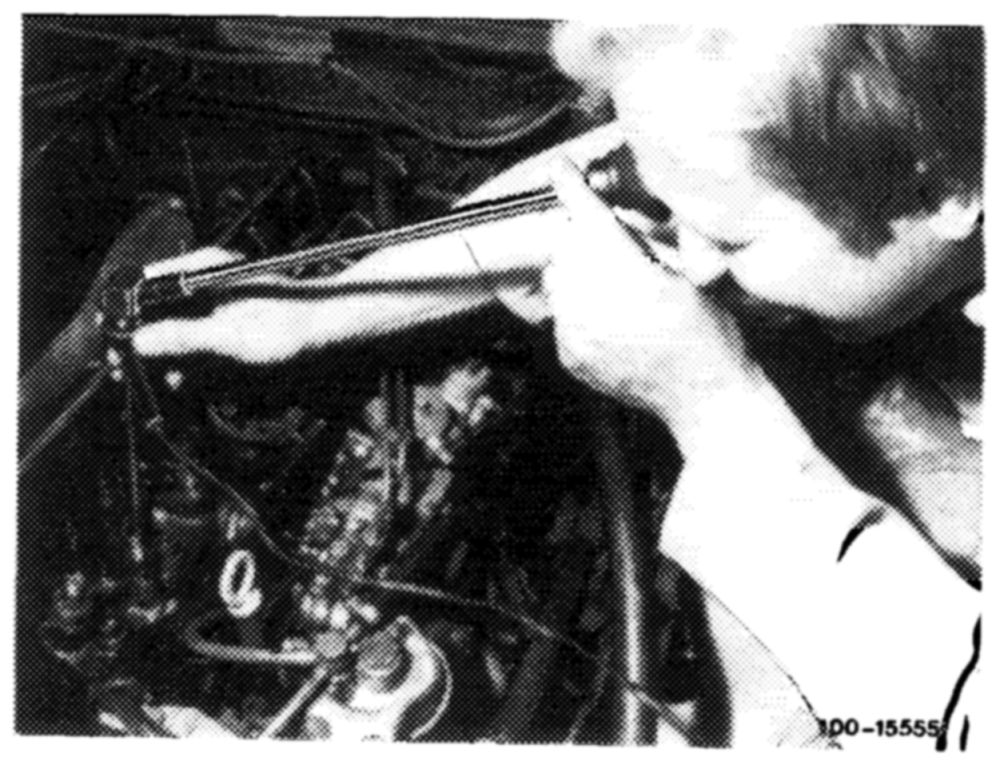
scored or streaky cylinder liner is so seriously damaged that the engine needs removing or repairing or whether the marks are insignificant. The following notes are intended to help you make a correct, professional decision.
First examine cylinder liner marks to distinguish between “optical streaks’ and “seizing marks”. ‘Optical streaks” are normally up to 3 mm wide. They are due to the ring gap but still show signs of honing. In contrast, ‘’seizing marks’ make the honing traces disappear completely.
“Streaks at the land side’ (in the direction of the piston pin) cannot be due to piston skirt slurring or seizing because there are no points of contact between the piston skirt and cylinder liner.