Viscofan clutch
WIS 20-320
Viscofan clutch speed-controlled
Engines 116.960 and 116.961 standard version,
117.960, 117.961
Operation
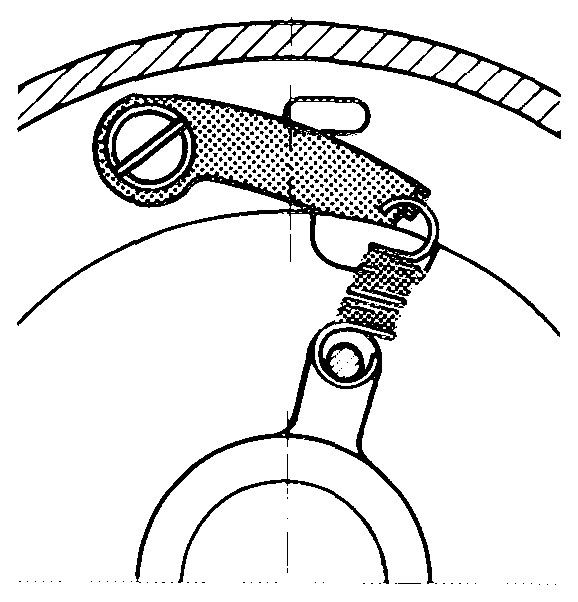
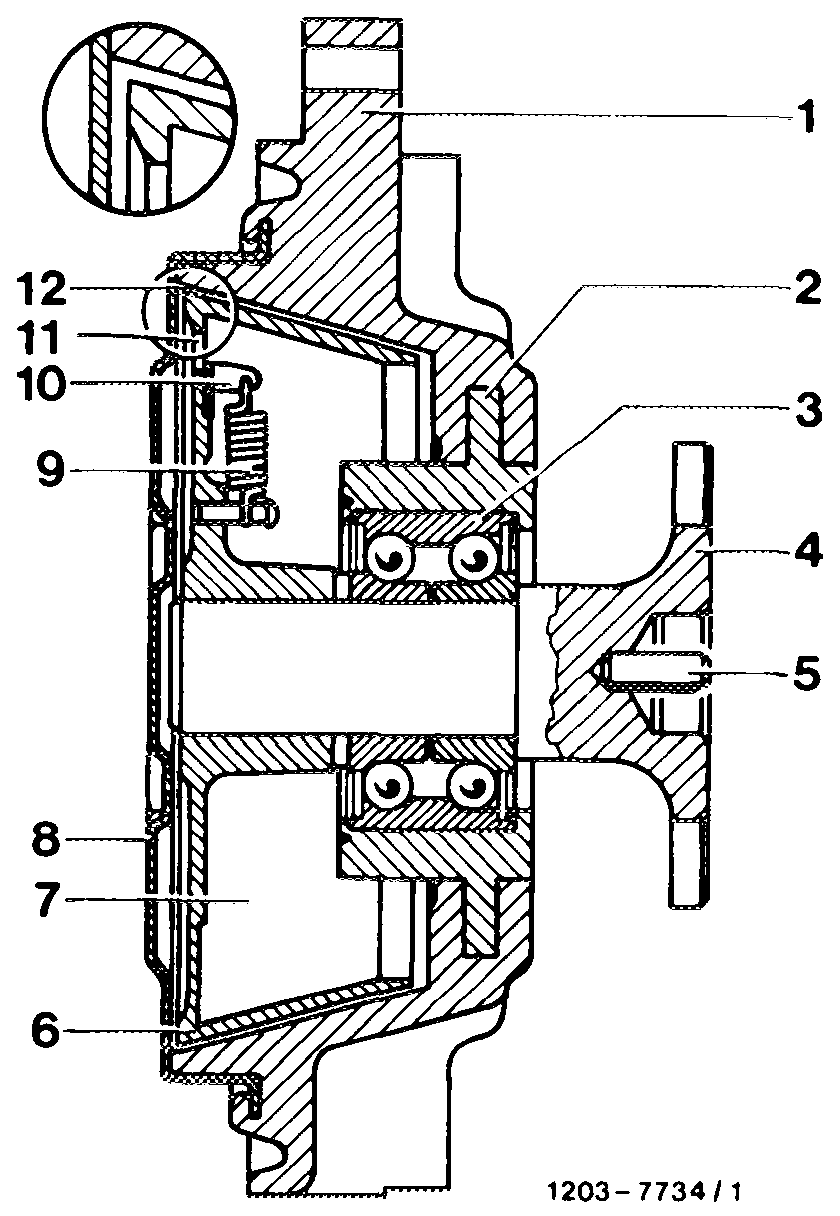
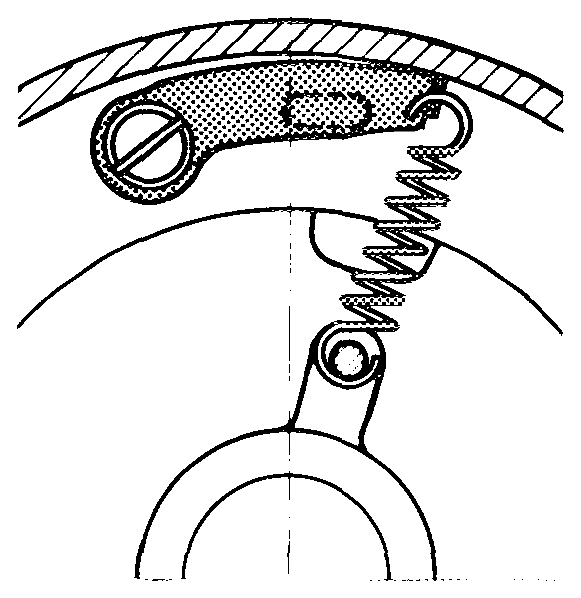
Secondary part N-OCOODNODTAWN— Steel bushing Double row angular ball bearing Flange shaft Pin Primary or drive disk Supply chamber Cover Tension spring Closing lever Ops Transfer bore Working gap Engaging position Disengaging position
Up to an engine speed of approx. 4650/min (engines 116.960, 116.961) and of approx. 3850/min (engines 117.960, 117.961) the fan speed increases proportionally to the engine speed, during which a fan speed of approx. 3000/min caused by the reduction of the belt drive and by the slip in the viscofan clutch is not exceeded. If the engine speed increases still further, the fan speed will drop to approx. 400–600/min; but a fan speed of approx. 600/min will not be exceeded even at maximum speed of engine.
As soon as the engine speed drops to approx. 4100/min (engines 116.960, 116.961) and approx. 3400/min (engines 117.960, 117.961), the viscofan clutch will engage again.
Engagement and disengagement is controlled by the closing lever (10) which, at increasing speed under influence of centrifugal force acting against force of tension spring (9), is gradually pushed over the transfer bore (11) until that bore is completely covered, thereby interrupting the circulation of the viscous oil (B, cut-out position). Under the influence of dropping speed, the effect of the centrifugal force on the closing lever is gradually reduced so that the lever can be displaced by the force of the tension spring (9) against the centrifugal force, with the result that the transfer bore is gradually opened and the circulation of the viscous oil is re-established (A, cut-in position).
Viscofan clutch temperature and speed-controlled
Engines 116.960 and 116.961 national versions
@ © ® 1981 116.962, 116.963, 116.964, 116.965, 117.962, 117.963, 117.964, 117.965, 117.967 and 117.968
Operation
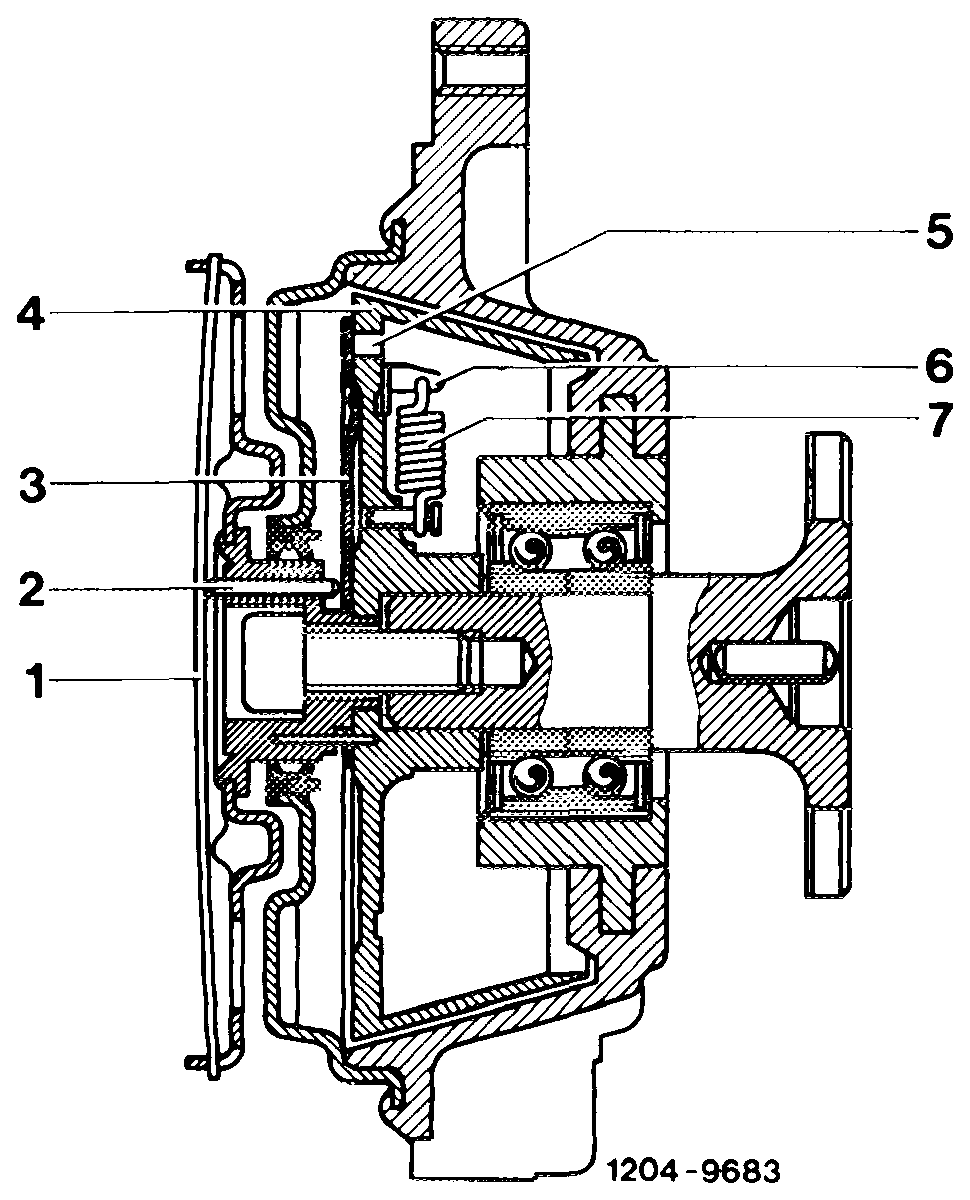
At coolant temperatures below approx. 105 °C the bimetallic strip (1) pushes the spring plate (3) against the primary disk (4) by way of the pin (2). The transfer bore (5) will then be covered and the circulation of the viscous oil will be interrupted. The viscofan clutch is disengaged and the fan rotates independent of the engine speed at 400–600/min; but the fan speed will not exceed a maximum of approx. 600/min even at maximum engine speed.
NMOORWN— Bimetallic strip Pin Spring plate Primary or drive disk Transfer bore Closing lever Tension spring the bimetallic strip (1) is heated by the air flowing through the radiator so that it will change its shape and arch in an outward direction. The spring plate (3) can now clear the transfer bore (5), as a result of which the circulation of the viscous oil is established and the viscofan clutch is engaged.
The fan now rotates up to an engine speed of approx. 3850/min, proportionate to the engine speed, but not exceeding a fan speed of approx. 3000/min under influence of the transmission ratio of the belt drive and of the slip in the viscofan clutch. With further increasing engine speed, the fan clutch will disengage and the fan will rotate independent of the engine speed at 400–600/min, but will not exceed a maximum approx. fan speed of 600/min even at maximum engine speed.
If the engine speed drops to approx. 3400/min, the viscofan clutch will again engage.
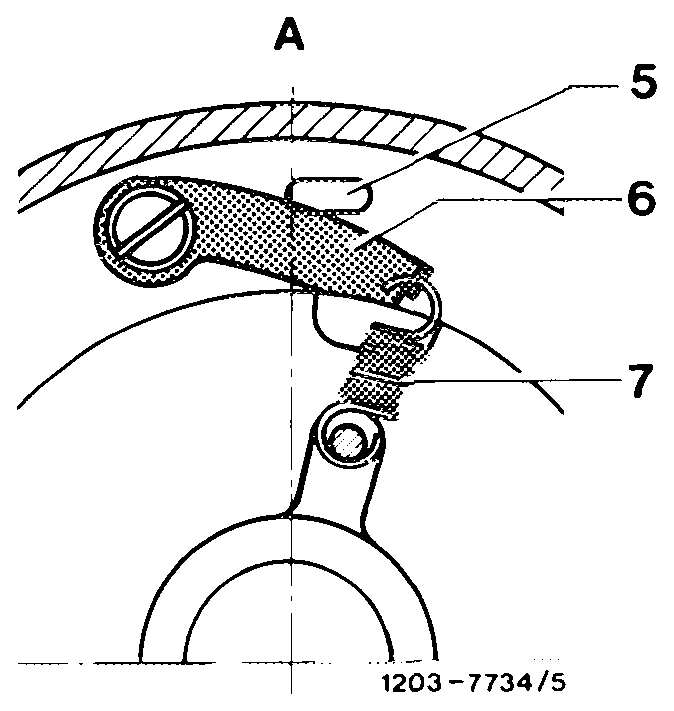
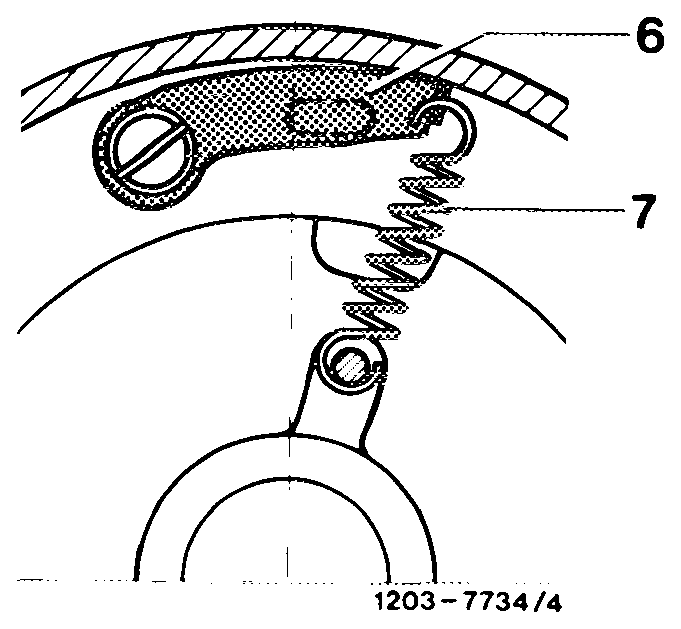
A acoolant temperature of approx. 105 °C engagement and disengagement is controlled by the closing lever (6) which, at increasing speed under influence of centrifugal force acting against force of tension spring (7), is gradually pushed over the transfer bore (5) until the bore is completely covered, thereby interrupting the circulation of the viscous oil (B, cut-out position). Under influence of the dropping speed, the effect of the centrifugal force on the closing lever is gradually reduced so that the lever can be displaced by the force of the tension spring (7) against the centrifugal force, with the result that the transfer bore is gradually exposed and the circulation of the viscous oil is re-established (A, cut-in position).
With decreasing coolant temperature the bimetallic strip (1) will gradually cool down and its changing shape will increasingly displace the spring plate (3) by way of the pin (2) in the direction of the primary disk (4) until the spring plate closes the transfer bore (5) not later than at a coolant temperature of approx. 95 °C. The circulation of the viscous oil is interrupted, the viscofan clutch will disengage.
Checkup
For checking the cut-out and cut-in point of the viscofan clutch, slowly increase or decrease the engine speed.
Disengagement and engagement of the viscofan clutch is acoustically indicated by the decreasing or increasing sound of the fan speed, visually, and also by the clearly noticeable increase or decrease of the air flow rate.
The viscofan clutch should disengage or engage not later than at the specified engine speeds or coolant temperature. Replace the viscofan clutch if it disengages or engages too late. A defective viscofan clutch cannot be repaired with workshop equipment.
Viscofan clutches should be transported and stored in an upright position. For short periods — e.g. for assembly purposes — the clutch may be set down on the flange, but not on its front end. This applies particularly to the temperature and speed-controlled viscofan clutch, since there is a risk of damaging the bracket holding the bimetallic strip which would render the clutch unfit for use.
Speed-controlled viscofan clutch
Engines 116.960 and 116.961 standard version,
117.960, 117.961
Checking disengagement and engagement
At an engine operating temperature (75–85 °C engine oil temperature) the viscofan clutch should disengage or engage at the following engine speeds.
Engine Cut-out speed Cut-in speed 1/min of engine
116 4650 + 100 4100 + 100
117 3850 + 100 3400 + 100
Temperature and speed-controlled viscofan clutch
Engines 116.960 and 116.961 national versions
QD @® G1981, 116.962, 116.963, 116.964, 116.965, 117.962, 117.963, 117.964, 117.965, 117.967 and 117.968
Checking temperature and speed-controlled engagement
Run engine at approx. 4500/min until a coolant temperature of 10075 °C has been reached. Reduce the engine speed to 3400 *300/min. The viscofan clutch should engage.
Checking speed-controlled disengagement
(coolant temperature > 100 *° °c)
Increase engine speed to 3850 7200 /min. Viscofan clutch should disengage.
Caution! While driving, and in addition to outside air temperature, the engine load and the driving speed play a decisive part. At low outside air temperatures, high engine load and low driving speed, the coolant temperature may increase to approx. 110 °C before the viscofan clutch engages.
The viscofan clutch is disengaged at coolant temperatures below approx. 95 °C.