Operation of intake air preheater
WIS 09-400
A. Model 115
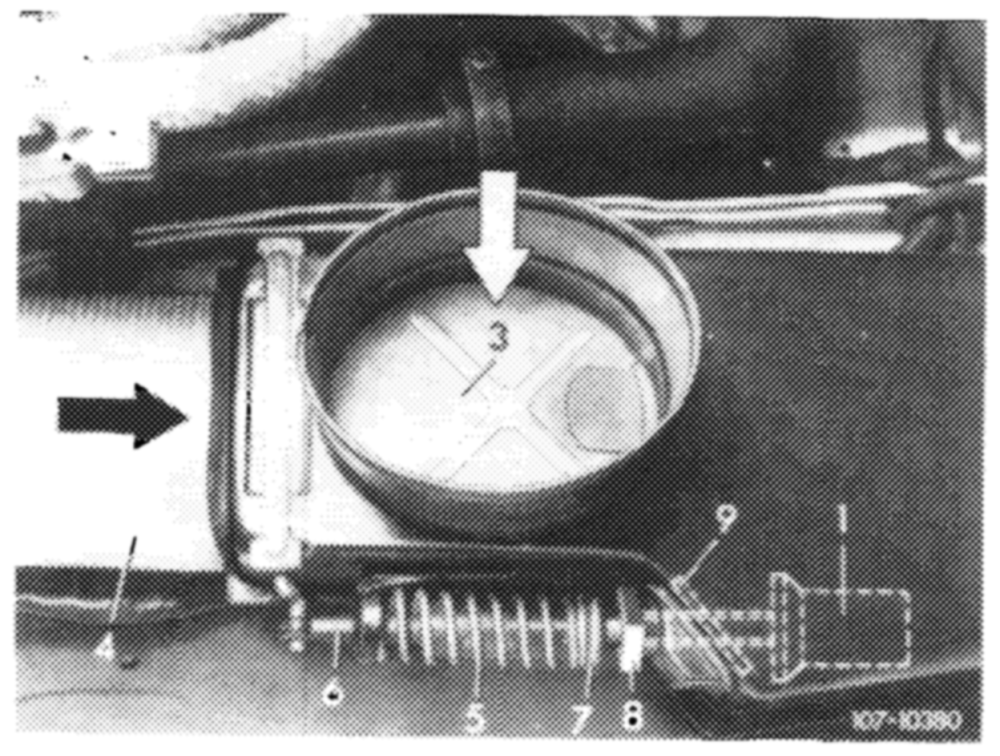
The intake air is preheated by means of a thermostat (1) installed in intake pipe of air cleaner and is automatically controlled by an air flap (3).
At thermostat temperature:
Below + 15 °C the fresh air input via fresh air duct (2) is closed by air flap (3). The warm air supply via warm air hose (4) is cleared, as a result of which preheated air will be drawn in by the exhaust manifold.
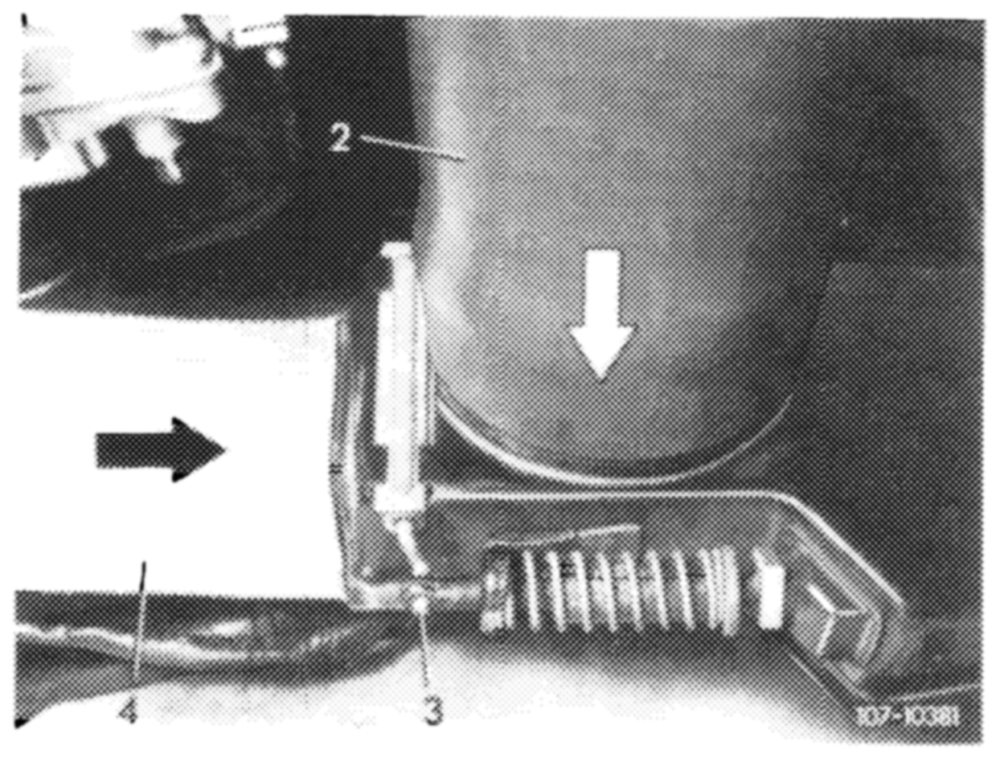
Above + 35 °C the warm air supply via warm air hose (4) is closed by the air flap (3), so that only fresh air can be drawn in.
2. Fresh air supply 4 Warm air supply
B. Model 123
The intake air is preheated under temperature and load-dependent control. The air valve is actuated according to intake air temperature and position of throttle valve in carburetor (engine load).
Operation
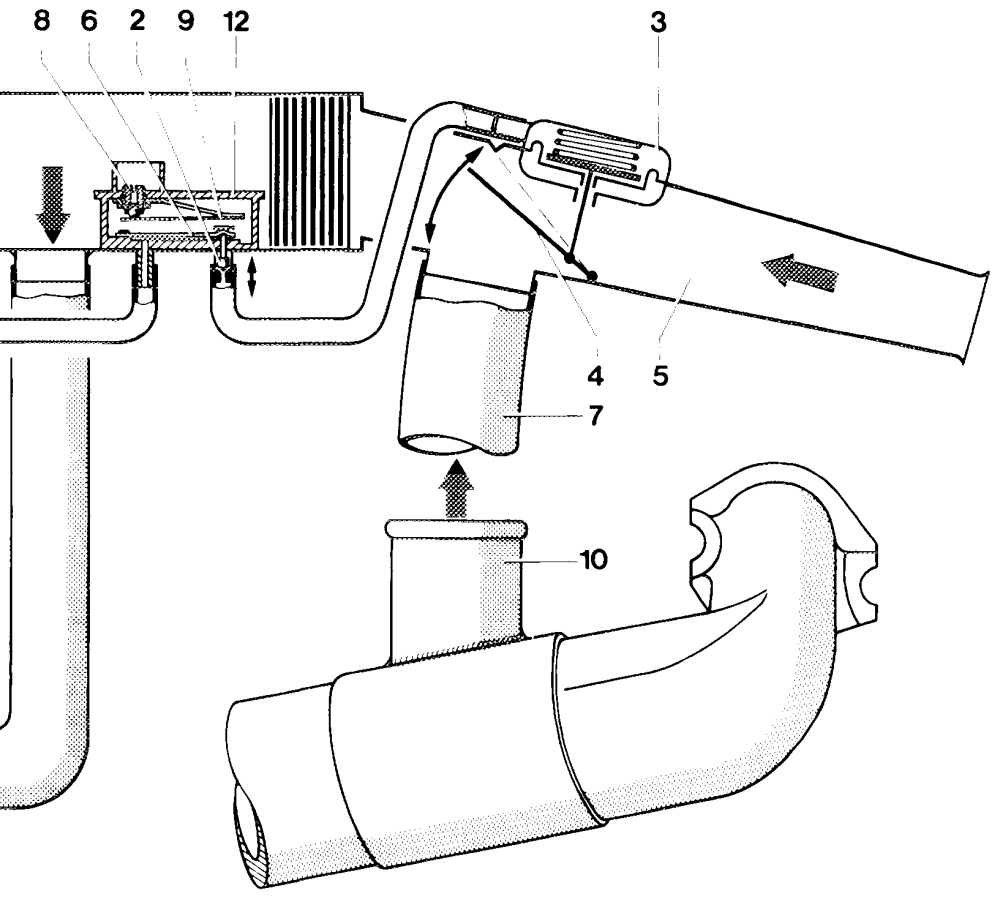
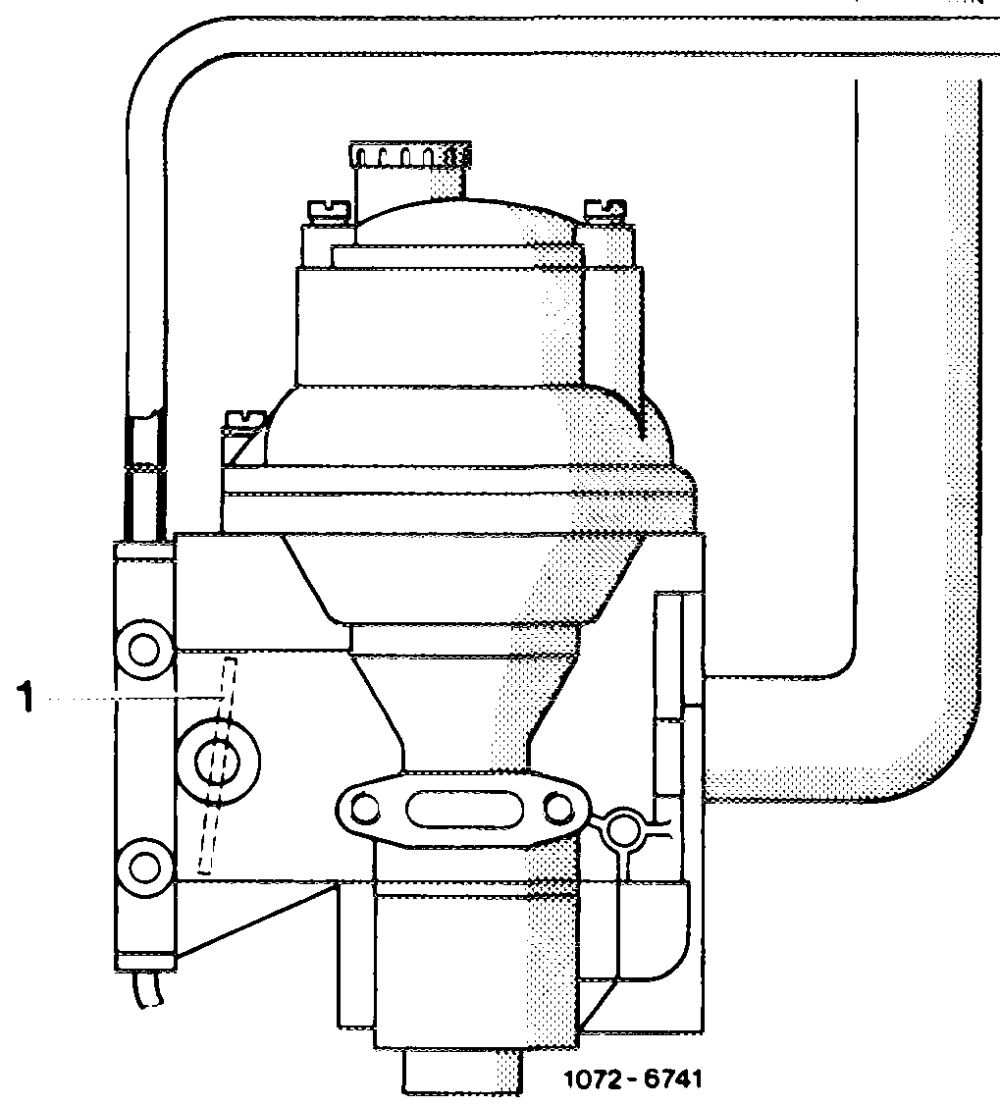
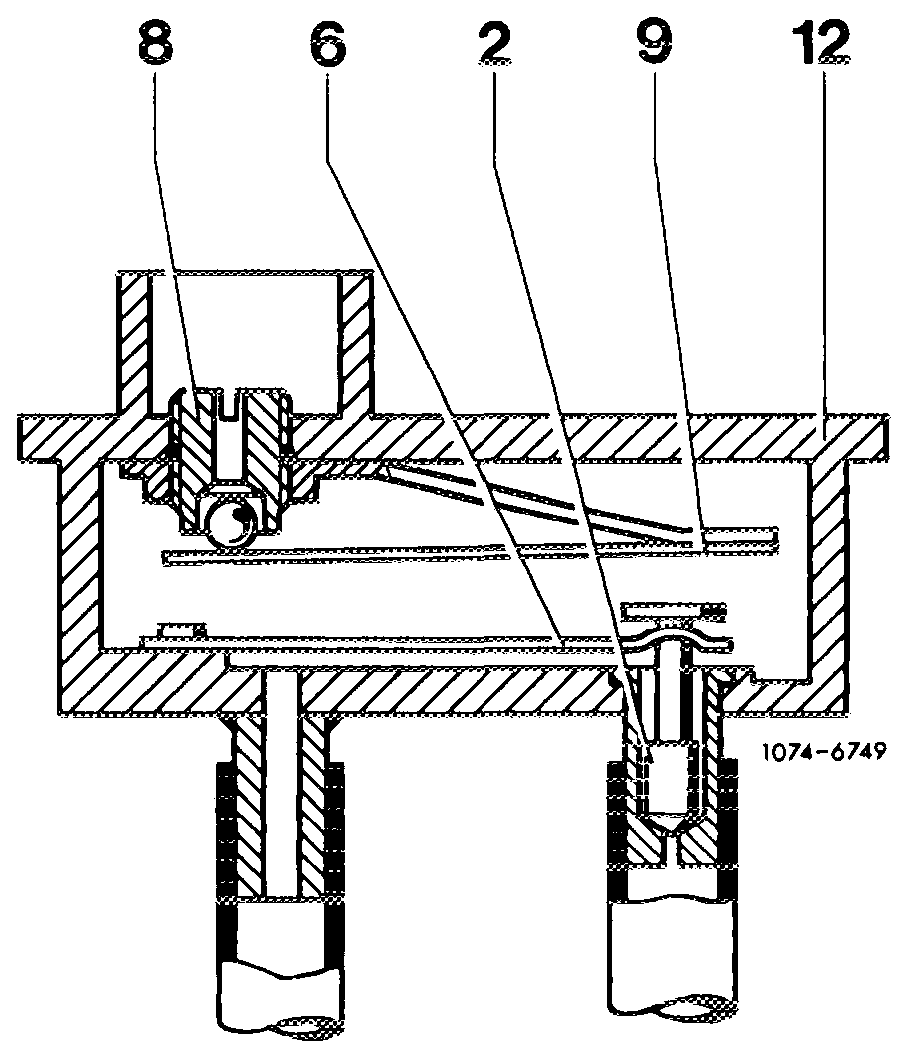
1 Throttle valve 7 Warm air duct
2 Check valve 8 Secondary air valve
3 Vacuum control unit 9 Bimetallic spring
4 Air valve 10 Warm air scoop on exhaust
5 Cold air duct manifold
6 Bimetallic spring 12 Temperature regulator
Operation at an intake air temperature below approx.
+30 °C (position of accelerator pedal remaining the
same)
On inoperative engine the warm air duct (7) is closed by air valve (4). With engine running, the air valve (4) is pulled via vacuum control (3) and opens the warm air duct (7). Warm air will be drawn in.
During acceleration, operation is as follows:
a) Intake air temperature below approx. + 25 °C
During acceleration the vacuum wil! drop. The check valve (2) in temperature regulator (12) closes. As a result, the vacuum will remain in vacuum control unit (3) and the warm air valve (4) remains open.
b) Intake temperature starting at approx. + 25 °C to approx. + 40 °C
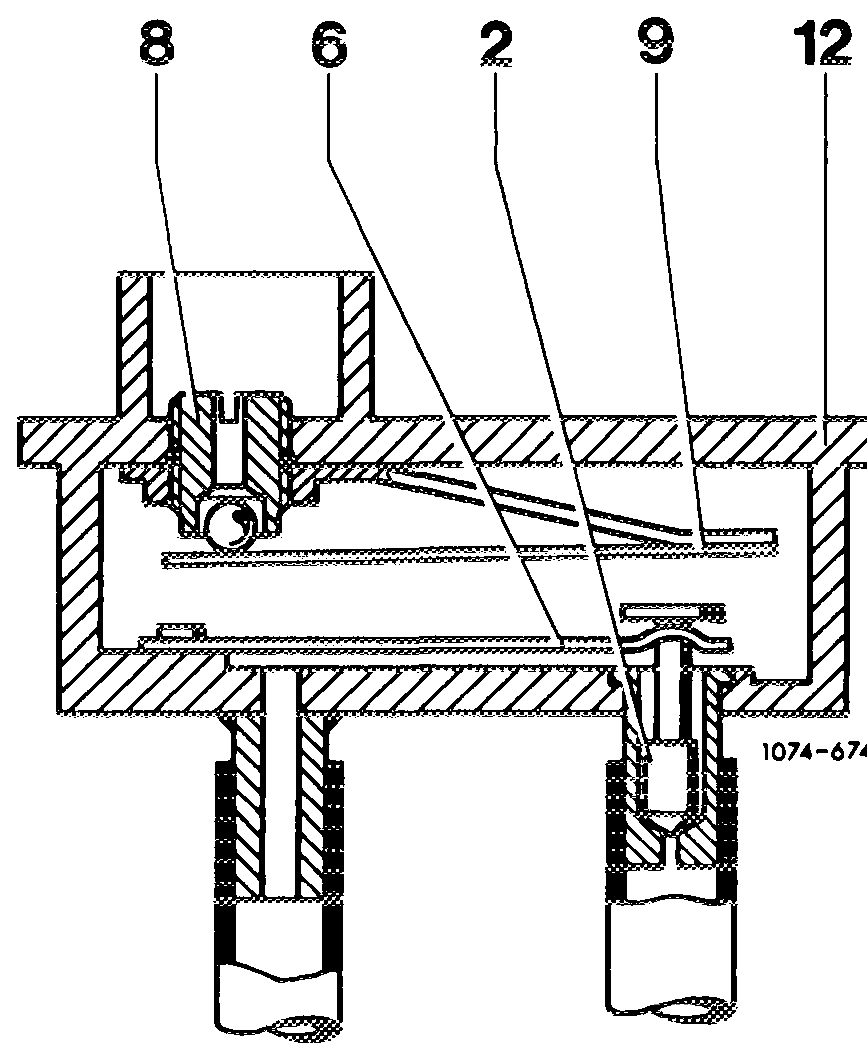
With ternperatures starting at approx. + 25 °C the check valve (2) remains open under influence of bimetallic spring (6). As a result, the vacuum in vacuum control unit (3) can be decreased when the throttle valve (1) is opened and the air valve (4) will close the warm air duct (7). Cold air will be drawn in.
When the acceleration process is completed, the vacuum will again increase and the air valve (4) will take a given position depending on prevailing vacuum.
Operation at an intake air temperature between
+ 30–40 °C (accelerator pedal position remaining the same)
Above approx. + 30 °C the secondary valve (8) is increasingly opened by the bimetallic spring (9) and thereby reduces the vacuum acting on vacuum control unit (3), since the check valve (2) is continuously open above approx. + 25 °C. Asa result, the air valve will take a given position within control range of approx. + 30–40 °C depending on prevailing vacuum.
By adding or removing cold air, the intake air temperature will be held to approx. + 30–40 °C.
Operation at intake air temperatures above approx. +40°C
Above approx. + 40 °C the secondary air valve (8) and the check valve (2) are continuously completely opened by the bimetallic springs.
The vacuum acting on vacuum control unit (3) will thereby be reduced to the extent that the diaphragm can no longer be pulled. The air valve (4) will now continuously close the warm air duct. Only air of the respective ambient temperature will now be drawn in.