Operation of oil pressure gauge
WIS 18-0090
A. Models 129, 140
P18-5113a7
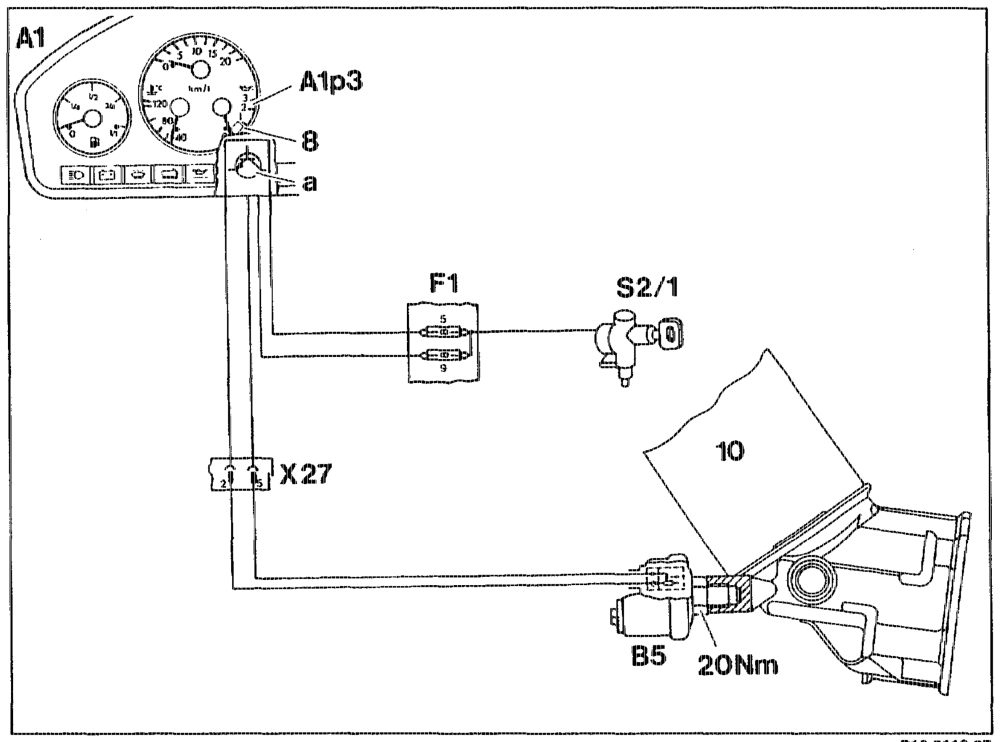
The two-pin oil pressure sensor (BS) in the oil The microprocessor (a) analyzes the two input filter (10) converts the engine oil pressure which signals relative to the stored characteristic curve exists into a resistance. As the oil pressure infrom an engine speed of > 1200 rpm. creases, the resistance increases also. Depending on the relevant evaluation, the angle The resistance and engine speed are supplied position of the pointer of the oil pressure gauge as input signals to the microprocessor (a) in the {A1p3) is controlled across the scale with the readings 0, 1, 2 and 3. electrical base plate of the instrument panel unit (At).
othe ~=RA,18.1201-0090/1
If the oil pressure drops at a certain engine The oi! pressure sensor (B5) is connected to speed with the result that the resistance drops ground at the base plate and to the microbelow a certain level, the oil pressure pointer processor (a) by means of the connector (X27). Voltage is supplied to the base plate through the moves to the bottom stop (0) and the warning lamp (8) comes on. ignition lock ($2/1), the fuses (§ and 9) in the The oil pressure gauge also moves to the fuse box (F1). bottorn stop (0) in the event of an open circuit in the wiring, but without the warning light (8) being operated.
othe §~RA 18.1201-0090/2
B. Model 124
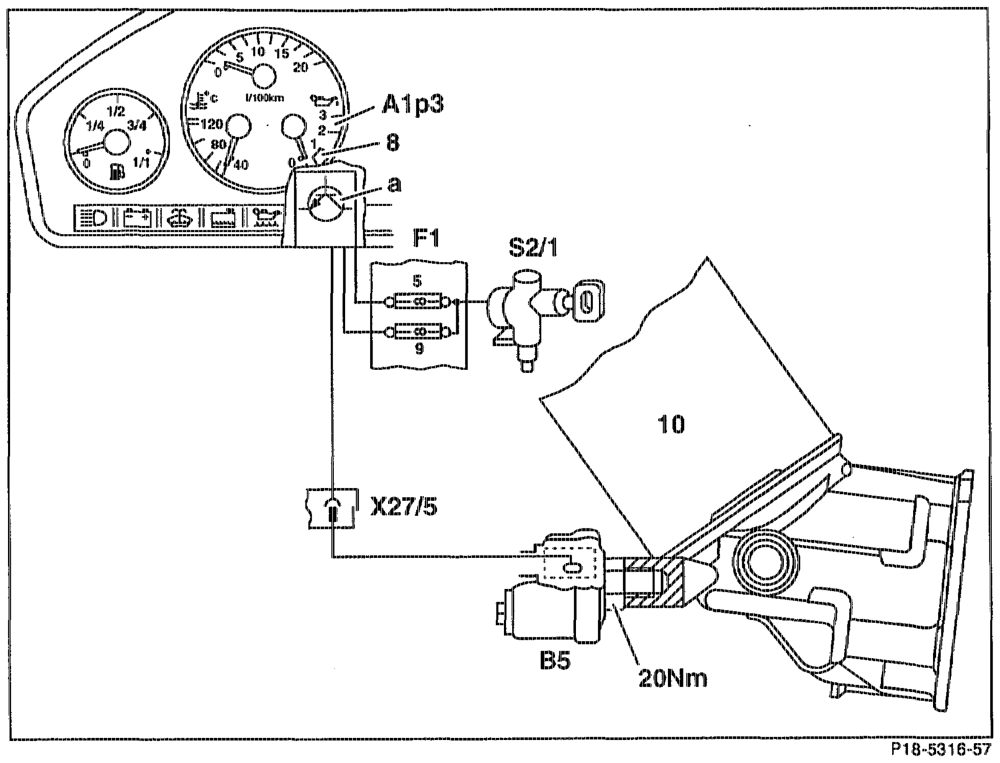
The single-pin oil pressure sensor (B5) at the oil Depending on the particular resistance, the filter (10) converts the engine oil pressure which angle position of the pointer of the oil pressure exists into a resistance. As the oil pressure in- gauge (A1p3) is controlled across the scale with creases, the resistance increases also. the readings 0, 1, 2 and 3. The resistance is supplied as an input signal to the electrical base plate of the instrument panel unit (A1).
whi RA 18.1201-0090/3