Typy 170 V i 170 D (W 136)
Produkcja: 1946 - 1953
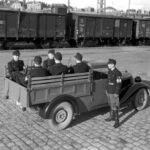
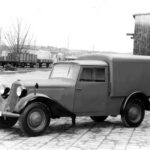
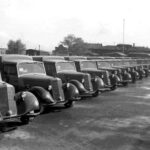
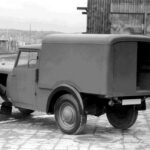
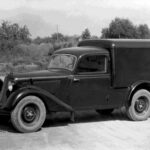
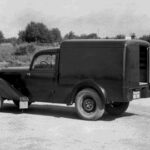
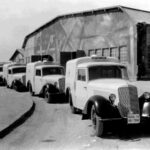
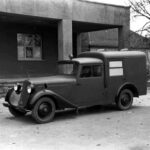

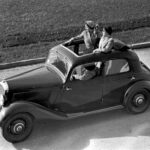
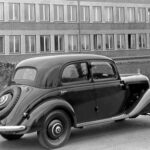
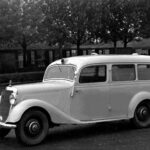
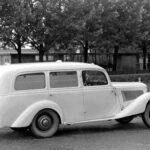
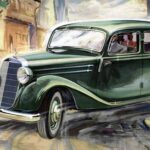
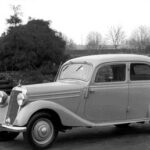
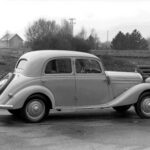
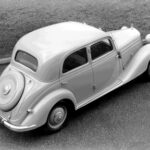
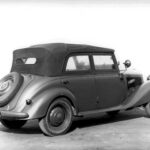
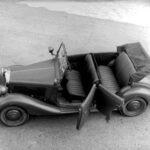
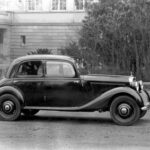
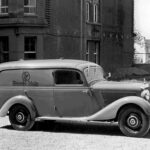
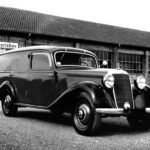
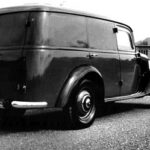
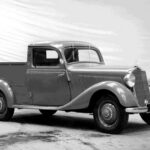
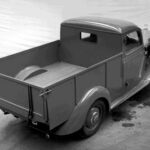
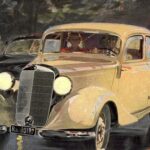
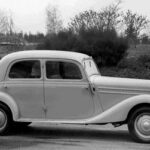
Typy
| Typ | Oznaczenie | Lata produkcji | Wyprodukowano |
|---|---|---|---|
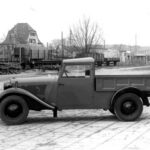
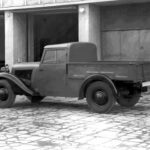
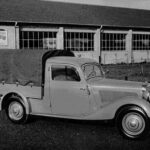
| 170 V samochód skrzyniowy | W 136 I | 1946 - 1949 | 658 |
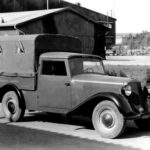
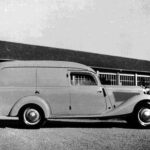
| 170 V furgon | W 136 I | 1946 - 1949 | 552 |
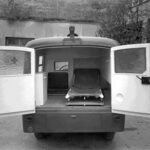
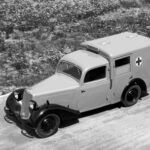
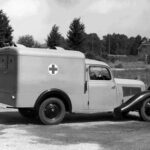
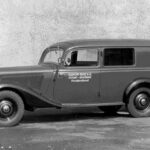
| 170 V ambulans | W 136 I | 1946 - 1948 | 628 |
| 170 V ambulans (nadwozie: Lueg) | W 136 I | 1949 - 1950 | brak osobnych danych |
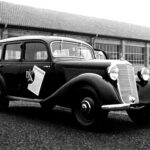
| 170 V | W 136 I | 05.47 - 05.50 | brak osobnych danych |
| 170 Va | W 136 VI | 06.50 - 05.52 | brak osobnych danych |
| 170 Va ambulans (nadwozie: Lueg) | W 136 VI | 1950 - 1952 | brak osobnych danych |
| 170 Va podwozie pod nadwozia specjalne | W 136 VI | 1950 - 1952 | brak osobnych danych |
| 170 Va furgon dostawczy | W 136 VI | 1952 | 35 |
| 170 Vb | W 136 VI | 05.52 - 08.53 | brak osobnych danych |
| 170 Vb podwozie pod nadwozia specjalne | W 136 VI | 1952 - 1953 | brak osobnych danych |
| 170 Vb ambulans (nadwozie: Lueg) | W 136 VI | 1952 - 1953 | brak osobnych danych |
| 170 D | W 136 I D | 05.49 - 05.50 | brak osobnych danych |
| 170 D OTP | W 136 VI D | 1951 - 1952 | 530 |
| 170 Da | W 136 VI D | 06.50 - 05.52 | brak osobnych danych |
| 170 Da ambulans (nadwozie: Lueg) | W 136 VI D | 1950 - 1952 | brak osobnych danych |
| 170 Da podwozie pod nadwozia specjalne | W 136 VI D | 1950 - 1952 | brak osobnych danych |
| 170 Da furgon dostawczy | W 136 VI D | 1951 - 1953 | 515 |
| 170 Db | W 136 VI D | 05.52 - 10.53 | brak osobnych danych |
| 170 Db ambulans (nadwozie: Lueg) | W 136 VI D | 1952 - 1953 | brak osobnych danych |
| 170 Db podwozie pod nadwozia specjalne | W 136 VI D | 1952 - 1953 | brak osobnych danych |
Historia
Historia tej serii nie jest jeszcze przetłumaczona; poniżej oryginał angielski.
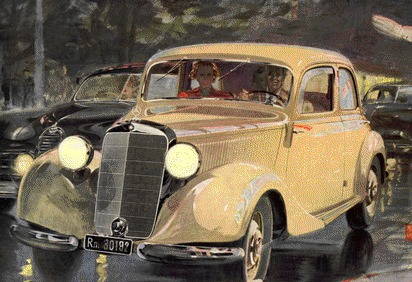
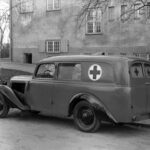
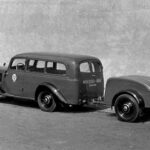
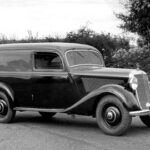
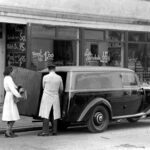
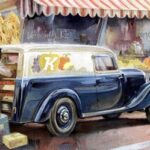
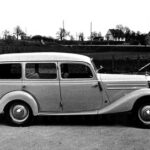
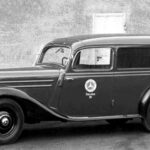
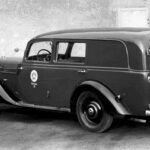
After the end of the war, passenger car production was resumed, starting with the proven design of the 170 V model (W 136). Only delivery vans were produced at first, since they were in urgent demand during post-war reconstruction. In May 1946 the first platform car was completed and one month later the first box-type delivery van; during september and october that year an ambulance car, based on this delivery van, and a police patrol car, on the basis of the platform car, completed the production range. Due to the difficult production conditions, the car bodies of these first models were, naturally, still rather primitive.
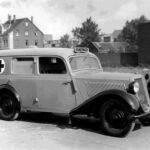
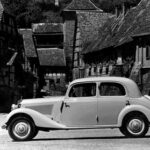
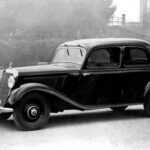
In July 1947, production of the four-door saloon car, now consisting of an all-steel construction, was resumed. this change in construction made it necessary the reduce the number of different car bodies, which had comprised seven different designs before the war. After the production of saloon cars had been resumed, the different types of the delivery van, too, were equipped with a modified driver's cab, which, with regard to car body and equipment, reached the standard of the saloon car.
In 1948/49 the concept of the ambulance car was brought up to date in order to meet the higher requirements of the time; the car body, now more spacious and modernised, was no longer produced at the production site in Sindelfingen but in Bochum by the well-known car body maker Lueg. Lueg was at that time a main representative of Daimler-Benz AG.
In May 1949, the models 170 D and 170 S, the first new Daimler-Benz passenger car designs after the war, were presented at the technical export fair in Hannover. The 170 D basically matched the 170 V, but was equipped with a 170-litre Diesel engine, which had been developed from the proven unit of the 170 V. It was the first Diesel-powered passenger car after the war and became the basis for the lasting success of this type of car. The salient feature of the 170 D was the significantly lower rate of fuel-consumption, compared to its petrol-powered counterpart, while retaining almost the same driving performance. Longevity and economy became synonymous with the Mercedes Benz Diesel-powered passenger car. Another reason for the high popularity of the 170 D during the first years of production was the fact that even five years after WWII had ended petrol was still in scarce supply whereas sufficient Diesel oil was available everywhere.
In May 1950, the 170 V and 170 D were reviewed and a whole range of measures was undertaken. The performance of both enginges was improved by increasing their cubic capacity. The security of the car was optimised by the integratinion of telescopic shock absorbers, a wider wheel gauge of the rear axles and stronger brakes. There were improvements, too, regarding passenger comfort: The seats had become bigger, the inner width of the passenger cabine was increased, the boot was now accessed from outside, which was far more comfortable, vents were equipped with covers in order to protect passenger from draught. In order to make it easier to distinguish these improved models from the originals, they were called 170 Va and 170 Da at Mercedes Benz.
In May 1095 both models were again revised. The rear axle depth gauge of Models 170 Vb and 170 Db had become even wider, they now had one-piece fenders, a bigger windshield with a windscreen wiper drive, which were encased inside and the bonnet louvers were now horizontally instead of diagonally aligned. Both Models were built until August 1953; their successors were the 170 S-V and 170 S-D models.
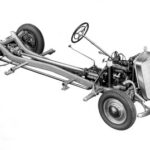
The 170 V, 170 Va, 170 Da, 170 Vb and 170 Db models were not only available as saloon cars, but as chassis, which were subsequently fitted by the body makers with special bodies. Because the production capacities were limited and in order to meet the high demand for the 170 D limousins as well as possilbe the Diesel chassis became available for sale as late as June 1950 and was delivered for the first time in October. The special bodies manufactured by the Lueg company are parcticularly famous - from December 1950 they also became available on the basis of the 170 D model and were officially sold by Daimler-Benz. in Bochum, too, estate cars, box-type delivery vans and platform cars were built, the majority of which were equipped with Diesel engines. a significant number of chassis, however, was delivered to car body works abroad, many of them in the shape of ckd-sets to Argentina..
From December 1951 until the middle of 1953, the 170 D model was also available as a platform car with a body produced at SindelfingeN. However, compared to the Lueg-body, it was less spatious and thus did not lend itself for conversion into an ambulance car. A special version of the petrol-powered 170 Va model was also available with a platform car body produced in Sindelfingen, which was never officially advertised or sold, however. In 1952, 35 models of this type were built and they were all delivered to Switzerland.
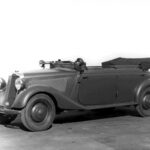
In Sindelfingen yet another special model was produced on the basis of the 170 D model: ein open four-door police touring car, with a light convertible hood, windows, that could be stuck onto the sides of the car and a windshield which folded down towards the front. In the years 1951/52, a total of 530 models were built and delivered to the federal office for the protection of the borders.