Rover of the series 460, 463 and 461
Production: since 1979


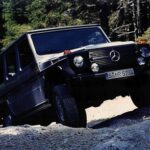
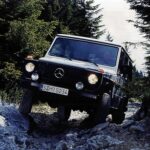
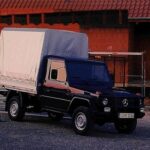
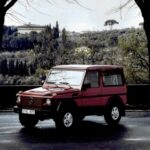

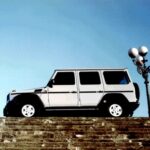
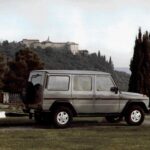
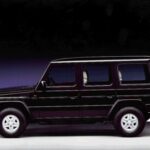
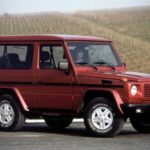
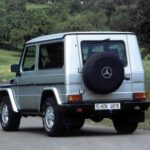

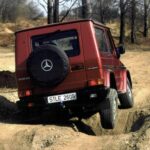
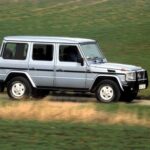
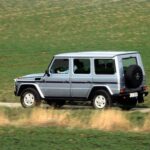


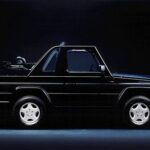
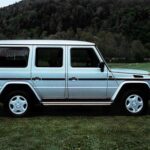
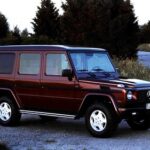
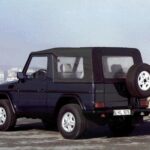



Types
| Type | Model | Production | Number produced |
|---|---|---|---|
| 240 GD | 460 GD 24 | 1979 - 1991 | altogether 7.645 (civil model, all versions) |
| 240 GD | 460 GD 24 | 1979 - 1991 | altogether 7.645 (civil model, all versions) |
| 250 GD | 460 GD 25 | 1987 - 1992 | altogether 2.051 (civil model, all versions) |
| 250 GD | 460 GD 25 | 1987 - 1992 | altogether 2.051 (civil model, all versions) |
| 300 GD | 460 GD 30 | 1979 - 1991 | altogether 20.415 (civil model, all versions) |
| 300 GD | 460 GD 30 | 1979 - 1991 | altogether 20.415 (civil model, all versions) |
| 230 G | 460 G 23 | 1979 - 1989 | altogether 4.138 (civil model, all versions) |
| 230 G | 460 G 23 | 1979 - 1989 | altogether 4.138 (civil model, all versions) |
| 230 GE | 460 GE 23 | 1982 - 1991 | altogether 6.884 (civil model, all versions) |
| 230 GE | 460 GE 23 | 1982 - 1991 | altogether 6.884 (civil model, all versions) |
| 200 GE | 460 GE 20 | 1986 - 1991 | altogether 610 (all versions) |
| 200 GE | 460 GE 20 | 1986 - 1991 | altogether 610 (all versions) |
| 280 GE | 460 GE 28 | 1979 - 1991 | altogether 9.945 (civil model, all versions) |
| 280 GE | 460 GE 28 | 1979 - 1991 | altogether 9.945 (civil model, all versions) |
| 230 GE | 461 GE 23 | 1991 - 1996 | altogether 331 (civil model, all versions) |
| 230 GE | 461 GE 23 | 1991 - 1996 | altogether 331 (civil model, all versions) |
| 290 GD | 461 GD 29 | since 1991 | in production |
| 290 GD | 461 GD 29 | since 1991 | in production |
| 290 GD turbodiesel | 461 GD 29 LA | since 06.97/ | in production |
| 290 GD turbodiesel | 461 GD 29 LA | since 04.97/ | in production |
| 250 GD | 463 GD 25 | 07.89/06.90 - 09.92 | 241 |
| 250 GD | 463 GD 25 | 07.89/05.90 - 12.91 | 31 |
| 300 GD, since 09.93: G 300 diesel | 463 GD 30 | 07.89/04.90 - 07.94 | 2.547 |
| 300 GD, since 09.93: G 300 diesel | 463 GD 30 | 06.89/04.90 - 08.94 | 1.616 |
| 350 GD turbo, since 09.93: G 350 turbodiesel | 463 GD 35 A | 08.91/03.92 - 07.96 | 1.841 |
| 350 GD turbo, since 09.93: G 350 turbodiesel | 463 GD 35 A | 09.91/03.92 - 07.96 | 2.451 |
| G 300 turbodiesel | 463 GD 30 LA | since 01.96/07.96 | in production |
| G 300 turbodiesel | 463 GD 30 LA | since 01.96/07.96 | in production |
| 200 GE, since 09.93: G 200 | 463 GE 20 | 07.89/06.90 - 03.94 | 376 |
| 200 GE, since 09.93: G 200 | 463 GE 23 | 09.89 - 06.93 | 17 |
| 230 GE, since 09.93: G 230 | 463 GE 23 | 07.89/04.90 - 07.94 | 382 |
| 230 GE, since 09.93: G 230 | 463 GE 23 | 07.89/04.90 - 05.94 | 134 |
| 300 GE, since 09.93: G 300 | 463 GE 30 | 06.89/04.90 - 08.96 | 2.132 |
| 300 GE, since 09.93: G 300 | 463 GE 30 | 06.89/04.90 - 03.97 | 2.806 |
| 500 GE V8 | 463 GE 50 | 1993 - 1994 | 446 |
| G 320 | 463 GE 32 | 02.94/05.94 - | n/a |
| G 320 | 463 GE 32 | 02.94/05.94 - | n/a |
| G 320 | 463 GE 32 | since 05.97/ | in production |
| G 320 | 463 GE 32 | since 04.97/ | in production |
History
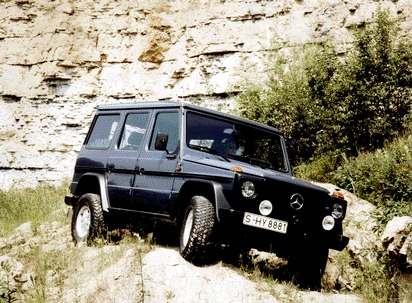
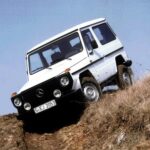
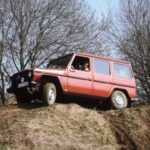
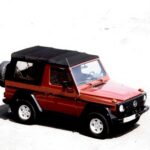
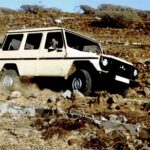
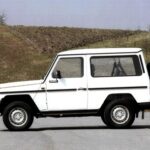
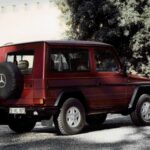
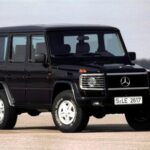
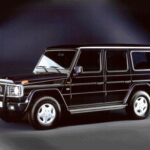
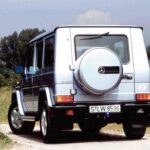
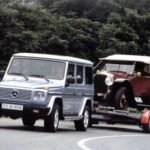
When in February 1979 the Mercedes-Benz G-models were presented, a totally new terrain was entered. Already during the war Mercedes-Benz had made cross-country cars which were, however, primarily used by civil as well as non-civil state institutions. The new generation of off-road cars were, on the one hand, conceived as an exclusive vehicle for free time activities, on the other hand, for heavy use in industrial and community areas.
The development took place in co-operation with the Steyr-Daimler-Puch-AG which extended the Puch plant in Graz-Thondorf for the series production of the G-models. First, on the basis of a co-operation contract, the ,Gelände-Fahrzeug GmbH" (off-road vehicles ltd.), in which both partners participated with 50 %, signed responsible for the production. In August 1981 the participation of Daimler-Benz in the GFG was given up. Ever since, Mercedes-Benz off-road vehicles are produced by Steyr-Daimler-Puch as subcontractors. In Austria, Switzerland and the COMECON countries the otherwise totally identical vehicles are sold under the trademark ,Puch".
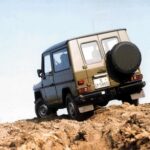
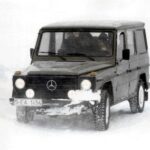
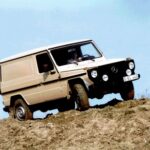
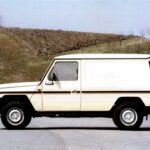
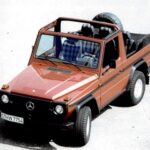
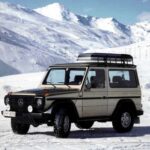
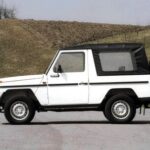
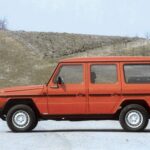
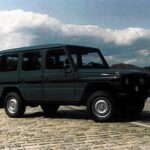
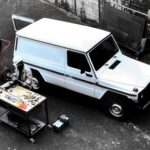
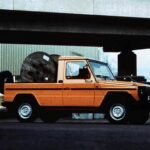
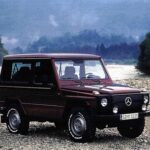
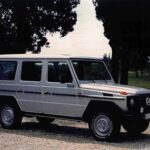
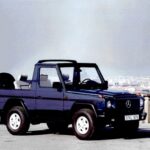
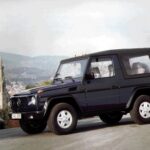
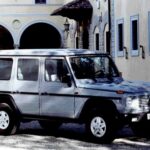
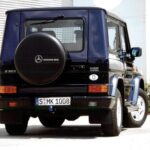
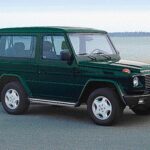
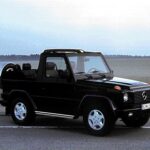
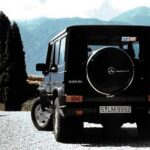
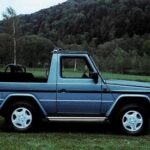
The original model range of the G-series comprised four engine and fife body variants as well as chassis with two different frame length and wheel bases. Besides an open car with short wheel base one could also choose an estate version, the so-called ,station wagon", as well as a box-type truck on a short or long chassis. As to aggregates and engines one had gone back to proven components - quite in line with the unit assembly system long practised by Daimler-Benz. As engines the 2,4 ltr.- and 3,0 ltr.-Diesel aggregates, know from series 123, were used; the 2,3 ltr.-carburettor engine and the 2,8 ltr.- injection engine. Internally all models and variants were assigned to series 460.
In the course of continuous model improvement and further development the interior equipment was refined several times and the range of special equipment constantly extended. In addition, the range of engines was changed as well. In April 1982, 230 GE with the 2,3 ltr.-injection engines M 102 was presented. On the domestic market it functioned as the successor of the former 230 G. Since 1986 it was also available on demand with a three-way catalyst. Since 1986 a variant with 2,0 ltr.-injection engine was exclusively produced as an export model for Italy. In October 1987 the 250 GD with its 2,5 ltr.-5 cyl.-Diesel engine OM 602 was introduced into the market and replaced the proven 240 GD.
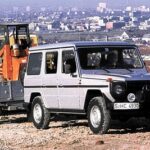
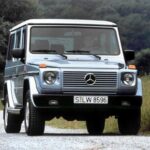
In September 1989 a new chapter in the history of the G-models began when a totally redesigned range of models - with the internal designation series 463 - was presented. The primary goal of the model improvement was to fulfil the increasing customer demands for more comfort and to pass from the simple utility vehicle to the new comfortable multipurpose car. Therefore the interior equipment of the new model generation was strongly oriented towards the passenger car. This impression was reinforced by the stylistically redesigned forward structure which was painted in the body colour.
In addition there were also technical changes. First of all the drive train was modified for increased comfort. It was equipped with a permanent all-wheel drive, instead of a disengageable one, as well as with a differential lock. The antilock system (ALS) , well proved in passenger cars, was now also available in a switch-on/switch-off version to customers of off-road vehicles. The range of engines was also restructured. Besides the 2,5 ltr.- Diesel engine and the 2,3 ltr.-injection engine as well as its 2,0 ltr.-variant for Italy, all known from series 460 and now used in a redesigned version, two modern six cylinder aggregates were now used in an off-road vehicle for the first time; the 3,0 ltr.-Diesel engine OM 603 as well as the M 103 with petrol injection and 3,0 ltr. displacement. The standard version of the petrol engines was equipped with a regulated emission control system.
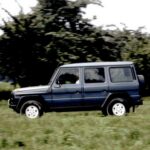
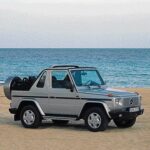
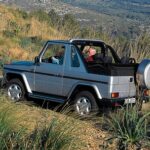
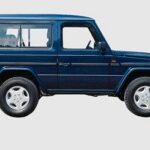
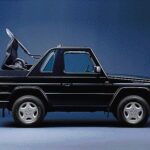
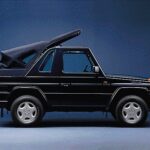
Because of the envisioned use of the off-road vehicles of series 463 they were not supplied as box-type trucks any more. One could choose between the open car with short wheel base, now called cabrio, and the two versions of the station wagon. For professional use series 460 and all its body variants remained in the selling program. Nor was the time-tested range of engines changed. Only the 2,8 ltr.-petrol engine was dropped.
In the beginning of 1992 the two Diesel engines of series 460 were replaced by the new type 290 GD. Its 2,9 ltr. -5 cyl.-Diesel engine had been developed from the time-tested 2,5 ltr.-aggregate. It excelled with higher performance and a considerably higher torque. The name of the series had also been changed. The new model was assigned to series 461, just as the widely available 230 GE. In previous years this designation was reserved to the variants with 24 V=on-board electrics. It was mostly used in non-civil areas. The production of 230 GE was discontinued in June 1966. Most professional users of off-road vehicles had decided for a Diesel model anyway.
In September 1997, after fife and a half years of production time, the 290 GD was replaced by 290 GD turbo diesel. The new power unit is a fife-cylinder in-line diesel engine with direct injection and exhaust turbocharger, as already known from the E-class. Compared to the preceding model, the power was considerably increased while the fuel consumption was reduced. In order to guarantee a high off-road mobility the charge-air cooling, in contrast to the car variant, is carried out by water charge-air coolers. Thus the front bumper could remain unchanged. The standard 290 GD turbo diesel is equipped with a 4-speed automatic transmission. In order to reduce maintenance, the drum brake used so far is replaced by the disk brake also at the rear axle. The 290 GD turbo diesel is available as station wagon with short wheel base and as station wagon and box-type truck with long wheel base. The body variant pick-up with wheel base 2850 mm is not supplied any more.
The off-road vehicles of series 463 were also improved continually. Especially important are the changes in the range of engines. You can see that in the changed type names. In order to respond to the demand for more powerful engines, the 350 GD turbo was introduced into the market in the beginning of 1992. Its 3,5 ltr.-turbo diesel-aggregate mobilised 136 PS. Its standard version was provided with automatic transmission. The least powerful model of the series, the 250 GD, was taken out of the selling program. At the other end of the performance scale ranged type 500 GE V8, equipped with a 240 PS strong 5,0 ltr.-V8-engine and produced in an exclusive small series in 1993.
In September 1993 the type names of the off-road vehicles were adapted to the new system of nomenclature of car types. The ,G" was now put in front of the three-digit figure. The additions ,E" and ,D" were dropped. At the end of 1993 type G 320 completed the model program. Its 210 PS strong four-valve six cylinder was already know from the S-class and the E-class. The new standard model, like the G 350 turbo diesel, was provided with a four-speed automatic transmission. In July 1994 types G 230, G 300 and G 300 Diesel were dropped for the domestic selling program.
Two years later, in September 1996, the G 300 turbo diesel was introduced to the market. It replaced the former G 350 turbo diesel. In contrast to its predecessor, the new diesel model was provided with a turbo engine with four-valve technology and charge-air cooling. The power of the engine is 177 PS and thus 40 PS higher. The torque was increased by 10 % and now is available within a broad range of rotational speed. Due to optimal combustion the exhaust emission and fuel consumption could be reduced considerably. The electronically controlled fife-speed automatic transmission, a standard equipment of the G 300 turbo diesel, is remarkable. The ,new automatic transmission" is not only more compact and lighter than the comparable transmissions with fife speeds. Due to its traction controlled converter lockup clutch it is also highly efficient.
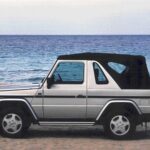
The year 1997 once more saw a comprehensive model improvement. Already presented to the public at the International Off-Road Automotive Salon in Munich in April, a new version of the cabrio with electro-hydraulic operation of the soft-top was actually introduced in June. If unbolted, the top can readily be opened and closed in 30 seconds each by simply pressing the release button. The new version of the cabrio can be easily recognised in such features as the supplementary triangular-shaped side panelling behind the roll-over bar covering the massive main bearings with the complex cabriolet-top actuating kinematics and at the same time minimising wind noise by a reduced soft-top cloth surface.
Half a year later another change of model took place. The six-cylinder inline engine of the former G 320 was replaced by a newly developed V6-aggregate, equal in displacement, already presented in the E=class nine months before.
Remarkable innovations are the three valve technology with two inlet valves and one exhaust valve as well as the phase shift alternating double ignition with two sparking plugs per cylinder. The goal in developing a new generation of engines was to achieve a better torque characteristic as well as a reduction of the fuel consumption. The optimal force transmission is guaranteed by the fife-speed automatic transmission which is electronically controlled and already known from the G 300 turbo diesel. Further developments were carried out in order to facilitate maintenance. As the 290 GD turbo diesel, the models of series 463 now are also equipped with disk brakes at the rear axle. In addition, the G 320 receives the flexible maintenance system ,ASSYST" which calculates the dates of service with the help of an electronic maintenance calculator on the base of the actual use and the conditions of use of the respective vehicle.
The off-road vehicles of series 461 and 463 have proven to be real classics with their fixed position in the type program. Their production will continue even after the market introduction of the M-class.