"Ponton-Mercedes", four-cylinder types (W 120, W 121)
Production: 1953 - 1962
Types
| Type | Model | Production | Number produced |
|---|---|---|---|
| 180 D | W 120 D I | 10.53/02.54 - 07.59 | 114.046 saloons |
| 180 Db | W 120 D II | 07.59 - 08.61 | 24.276 saloons |
| 180 Dc | W 120 D III | 06.61 - 10.62 | 11.600 saloons |
| 180 | W 120 B I | 07.53 - 06.57 | 51.907 saloons |
| 180 a | W 120 B II | 06.57 - 07.59 | 27.155 saloons |
| 180 b | W 120 B III | 07.59 - 08.61 | 29.033 saloons |
| 180 c | W 120 B IV | 06.61 - 10.62 | 9 097 saloons |
| 190 D | W 121 D I | 08.58 - 07.59 | 20.493 saloons |
| 190 Db | W 121 D II | 06.59 - 09.61 | 60.598 saloons |
| 190 | W 121 B I | 03.56 - 08.59 | 60.991 saloons |
| 190 b | W 121 B III | 06.59 - 08.61 | 28.114 saloons |
| 180 D chassis with four-door partial body | W 120 D I | 1955 - 1959 | 2.439 chassis with 4- and 2-door partial body, resp. |
| 180 D chassis with two-door partial body | W 120 D I | 1955 - 1959 | 2.439 chassis with 2- and 4-door partial body, resp. |
| 180 Db chassis with four-door partial body | W 120 D II | 1959 - 1961 | 400 chassis with 4- and 2-door partial body, resp. |
| 180 Db chassis with two-door partial body | W 120 D II | 1959 - 1961 | 400 chassis with 2- and 4-door partial body, resp. |
| 180 Dc chassis with four-door partial body | W 120 D III | 1961 - 1962 | 222 chassis with 4- and 2-door partial body, resp. |
| 180 Dc chassis with two-door partial body | W 120 D III | 1961 - 1962 | 222 chassis with 2- and 4-door partial body, resp. |
| 180 chassis with four-door partial body | W 120 B I | 1955 - 1957 | 279 chassis with 4- and 2-door partial body, resp. |
| 180 chassis with two-door partial body | W 120 B I | 1955 - 1957 | 279 chassis with 2- and 4-door partial body, resp. |
| 180 a chassis with four-door partial body | W 120 B II | 1957 - 1959 | 198 chassis with 4- and 2-door partial body, resp. |
| 180 a chassis with two-door partial body | W 120 B II | 1957 - 1959 | 198 chassis with 2- and 4-door partial body, resp. |
| 180 b chassis with four-door partial body | W 120 B III | 1959 - 1961 | 382 chassis with 4- and 2-door partial body, resp. |
| 180 b chassis with two-door partial body | W 120 B III | 1959 - 1961 | 382 chassis with 2- and 4-door partial body, resp. |
| 180 c chassis with four-door partial body | W 120 B IV | 1961 - 1962 | 183 chassis with 4- and 2-door partial body, resp. |
| 180 c chassis with two-door partial body | W 120 B IV | 1961 - 1962 | 183 chassis with 2- and 4-door partial body, resp. |
| 190 D chassis with four-door partial body | W 121 D I | 1958 - 1959 | 136 chassis with 4- and 2-door partial body, resp. |
| 190 D chassis with two-door partial body | W 121 D I | 1958 - 1959 | 136 chassis with 2- and 4-door partial body, resp. |
| 190 Db chassis with four-door partial body | W 121 D II | 1959 - 1961 | 711 chassis with 4- and 2-door partial body, resp. |
| 190 Db chassis with two-door partial body | W 121 D II | 1959 - 1961 | 711 chassis with 2- and 4-door partial body, resp. |
| 190 chassis with four-door partial body | W 121 B I | 1956 - 1959 | 354 chassis with 4- and 2-door partial body, resp. |
| 190 chassis with two-door partial body | W 121 B I | 1956 - 1959 | 354 chassis with 2- and 4-door partial body, resp. |
| 190 b chassis with four-door partial body | W 121 B III | 1959 - 1961 | 349 chassis with 4- and 2-door partial body, resp. |
| 190 b chassis with two-door partial body | W 121 B III | 1959 - 1961 | 349 chassis with 2- and 4-door partial body, resp. |
History
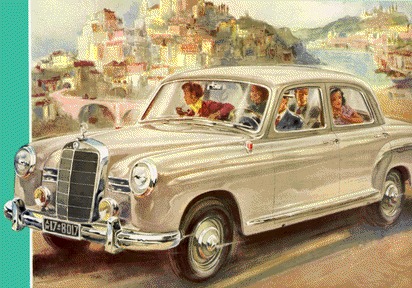
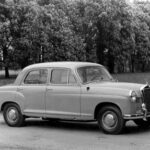
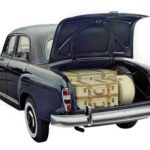
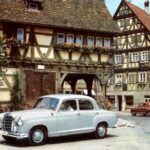
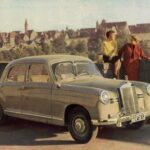
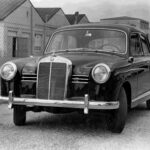
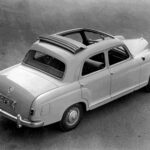
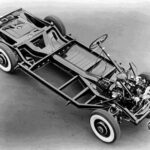
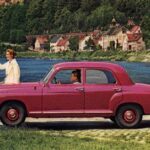
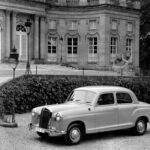
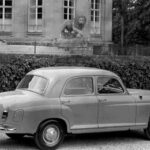
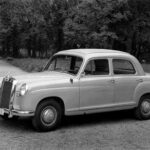
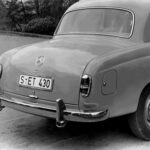
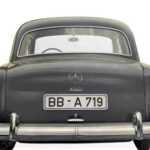
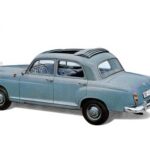
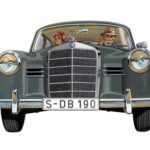
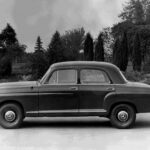
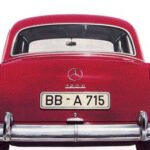
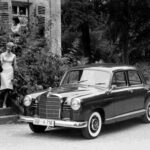
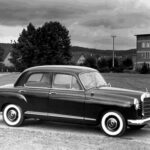
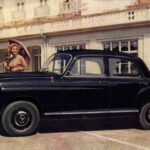
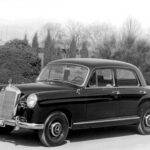
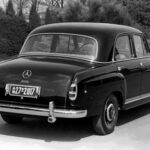
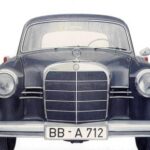
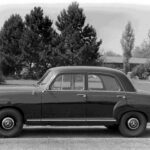
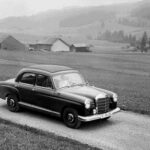
In August 1953, Mercedes Benz presented the Type 180 = internally code named W 120 = , the first passenger car with a pontoon-shaped car body. The pontoon body, which had been built for the first time in 1946 in the USA, was characterised by fully integrated mud guards and a rectangular plan. This concept resulted in lower air resistance, less wind noise and also in a much more spacious cabin. Another novelty in the history of the Mercedes-Benz passenger car was the integral body which was firmly welded onto the framework construction. there was a marked improvement in torsion rigidity Compared to the conventional construction of the 170 Types.
With these construction features, the Type 180 had a concept, which was unusually modern for those times and it was unanimously approved by automobile experts around the world; the only point of regret was the laterally controlled engine, carried over from the 170 Sb model. Although there was no real cause for complaint, with a mere 52 bhp, it was somewhat lacking in temperament.
Compared to its predecessor, driving performance was improved once again; Front and rear axle suspension were basically the same as in the 170 Sb, some aspects were modified, however. The wheels of the double wishbone front axle were no longer attached directly to the frame, but were suspended from a so-called ,drivers stool". This was a U-shaped axle-carrier, consisting of two compressed sheet metal pieces, which were welded together. Not only the front wheel suspension was attached to this device, but also the engine, gearbox and the steering assembly. The Drivers stool itself was tucked away in three silent blocks at the front of the frame, emitting a minimum of noise. For rear wheel suspension, the well-tried jointed cross shaft axle was used. The two wheels were now additionally guided by two longitudinal pull rods, which were situated at a great distance from each other.
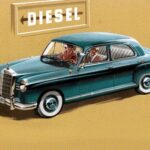
In January 1954 the product line 120 was rounded off by the 180 D model, which was identical with its fuel-powered sister model except for the Diesel-engine which had been taken from the 170 DS, 12 V electric equipment and adjusted rear axle transmission. From now on, ingrained Diesel drivers could benefit too from the advantages of this modern car concept.
The Diesel as well as the fuel-powered car received a new rear axle in 1955: the single joint cross shaft axle with lowered pivot that had been introduced one-and-a-half years before into the 220 a type and had resulted in much better ride performance due to a lower track change and king pin angle.
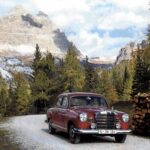
Half a year later, in March 1956, a third model completed the production range of four-cylinder types. The 190 type was mainly based on the well-tried 180 model. It had a much more powerful 75 bhp engine, however. The superiorially steered 1,9 litre unit was originally carried over from the 190 SL, but had been tamed to a large degree by compression and the use of more suppliant camshaft as well as single register carburettors. It was no longer supported at the front only, as had been the case with the 180 / 180 D models, but there were now two additional supports in the rear portion. The brakes were adjusted to the performance of the car: The 190 type featured ribbed ,turbo-cooled" brake drums as well as broader brake shoes.
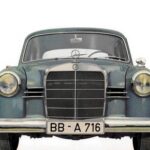
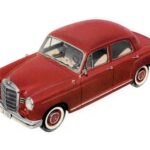
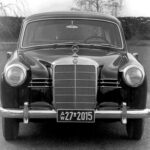
The exterior of the 190 model was different from that of its more profane counterparts in that it was equipped with different details. Characteristic features were swivel windows at the front doors, chrome trimmings running below the windows, a broader radiator mask with horizontal chrome ribs, decorative trims of different lenghts along the air admission vents extending onto the mud guards to the right and the left of the radiator mask, bigger taillights, louvered wheel rims and wheel boss caps with a more prominent Mercedes star.
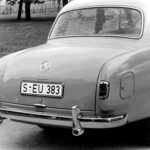
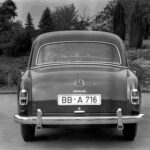
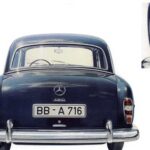
True to The motto "even more value for the same money" almost all passenger car models were presented in August 1957, some with more, some with less significant improvements. All three four-cylinder saloon cars had new interiors, number plate illumination, which was integrated into the fender and a recessed handle in the boot lid. the 180 type underwent the most profound changes: the revised version, internally code named 180 a, now also had a 1,9 ltr.-engine with overhead camshaft. This was based on the aggregate of the 190 type, but was derated to 65 hp by reducing compression and the use of a simple carburettor instead of the register carburettor. Moreover, it only required ordinary fuel. The exterior of the 180 a , too, was upgraded: In contrast to its diesel-powered sister model, it was equipped with bigger taillights, decorative trims at the air admission vents and the broader radiator cover of the 190 model - the last, however, without chrome ribs.
From April 1958, the 180 and 180 D models were available with swivel windows at the front doors; at the same time the wheel boss caps with the bigger Mercedes stars were fitted.
Im September 1958, a second Diesel-powered car, the 190 D, extended the passenger car range. The 1,9 litre diesel engine with 50 bhp was developed from the fuel-powered unit of the 190 model, with the new type featuring exactly the same car body equipment. The new Diesel became an instant best-seller, as, regarding its performance and smoothness of running, it compared favourably with the 180 D.
Simultaneously with the new six cylinder types of product line 111, Daimler Benz presented modernised versions of the 180, 180 D, 190 and 190 D four-cylinder models. Technically, all four types remained more or less unchanged; but now the 180 and the two diesel-powered models, too, were equipped with the turbo-cooled brake drums at the front wheels and the broader brake shoes of the 190 model. The engine performance of the fuel-powered models was improved by increasing compression up to 68 bhp in the 180 and 80 bhp in the 190 model.
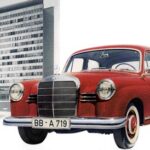
The front and rear of the revised types, which were internally called 180 b, 180 Db, 190 b and 190 Db models, became more modern in style: The bonnet became flatter, the broader and lower radiator cover was carried over from the new six cylinder types, the fenders had become bulkier; In contrast to its predecessors, the new model did no longer have any attachments on the front fender. The taillights were revised, too: they were now fitted with integrated rear reflectors as in the coupes and convertibles. More revised features were to be found in the interior and were an improvement of passive safety: Like the new six-cylinder models, the 180, 180 D, 190 and 190 D models, too, were fitted with an upholstered dashboard with flexible and partially recessed instruments as well as a steering wheel with an upholstered centre. exterior Distinguishing features of the 190 b and 190 Db, as compared to their 180 counterparts were the chrome trim running along the sides of the car beneath the windows and chrome roof rails.
With the 190 c and 190 Dc types, two completely reconstructed four cylinder models with tailfinned car body were presented in August 1961 as successors of the 190 b and 190 Db models. however, this did not yet spell the end of the "Pontoon-Model" era: the 180 and 180 D models were still produced, even though they were to be phased out soon. There were some minor changes, as can be seen from the internal code names 180 c and 180 Dc. In contrast to its predecessor, only the chamshaft and the valve drive were modified in the 180 c model, while the 180 Dc received a totally new engine: It was fitted with the 2,0 liter unit of the 190 Dc. After a reduction of torque down to 3800 per min. it delivered only 48 hp, 7 hp less compared to the 190 Dc, but still 5 hp more than the 1,8 litre engine of the 180 Db. Both types were manufactured until October 1962.
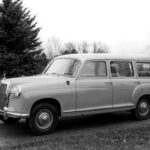
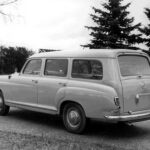
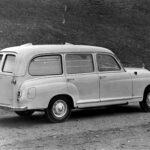
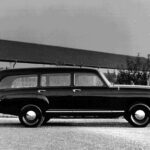
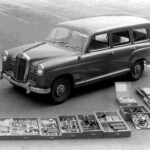
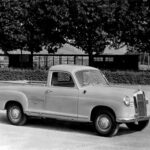
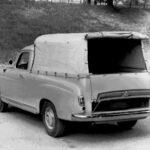
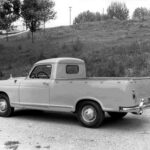
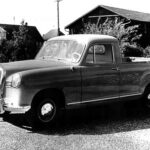
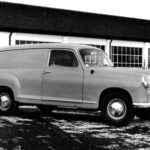
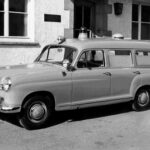
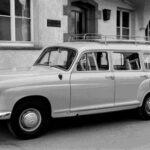
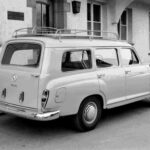
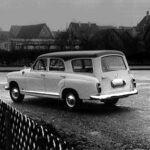
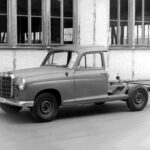
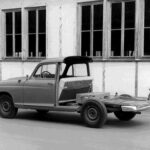
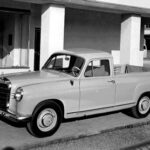
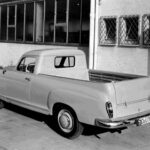
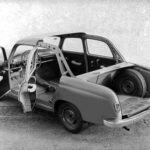
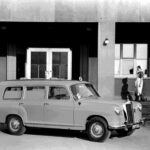
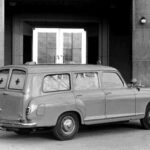
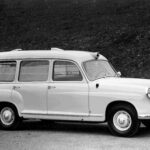
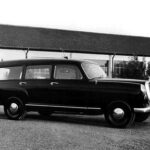
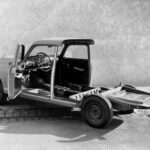
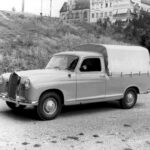
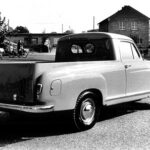
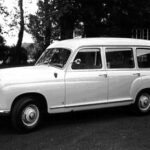
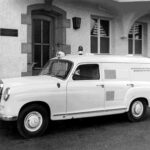
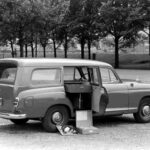
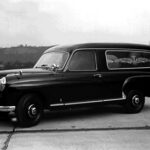
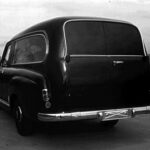
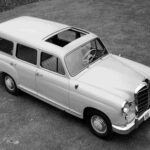
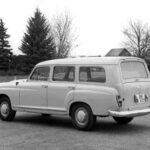
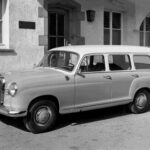
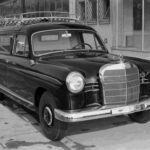
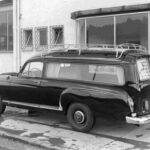
Like their predecessors, the pontoon types of product line 120 and 121 were not only available as saloon cars, but also as chassis with a partial car body, which were made into ambulance cars, station wagons or other special bodies by different body makers at home and abroad. Especially the ambulance bodies produced by the companies Binz in Lorch and Miesen in Bonn soon became very popular everywhere. From May 1955, types 180 and 180 D were first offered as chassis for ambulance cars; In September the station wagon and funeral car designs completed the sales programme. From November at last, a chassis with a two door partial car body - for funeral cars or platform vans etc. - became available. During the time they were produced they underwent the same revision and augumentation of the type range as the saloon cars, on which they were based. Correspondingly, each of the numerous pontoon four cylinder models was also offered as a chassis for special car bodies.
After production of the 180 c and 180 Dc types was stopped in October im 1962, the pontoon era at Daimler-benz was drawing to a close after nine years. During these years a total of 442.963 cars of the 180 - 190 D types were built at the works in Sindelfingen, 437.310 of them were saloon cars and 5.653 were chassis with a partial car body. From a technical point of view, all the other saloon cars built by Mercedes-Benz have the pontoon shape, too. However, The term "Pontoon-Mercedes" today refers to the original generation of models only.